
Last updated November 22, 2026
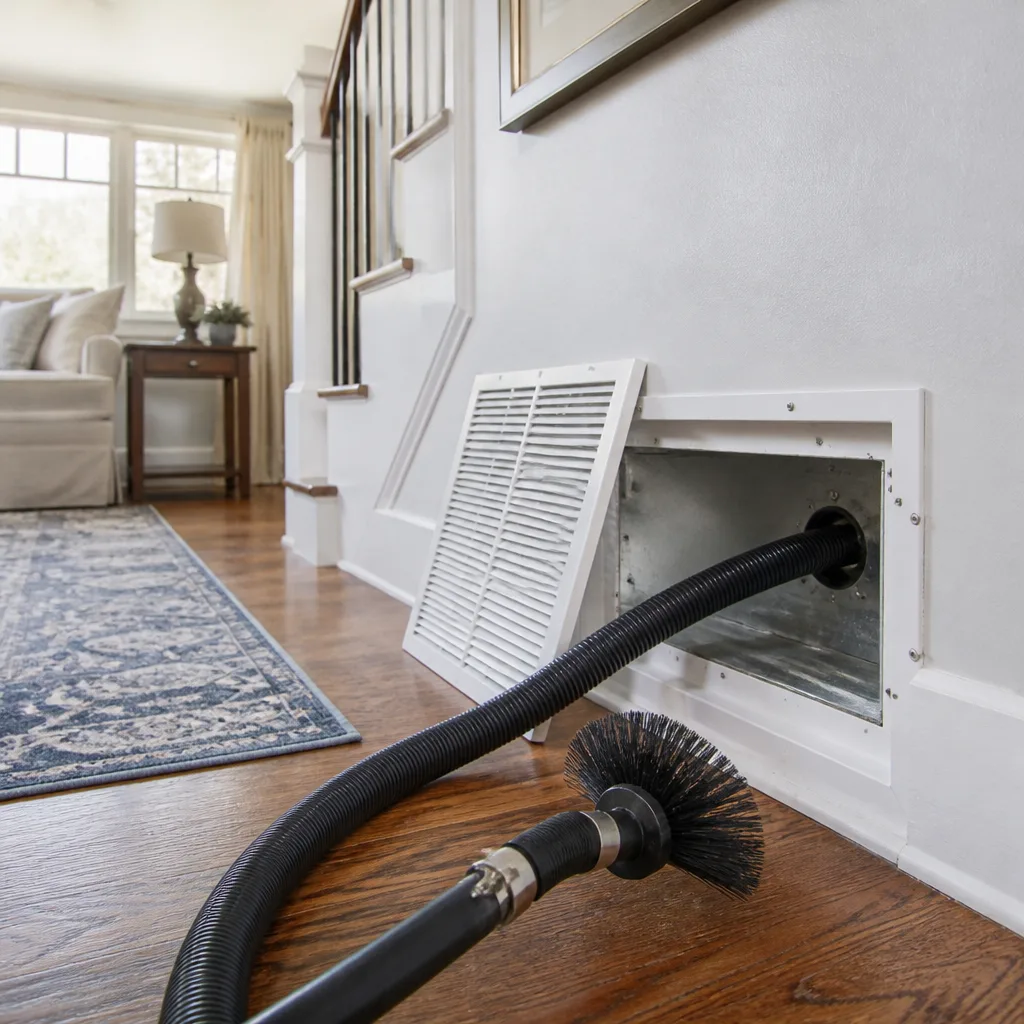 Whole-home duct cleaning
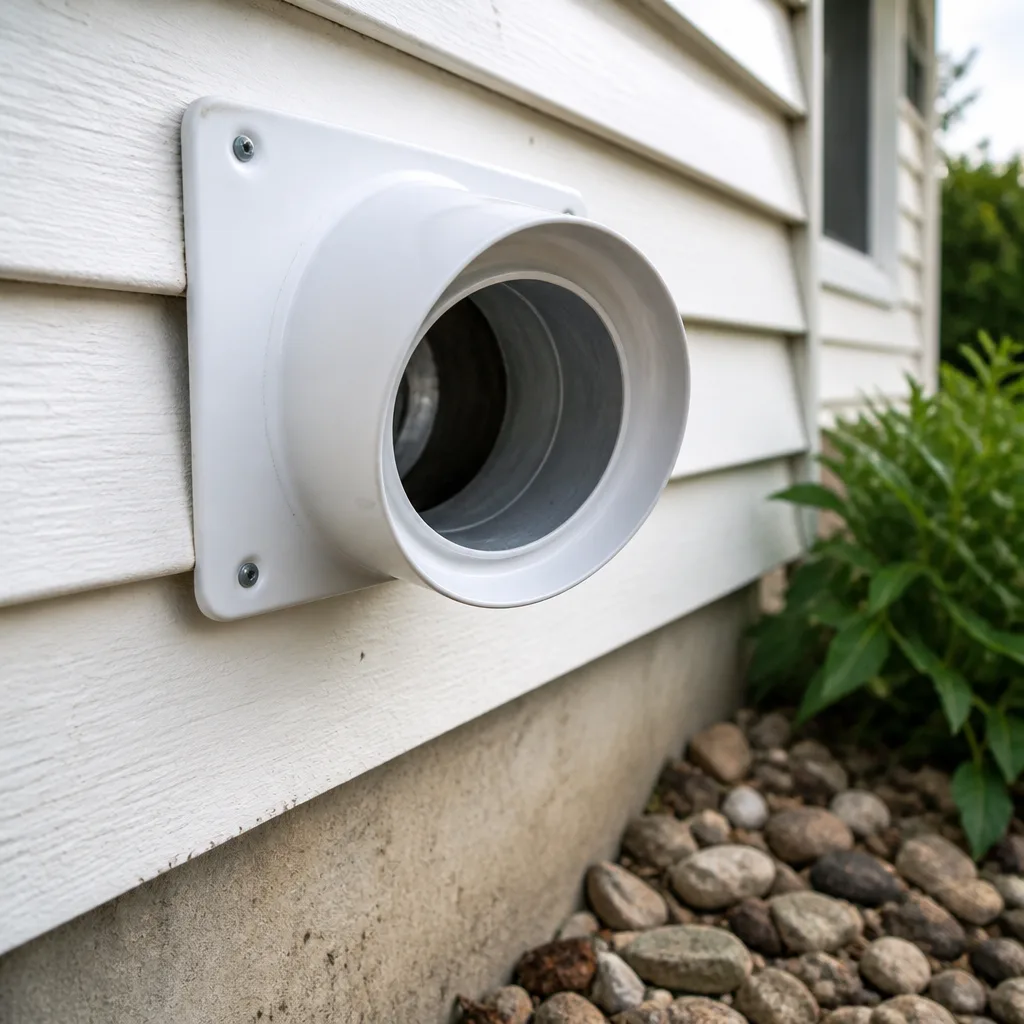 Dryer vent cleaning
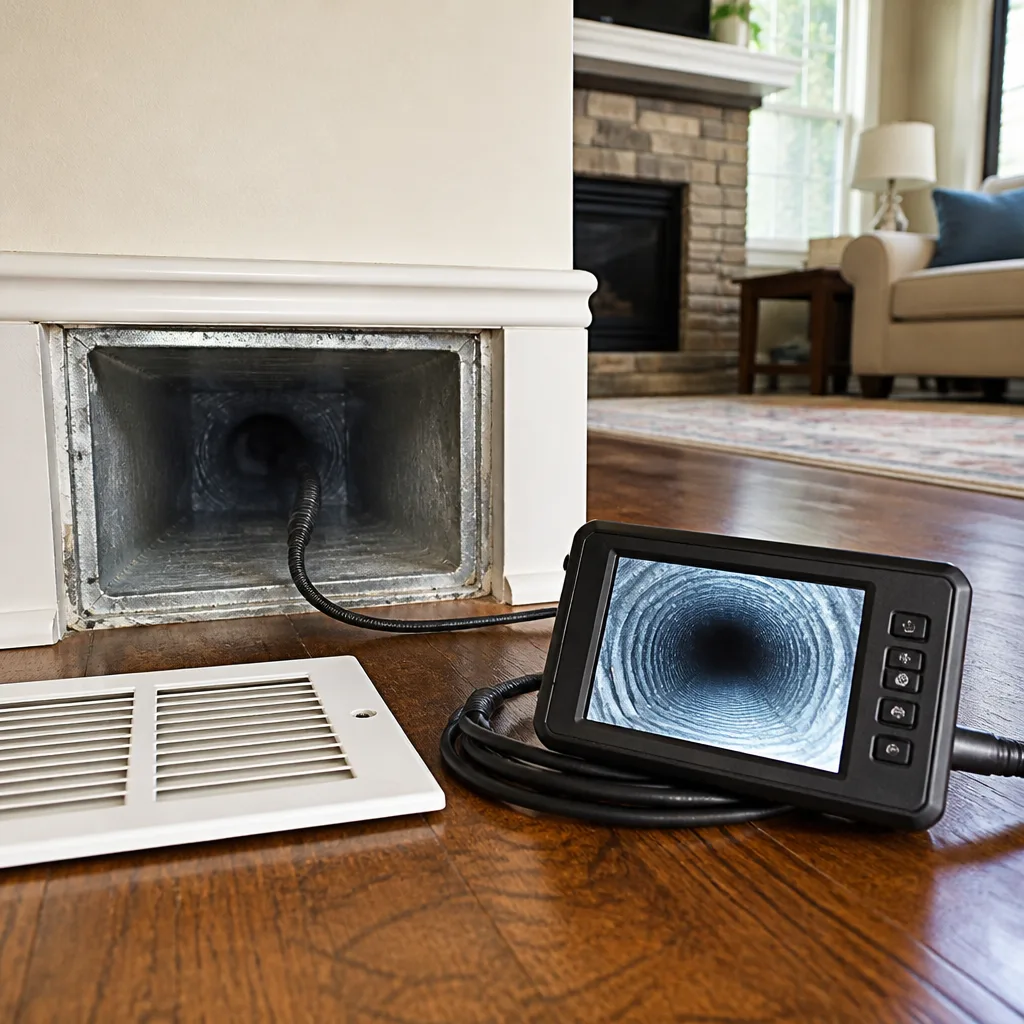 Camera inspection
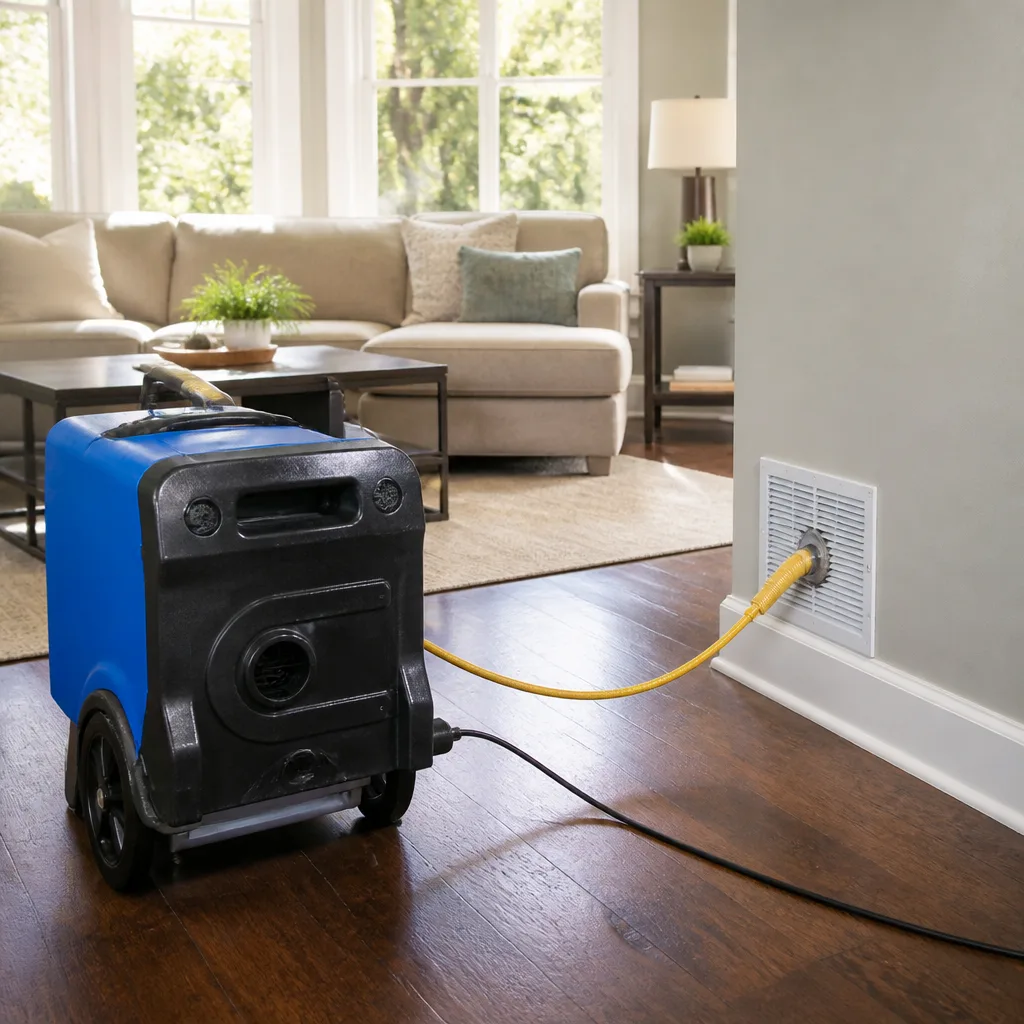 Sanitizing & deodorizing
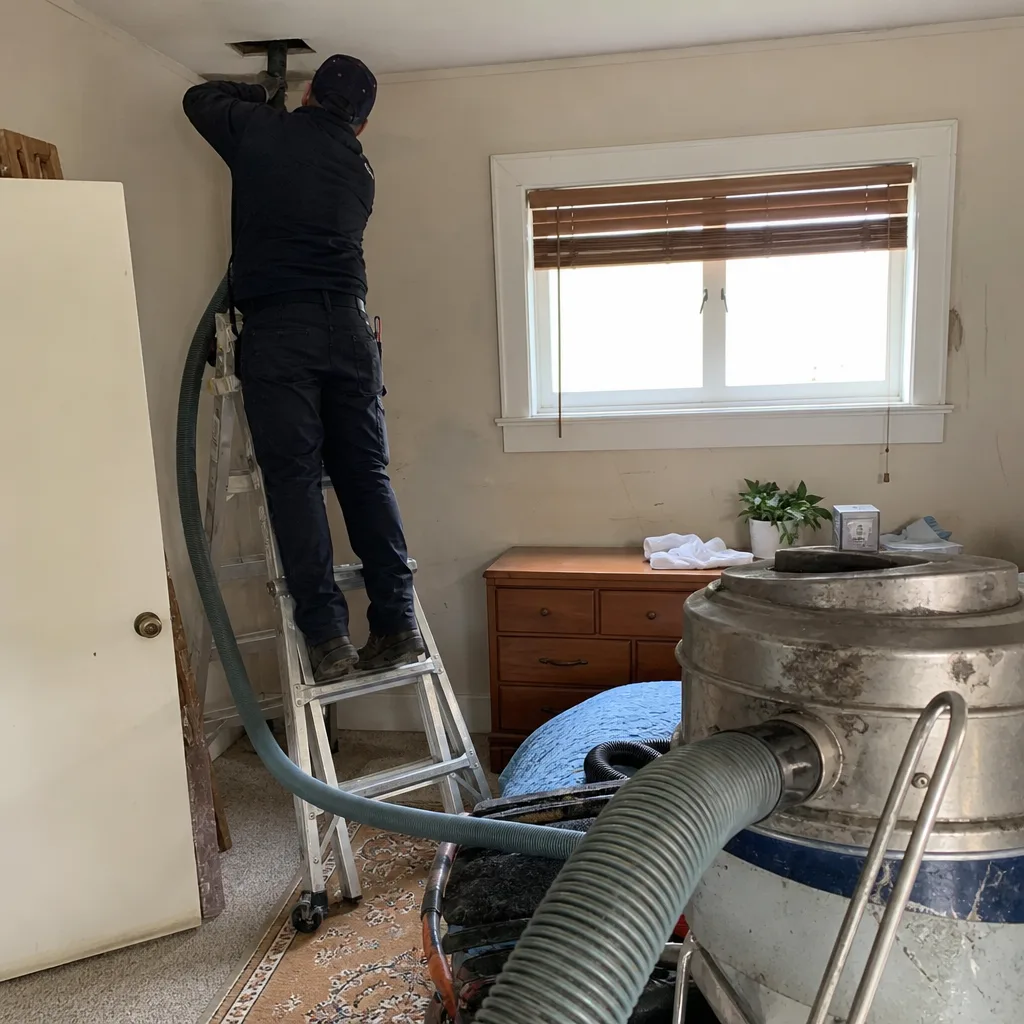
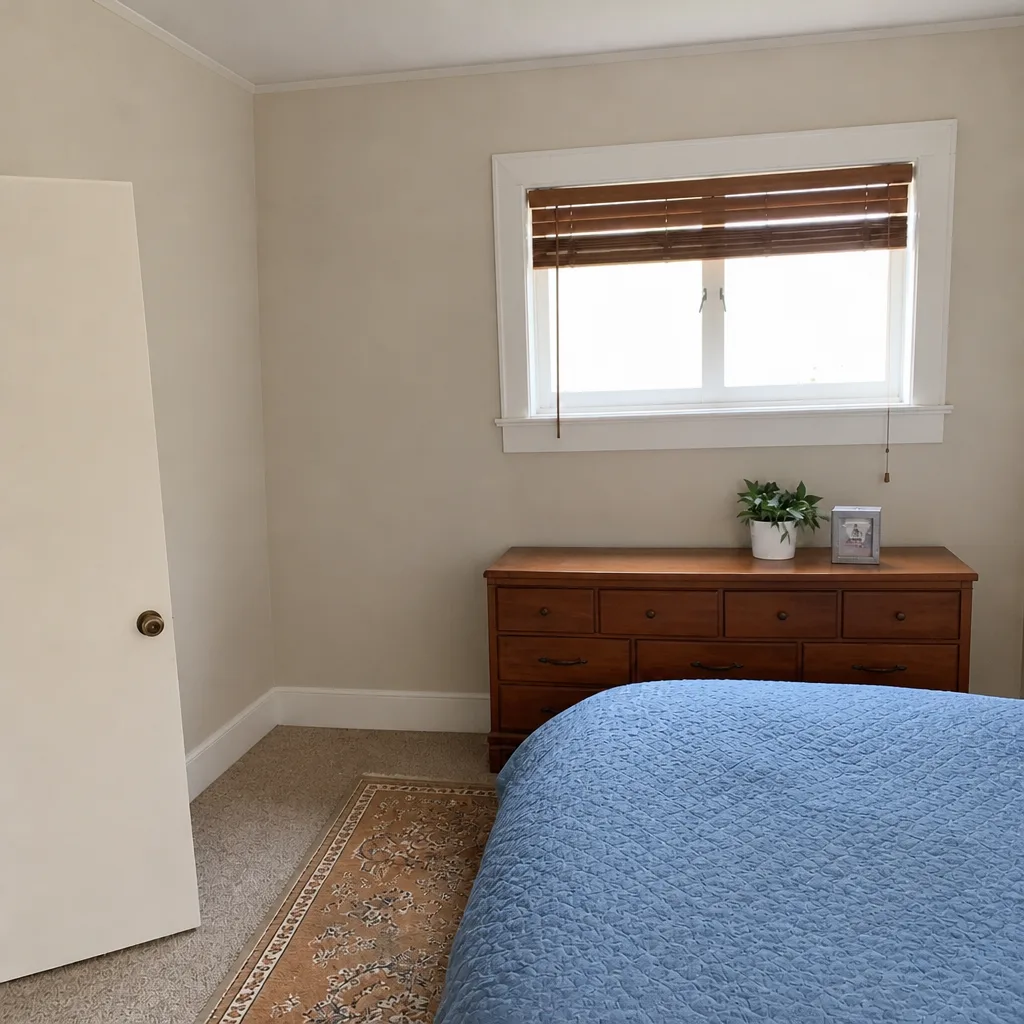
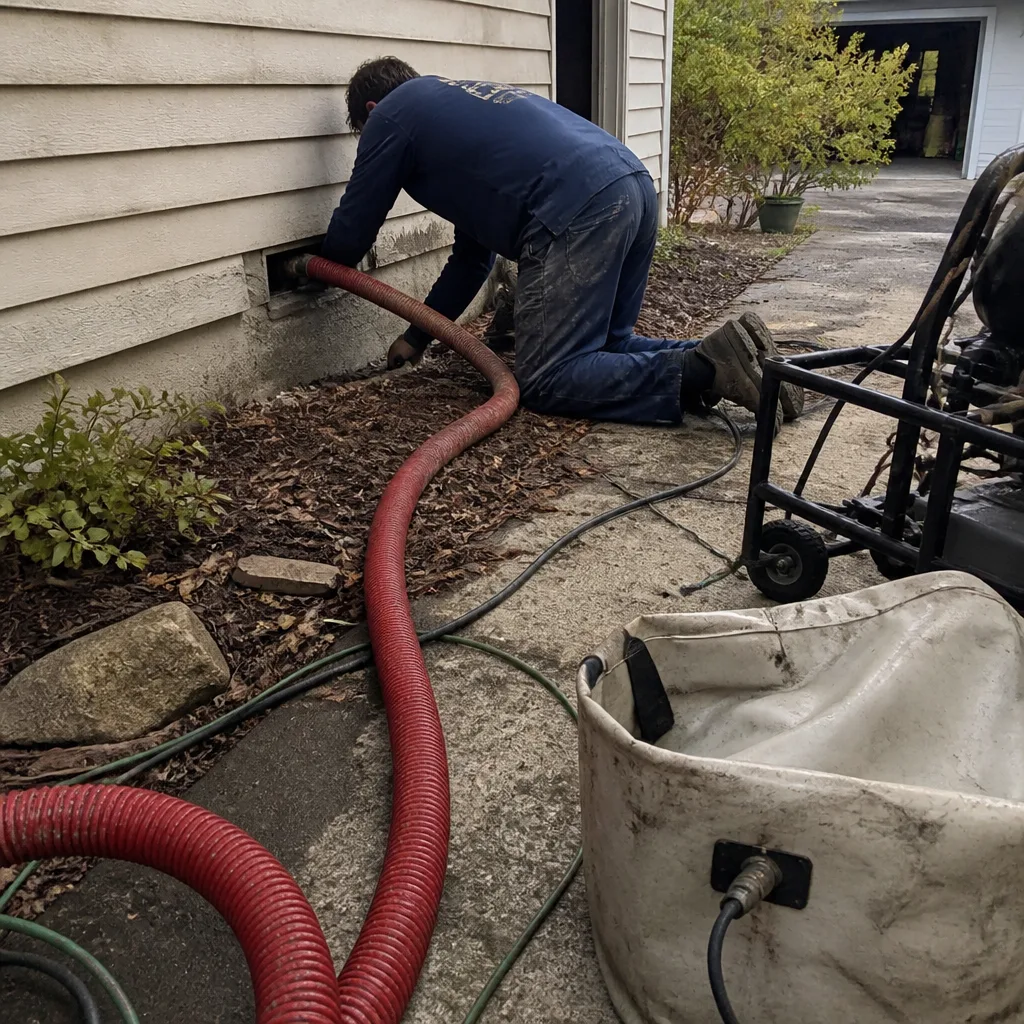
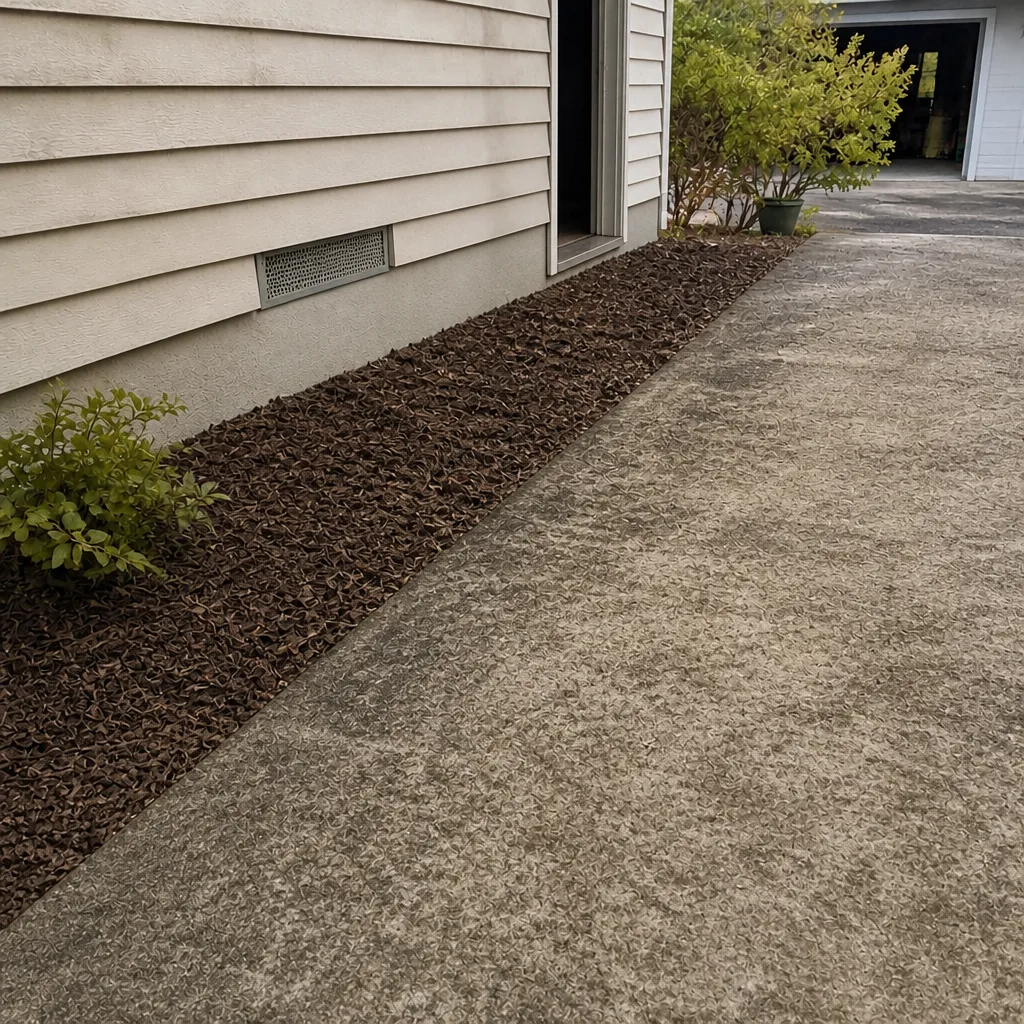
Whole-system duct and dryer vent check with before-and-after photos - you see exactly what came out of your vents
That "$99 whole-house special" is a bait ad - the real number appears once they are in your hallway, or the "clean" is a shop-vac at the register. We photograph the inside of your ducts before and after instead.
Air Duct Cleaning Warning Signs: A West Seattle Homeowner’s Reference Guide
If you can visibly see debris falling from your registers, you’re already well past the early-warning stage. The signs that actually matter show up months earlier in how your system smells and performs. Most West Seattle homeowners are looking for the wrong thing: they check the vent cover for dust, see a little, and decide everything’s fine. Meanwhile the real story is happening in pressure, odor, and how quickly a filter loads. This guide walks through the diagnostic signs an experienced technician reads before a system becomes a problem, and shows you what you can check yourself with nothing more than a tissue and a register.
Quick Answer
The main warning signs of a duct system that needs attention are uneven airflow between rooms, a musty or dusty smell when the system starts, filters that clog faster than they used to, visible dust streaks around registers, and inconsistent heating or cooling that isn’t explained by thermostat settings. In West Seattle’s older housing stock and its active remodel market, these symptoms usually point to duct leakage, blockage, or accumulated debris rather than an HVAC capacity problem. If you notice two or more of these at once, it’s worth having the system inspected by a professional.
Styles & brands we work with
- Whole-home duct cleaning
- Dryer vent cleaning
- Camera inspection
- Sanitizing & deodorizing
Table of Contents
- The Airflow Diagnostic You Can Do With a Tissue
- Odor Differentiation: Musty, Burning Dust, and Chemical
- Why Some Rooms in Your West Seattle Home Stay Cold
- The Filter Interval Drift Warning
- Post-Renovation Warning Signs in West Seattle
- Visible Signs at Registers and Vents
- When the HVAC Unit Itself Is the Warning Sign
- What a Proper Duct Inspection Actually Involves
The Airflow Diagnostic You Can Do With a Tissue
Here’s the simplest diagnostic in the trade, and it takes about two minutes. Hold a single-ply tissue against a supply register while the system is running. Then do the same at a return grille. The tissue should be pulled firmly against the register on a supply and pulled toward the grille on a return. If it flaps weakly, barely moves, or falls away, the system is telling you something is restricted.
Homeowners in West Seattle tend to read weak airflow as an HVAC problem. It rarely is. In most homes we inspect, the blower is fine and the filter is clean, but the duct system itself is leaking at joints or blocked by debris that has been accumulating for years. A tissue test at each register in the house gives you a rough map of where the restriction sits.
Run the test methodically:
- Turn the system on and let it run for a full five minutes so pressure equalizes.
- Hold the tissue flat against the face of each supply register in the house, one at a time.
- Note which registers pull strongly, which pull weakly, and which barely register.
- Repeat at every return grille and note the suction strength.
- Compare rooms. A strong pull at the register closest to the air handler and weak pull at the far end is a classic sign of leakage or blockage along the run.
A house in Fauntleroy with a long supply run to a back bedroom, or a Delridge home where ducts run through a cold crawlspace, will often show the strongest contrast. That contrast is the diagnostic. It tells you the restriction exists before it becomes a full system efficiency problem and before the HVAC unit has to work harder to compensate.
If the tissue test shows a consistent drop across multiple rooms, it’s worth having the system looked at before the next heating season. Air Duct Cleaning West Seattle offers air duct cleaning and inspection for homeowners who want the restriction diagnosed with professional extraction equipment rather than a shop vac and a hose.
Odor Differentiation: Musty, Burning Dust, and Chemical
The smell of your system is a diagnostic. Three distinct odor profiles point to three completely different problems, and lumping them together is one of the most common mistakes we see in West Seattle homes.
Musty odor
A musty, damp-earth or old-basement smell when the system first kicks on usually points to biological growth somewhere in the air pathway. In a climate like West Seattle’s, with months of damp weather and homes that sit closed up through the wet season, moisture can collect in ductwork, on evaporator coils, or in the return plenum. The smell intensifies at startup because the system pushes the growth-related particles into the rooms first. This is a case for cleaning and, many times, post-clean sanitizing of the duct system, not just a filter change.
Burning dust odor
A hot, dusty, “first time the furnace ran this year” smell is different. If it appears once at the start of the season and fades within a few minutes, it’s usually ordinary dust burning off the heat exchanger. If it persists, comes back every cycle, or smells sharp and acrid, stop and call an HVAC professional to inspect the heat exchanger. That’s a safety issue, not a cleaning issue, and it deserves an immediate trained set of eyes. We won’t tell you to ignore it and we won’t tell you to handle it yourself.
Chemical odor
A solvent, adhesive, paint, or new-plastic smell after a renovation is the third profile. VOCs and off-gassed compounds from recent work get pulled into the return system and cycle back out through every supply register. This is a renovation-specific warning sign and it deserves its own section below.
Recognizing which of the three odors you have is the entire point. Musty usually means growth and cleaning, burning dust usually means the heat exchanger and a service call, and chemical usually means a renovation event and a targeted cleaning with HEPA containment. We use Nikro HEPA-filtered equipment because it captures fine particulate during cleaning instead of letting it drift back into the room.
Why Some Rooms in Your West Seattle Home Stay Cold
A room that never warms up, no matter what you set the thermostat to, is usually a duct problem, not an HVAC capacity problem. Inconsistent room temperatures in a West Seattle home most often trace to duct leakage or blockage along that room’s run, not to an undersized furnace or a failing heat pump. Homeowners routinely replace HVAC equipment to fix temperature swings and find the swing is still there afterward.
Here’s why this happens. Every duct run loses some pressure. A joint that’s slipped apart in an attic, a flex duct that’s been kinked or crushed by a remodel, a run that’s been disconnected entirely by a contractor working in the crawlspace: any of these will starve a room of conditioned air while the rest of the house feels fine. The thermostat, sitting in the hallway, sees a comfortable temperature and shuts the system off. The back bedroom stays cold.
The warning signs of duct-related temperature inconsistency:
- One or two rooms are consistently 4 to 8 degrees different from the rest of the house.
- The difference is worse on windy days or in very cold weather.
- The room’s register has weak airflow on the tissue test.
- You can hear a whistling or rushing sound at a register or near the air handler.
- A room that was previously comfortable became uncomfortable after some other work in the house.
Whistling is worth calling out. A whistle means air is escaping through a gap that shouldn’t be there. Ducts that leak don’t just waste conditioned air, they also pull unconditioned air in from the crawlspace or attic, which in an older West Seattle home can mean pulling in dust, insulation fibers, and whatever else is in that space. Duct Repair & Sealing is a named service we offer because cleaning without sealing leaves the leak in place. We seal what we find.
If a room is consistently cold and the tissue test shows weak flow, the fix usually starts with an inspection. HVAC cleaning covers the unit and coil side; the duct side gets handled with the same visit when it makes sense.
The Filter Interval Drift Warning
Here’s a warning sign almost no homeowner thinks to check: how often they’re changing their filter compared to how often they used to. If a filter that used to last three months now loads up in one, something upstream changed. That drift is one of the most reliable early indicators of a system that’s accumulating debris, developing a leak, or pulling in outside particulate.
Think about it as a signal rather than an inconvenience. Your filter is the one component in the HVAC system that gives you a regular, physical read on what the air is carrying. When the interval shortens, the air is carrying more or the system is pulling harder to overcome restriction. Neither is good, and both point back to the duct system.
Track it in a simple log:
- Write the date on the filter housing when you change the filter.
- Note the date you change it again, and count the days between changes.
- Compare that interval to the previous few changes.
- If the interval has shortened by roughly a third, treat it as a warning sign and have the system inspected.
- If the interval is shortening steadily, have the inspection done sooner rather than later.
West Seattle homes near major construction or in neighborhoods with a lot of active remodeling will see this drift faster than others, because ambient particulate levels are higher. Homes with pets, or with occupants who run the HVAC system almost continuously through the shoulder seasons, see it faster too. The filter interval is the closest thing you have to a free diagnostic, and it’s one of the first things we ask about when a homeowner calls in.
Post-Renovation Warning Signs in West Seattle
Renovation dust behaves differently in a duct system than the everyday dust that accumulates in a house. It’s finer, it’s more abrasive, it carries adhesive and paint compounds, and it settles into the ductwork in a way that ordinary household dust doesn’t. West Seattle’s active remodel market means a lot of homes deal with this, and it’s a category of warning sign most guides skip entirely.
Here’s why it matters. Drywall dust is extremely fine, and once it gets into the return system it coats the inside of the ducts, the blower wheel, and the evaporator coil. Insulation fibers, when disturbed during a remodel, become airborne and lodge in the duct lining. VOC-laden particulates from paint, adhesive, and sealant off-gas slowly for weeks after the work is finished, and every time the system runs they get distributed through the house. That distribution doesn’t just make the house smell like a construction site. It also coats surfaces in every room.
Renovation-specific warning signs to watch for:
- Fine white dust on horizontal surfaces that keeps reappearing after cleaning.
- A persistent paint or adhesive smell that gets stronger when the HVAC runs.
- Visible dust puffing from a register when the system starts.
- A filter that loaded up completely within a few weeks of renovation work.
- Occupants reporting headaches, itchy eyes, or respiratory irritation that appeared after the remodel.
Homeowners in North Admiral and Genesee Hill who’ve recently finished an addition, a kitchen remodel, or a basement finish should have the duct system inspected once the dust has settled. Cleaning with HEPA-filtered extraction, plus a consideration of air quality hardware, is a reasonable response. Honeywell and Aprilaire systems can be installed alongside cleaning when a homeowner wants ongoing filtration beyond what the existing filter provides. Abatement Technologies equipment is what we use when contamination levels are elevated, because it’s built for particulate control rather than surface-level dusting.
If you’ve just finished a remodel and the first run of the heating system made the whole house smell like a construction site, that’s the warning sign. Call before the next heating season so the system is clean before it gets heavy use.
Visible Signs at Registers and Vents
Visible signs are the last warning in the sequence, not the first. When debris starts showing up at a register, the accumulation has been building quietly for a long time. That said, visible signs confirm what the airflow, odor, and filter signals have been telling you.
What to look for at each register and vent:
- Dust streaks radiating from the register cover. This is air escaping around the edges of the cover where it seats, and it leaves a pattern of residue on the wall or ceiling.
- Debris or dark particulate on the register face itself. Small particles that fall out of the airstream and settle on the louvers.
- Dark staining inside the duct visible with a flashlight. Not conclusive on its own, but worth noting.
- Loose or fallen register covers. Usually means the surrounding duct has shifted, which also means the run may have pulled apart behind it.
- Visible dust in a return grille that reappears within a week of cleaning the grille. The grille isn’t the source; something behind it is.
For the dryer vent specifically, the visible sign is different. Lint accumulating behind the dryer, visible lint at the exterior vent, clothes taking longer to dry, or the dryer itself feeling hot to the touch after a cycle: all point to a vent that needs attention. Dryer vent cleaning is a separate service from the duct system, and it’s one we handle with the same equipment. A dryer vent cleaning is worth scheduling once a year for most households, and more often for large families.
When the HVAC Unit Itself Is the Warning Sign
Sometimes the warning sign is the unit, not the ducts. Inconsistent performance, short cycling, a blower that sounds strained, or a unit that runs constantly without delivering even temperatures can all be driven by a duct system that’s fighting the equipment. Before you consider replacing the HVAC unit, you should know whether the ducts are the cause.
A few specific symptoms:
- Short cycling: the system runs for a few minutes, shuts off, runs again. Often means the system is working against high static pressure, which is frequently a duct restriction issue.
- Strained blower: a blower that’s audible throughout the house may be working harder than intended. Restricted ducts force this.
- Ice forming on the indoor coil or line set. This can indicate restricted airflow across the coil, which means the duct side is starving the system of air.
- Coil fouling: a coil coated with dust and fiber from the duct system can’t transfer heat properly. Cleaning the coil without investigating why it fouled leaves the cause in place.
This is why we treat the air pathway as a single system. From intake to output: supply ducts, return ducts, the air handler, the coil, the registers, and the dryer vent on its own circuit. Cleaning one component and leaving the others alone means the same debris gets redistributed on the first run. HVAC cleaning that covers the full pathway is what actually makes a difference to system performance.
What a Proper Duct Inspection Actually Involves
A proper inspection isn’t someone shining a flashlight into a register for ten seconds. It’s a step-by-step review of the whole air pathway, with photographic documentation, done with the equipment that can see and reach where the restriction actually sits.
A thorough inspection covers:
- Visual review of every accessible register and return.
- Access through the air handler and, where accessible, the main trunk line.
- Camera inspection of the duct runs, especially the long runs and the ones that pass through attic or crawlspace.
- Pressure measurements to confirm whether airflow restriction is present.
- Photographic documentation of conditions found, so the homeowner sees what the technician sees.
- A written summary of the recommended scope and the flat price for the job, agreed before any work starts.
That last point matters because this industry has a reputation problem. The most common complaint is a low coupon price that turns into a much larger invoice once the technician is on site. We quote one flat price per system, not a per-vent price, agreed before the work begins. We also provide before-and-after photos of the homeowner’s own ducts so there’s no question about what was done. That’s the standard we hold to, and it’s why we lead with the equipment: professional-tier extraction systems like Rotobrush and Nikro are the visible difference between a real cleaning and a surface-level wipe-down.
Common Mistakes to Avoid
- Assuming weak airflow means a failing HVAC unit. In most West Seattle homes we inspect, the blower is fine and the issue is on the duct side. Replacing the unit without diagnosing the ducts can leave the same temperature swings in place.
- Ignoring the filter interval drift. If a filter that lasted three months now lasts one, that’s information. Dismissing it as “a dusty house” misses a signal that’s right in front of you.
- Confusing musty and burning dust smells. These point to completely different problems. Musty usually means growth in the air pathway. Burning dust that persists means the heat exchanger needs inspection, and that’s a safety matter for a trained professional.
- Cleaning the ducts after a remodel without HEPA containment. Cleaning without proper extraction equipment can stir fine renovation dust back into the air. The right equipment captures it; the wrong equipment redistributes it.
- Cleaning without addressing leaks. If the ducts leak, cleaning them buys you a few months before the same dust pulls back in from the crawlspace. Duct Repair & Sealing is part of the job when the inspection finds breaches.
- Hiring on price alone. A quote that’s dramatically lower than the others usually reflects a different scope: less equipment, less coverage, no sealing, no photographs. Ask what’s included before you compare numbers.
- Waiting for visible debris at the register. By the time you can see it, the accumulation has been building for a while. Trust the earlier signals: airflow, odor, filter interval, and room temperature inconsistency.
See the difference
 Before
 After
 Before
 After
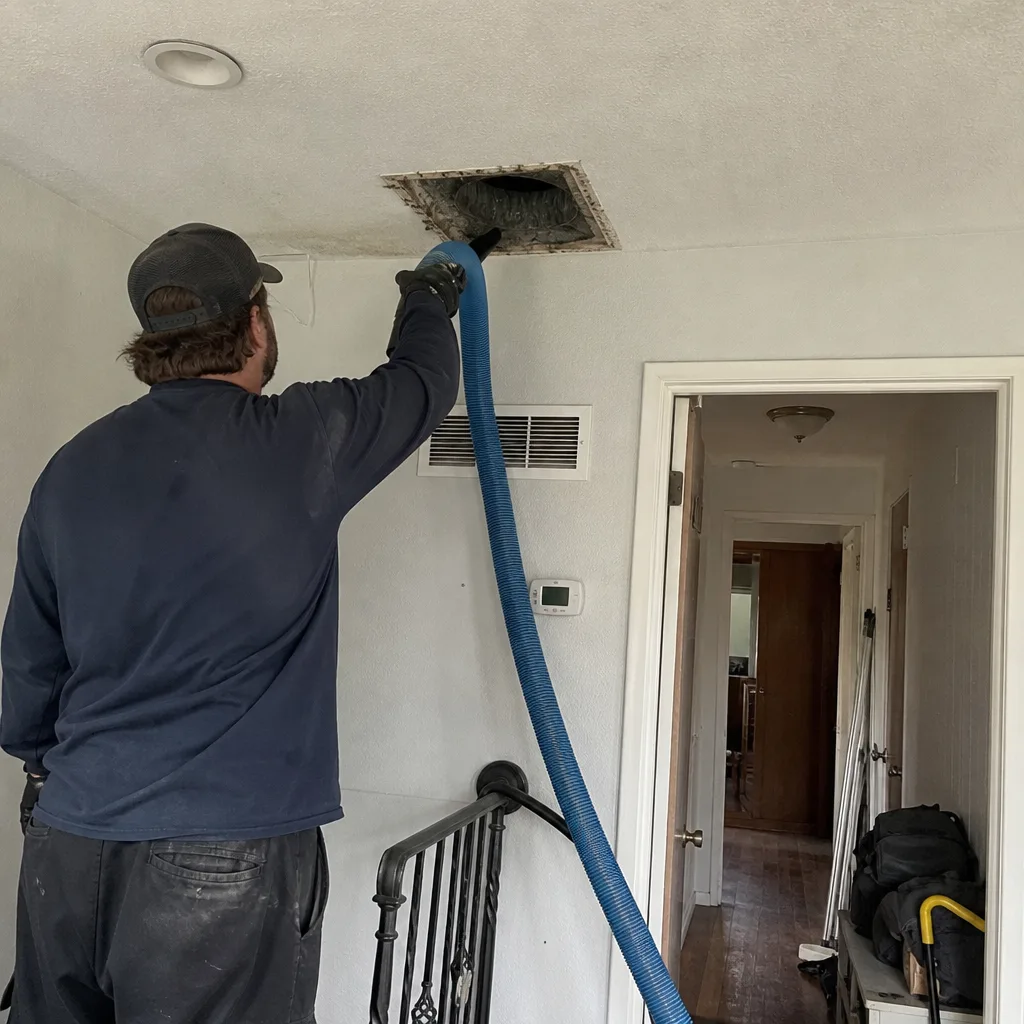 Before
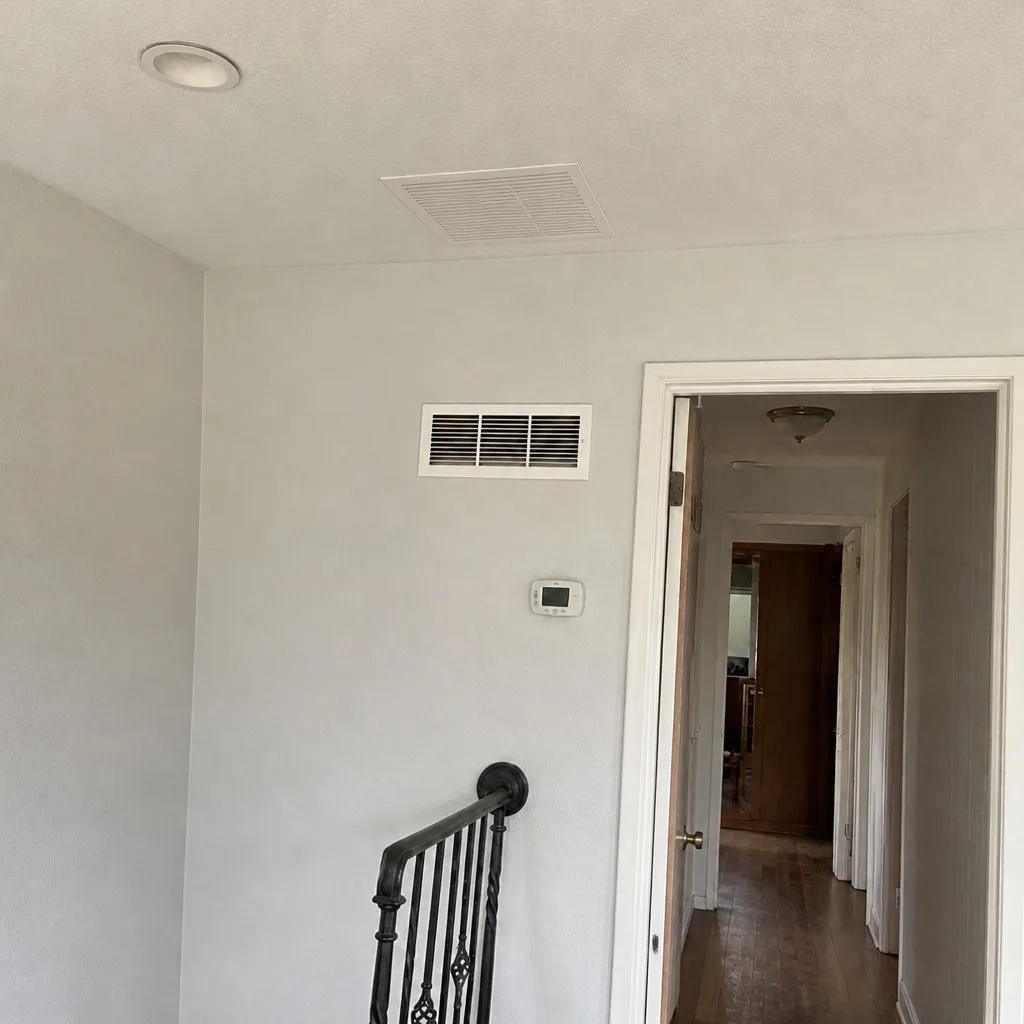 After
When to Call a Professional
Call a professional when you have two or more of the warning signs from this guide at once, when a room has been consistently cold for more than a season despite other fixes, when a musty smell appears at system startup, when a filter interval has shortened noticeably, or when a renovation has recently finished. Call immediately if you smell a persistent burning odor or an acrid smell from the system; that’s a safety issue and deserves a trained set of eyes, not a household remedy. Call before replacing any HVAC equipment so the duct side is confirmed first. Air Duct Cleaning West Seattle offers free estimates in West Seattle. Call (877) 492-4032. We answer 24/7. Fast dispatch from 7am to 7pm, Sunday through Friday.
Frequently Asked Questions
Most homes in West Seattle should have the duct system inspected every two to three years, and cleaned when the inspection shows accumulation that warrants it. Homes with pets, allergies, recent renovations, or heavy dust exposure may need it more often. The interval is less important than the signs: airflow, odor, filter drift, and temperature inconsistency tell you more than a fixed calendar. If you’re noticing two or more of those signs, call (877) 492-4032 for an exact quote. Estimates are free.
Pricing is set per job by the written estimate, after the technician has seen the system. That’s the honest answer. Whole-system scope varies, and the written estimate is what sets the final price. What we can say is that we quote one flat price per system rather than a per-vent price, and that price is agreed before any work starts. Call (877) 492-4032 for an exact quote. Estimates are free.
Lower quotes usually reflect a narrower scope: consumer-grade vacuums rather than professional extraction systems, no sealing of breaches, no photographic documentation, and no coverage of the full air pathway. A cleaning that doesn’t reach the actual accumulation isn’t really a cleaning. We use contractor-grade equipment because it reaches where a shop vac can’t, and we provide before-and-after photos so you can see exactly what was done. Call (877) 492-4032 for an exact quote on a full-system cleaning. Estimates are free.
Ask for before-and-after photos of your own ducts, not stock photos from a website. A professional cleaning documents conditions found and conditions after, and provides both to the homeowner. On top of that, ask what equipment is used: Rotobrush rotary brush extraction and Nikro HEPA-filtered vacuum equipment are the standards for real cleaning. If a contractor can’t tell you what equipment they’re using, that’s the answer. Call (877) 492-4032 to schedule a free estimate and see the documentation standard for yourself.
A musty smell at system startup usually points to biological growth somewhere in the air pathway, most commonly on the evaporator coil, in the return plenum, or along a duct run in a damp space. It’s not usually an emergency, but it’s worth addressing, and it isn’t fixed by a filter change alone. Cleaning plus post-clean sanitizing is the typical response. If you smell something sharp, acrid, or chemical at the same time, have the system looked at promptly. Call (877) 492-4032 to schedule a free estimate. We answer 24/7.
In most cases, yes. Drywall dust, insulation fibers, and VOC-laden particulates from paint and adhesive get pulled into the return system during the work and stay there afterward. A duct cleaning with HEPA-filtered extraction after the renovation is finished, not during, is the right response. Abatement Technologies equipment is what we use when contamination levels are elevated. Call (877) 492-4032 to schedule a post-renovation estimate. Estimates are free.
The Bottom Line
The signs that actually matter aren’t visible at the register. They show up in airflow behavior, in the smell of the system at startup, in how quickly a filter loads, and in how evenly a house heats and cools. West Seattle homes in older neighborhoods, homes that have recently been remodeled, and homes dealing with damp-season moisture all tend to show these signs earlier. Trust the tissue test, trust the filter interval, and trust your nose: musty and burning dust point to completely different problems, and only one of them is a cleaning issue. When two or more signs line up, get an inspection from an experienced set of hands. That’s how a small restriction gets handled before it becomes a bigger one.
Ready to have the system looked at? Call (877) 492-4032 for a free estimate. We answer 24/7. Fast dispatch from 7am to 7pm, Sunday through Friday. One flat price per system, agreed before work starts, with before-and-after photos of your own ducts so you know exactly what was done.
Written by the team at Air Duct Cleaning West Seattle.