
Last updated November 22, 2026
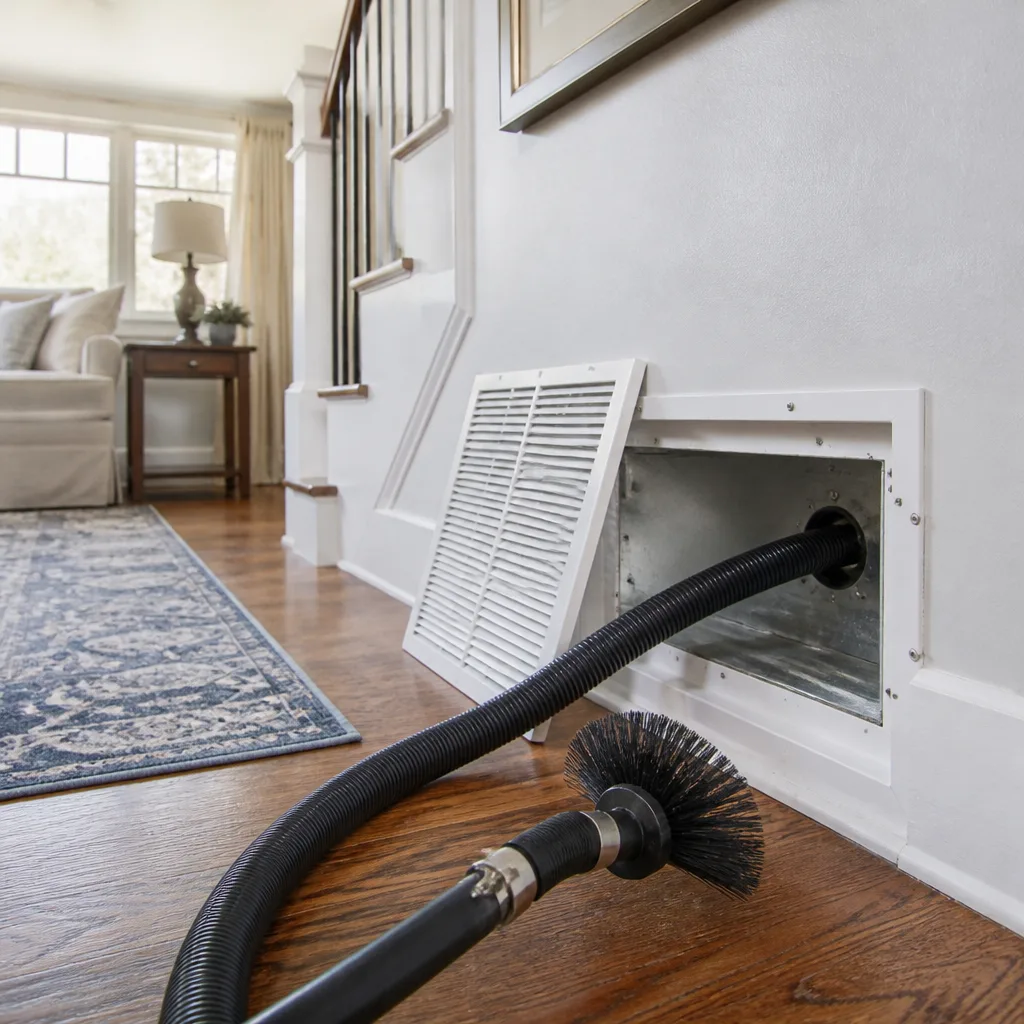 Whole-home duct cleaning
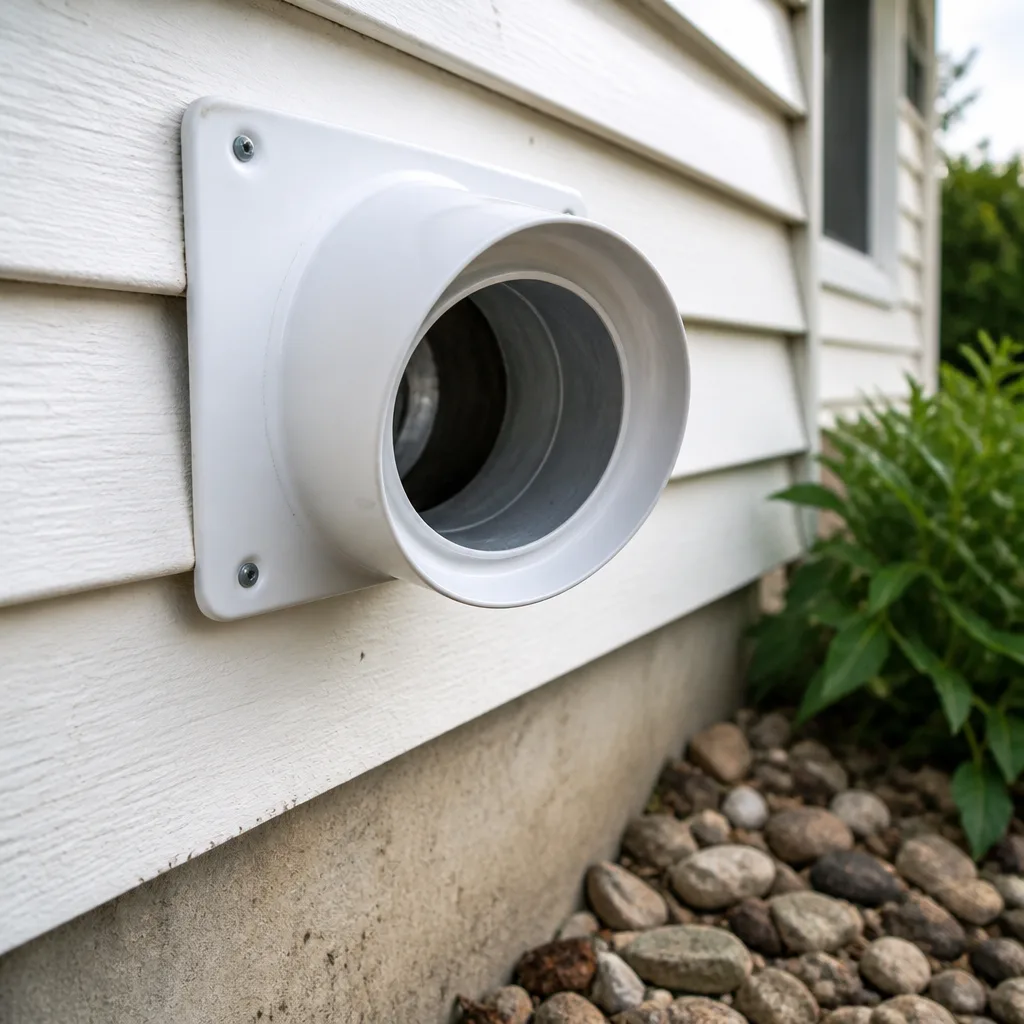 Dryer vent cleaning
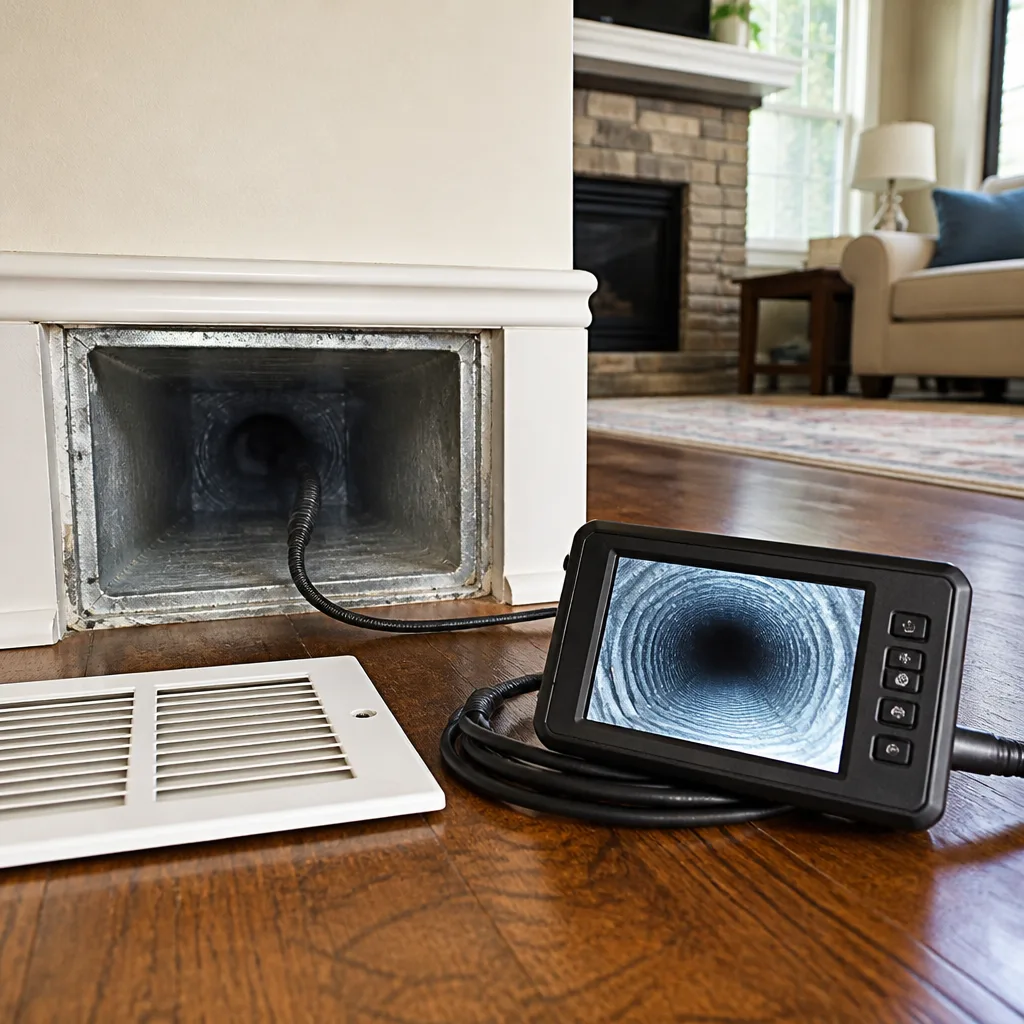 Camera inspection
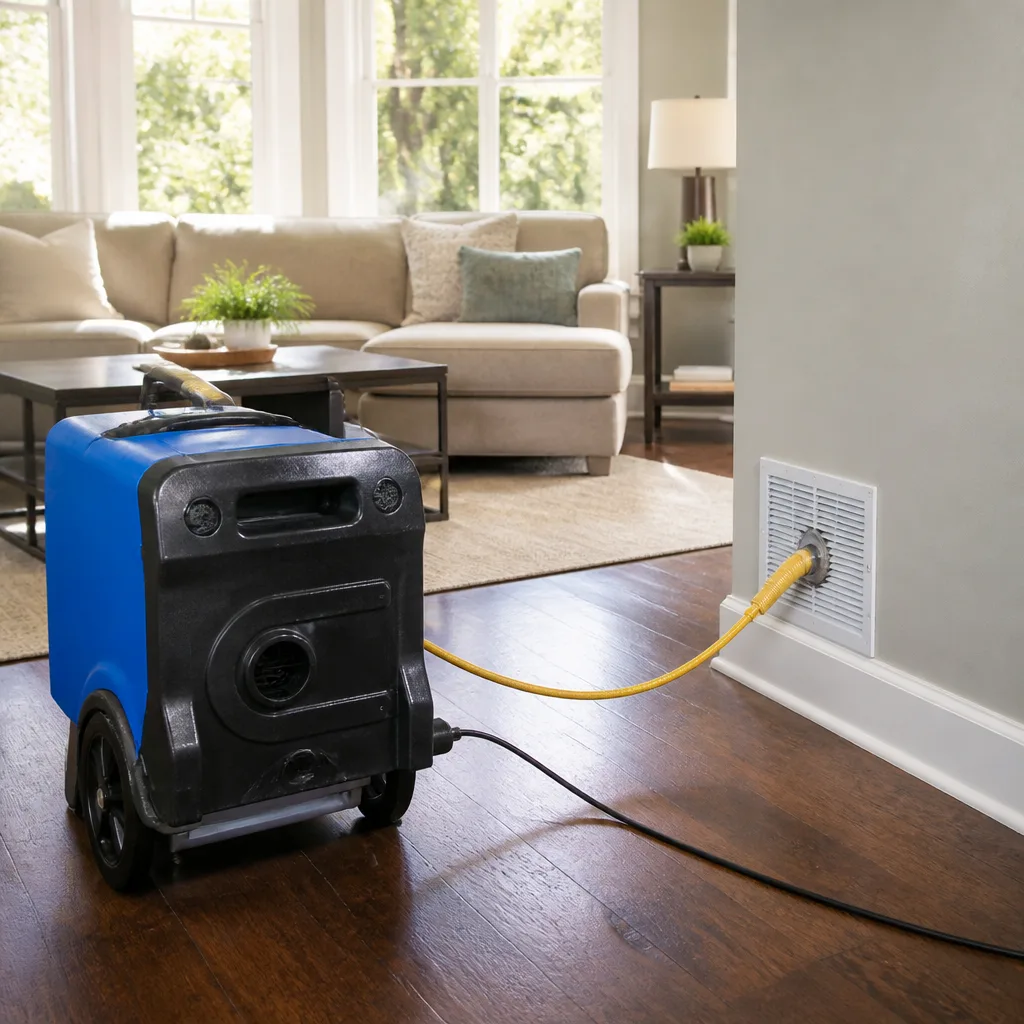 Sanitizing & deodorizing
Whole-system duct and dryer vent check with before-and-after photos - you see exactly what came out of your vents
That "$99 whole-house special" is a bait ad - the real number appears once they are in your hallway, or the "clean" is a shop-vac at the register. We photograph the inside of your ducts before and after instead.
DIY vs Professional Air Duct Cleaning: The West Seattle Homeowner’s Decision Guide
A consumer duct cleaning kit can clean what you can reach from a register opening. The contamination that affects your air quality almost never lives within arm’s reach of a register opening. That gap, between the six inches you can see and the forty feet of ductwork you can’t, is where this entire debate lives. It isn’t about effort. It isn’t really about money either. It’s about whether a shop vac and a brush on a flexible rod can achieve source removal inside a sealed forced-air system. We’re going to walk through that physics question, then talk honestly about what a homeowner in West Seattle can do between professional cleanings and when DIY stops making sense.
Quick Answer
Professional air duct cleaning is worth it when contamination has actually accumulated in the system – visible debris at the registers, musty odors when the furnace kicks on, recent renovation dust, or a new home with unknown history. DIY cleaning kit work can’t achieve source removal because it only addresses what’s within reach of each opening, leaving the bulk of the contamination in place. In West Seattle specifically, older ductwork, tighter crawlspace assemblies, and insulation-era construction raise the stakes on doing it right the first time. Our technicians have up to 8 years of experience, and the local work we see most often has less to do with dirt volume than with duct integrity.
Styles & brands we work with
- Whole-home duct cleaning
- Dryer vent cleaning
- Camera inspection
- Sanitizing & deodorizing
Table of Contents
- The Physics That Settle the Debate
- What a DIY Kit Can Actually Reach
- West Seattle-Specific Risks in Older Homes
- What Professional Equipment Does That a Shop Vac Can’t
- Cost Comparison Done Honestly
- What You Can Legitimately Do Between Cleanings
- How to Verify the Work Actually Worked
- When DIY Makes Sense and When It Doesn’t
The Physics That Settle the Debate
Source removal in a forced-air system requires the entire ductwork to be under negative pressure simultaneously. Not the section being brushed. Not the return trunk. The whole envelope, from intake to output, sealed and evacuated at once. That’s the physics.
Here’s why it matters. When a technician introduces mechanical agitation – a rotary brush, a compressed-air whip, a pneumatic snake – into one section of duct while the rest of the system is open to the surrounding air, pressure differentials push loosened particulate into the adjacent runs. Some of it goes out the register. Some of it goes into the furnace plenum. Some of it settles back into the segment that was just brushed. The system works against the cleaning.
Negative-pressure containment flips that. Every branch of the ductwork is under vacuum while agitation is happening, so loosened particulate moves toward the collection point rather than away from it. That’s what a Nikro HEPA-filtered vacuum does when it’s connected properly and the system has been sealed. It’s also why every part of the job – supply runs, return runs, the furnace cabinet, the coil, the plenum – has to be part of the same pressure envelope. Cleaning one side of the system at a time accomplishes very little of what a homeowner is paying for.
A shop vac connected to one register performs neither of these functions. It creates localized suction at one opening while the rest of the system stays at ambient pressure, meaning loosened contaminants spread through the ductwork instead of leaving it. The system can absolutely be made cleaner at the register boot. The rest of the ductwork stays roughly where it was.
What a DIY Kit Can Actually Reach
Consumer duct cleaning kits typically include a flexible rod, a small round brush, and a shop vac adapter. Depending on the kit and the duct geometry, that assembly can reach somewhere between six and eight feet into a straight run from a register opening. That’s a real number to keep in mind.
What that means in practice depends on the system. A single-story home with short branch runs to floor registers has ductwork the brush can touch most of the way to the trunk. A two-story Craftsman in West Seattle with drop runs to a basement furnace, longer trunk lines, and elbows every few feet has ductwork where the brush reaches less than a quarter of the total pathway.
So what does the DIY approach actually accomplish?
- It lifts loose dust from the first few feet of a branch run.
- It removes register-boot debris – the visible stuff that prompted the cleaning in the first place.
- It gives a homeowner direct visual confirmation that some dirt is coming out.
- It does not address the trunk line, the coil, the furnace cabinet, the return plenum, or any run beyond the first few elbows.
- It cannot restore or verify duct integrity, which matters more in older homes than dirt volume.
That’s not a dismissal of DIY. It’s an accurate description of the scope. Register-boot cleaning is legitimate maintenance. It just isn’t the same service as a full-system extraction.
West Seattle-Specific Risks in Older Homes
West Seattle has a housing stock that rewards extra caution. The neighborhoods running from the Junction through Gatewood, Genesee, Fauntleroy and up into Arbor Heights include a significant share of homes built before 1980, which means ductwork in a large portion of these houses is either original or has been through one or more partial replacements.
Three risks come up repeatedly in these homes.
Damaged lining on older ductwork. Duct liner has a shelf life. Decades-old liner in West Seattle homes can delaminate, flake and shed, especially in systems that have run hot for years. A rotary brush applied aggressively to failing liner makes the problem worse – it breaks more of it loose and sends it downstream. Professional crews adjust technique when they meet compromised liner. A homeowner with a brush kit has no way of knowing it’s happening until debris starts appearing at the registers.
Flex duct prone to collapse. Flex duct is common in West Seattle retrofits and additions. It’s also easy to crush. Any contact with the outer jacket that compresses the inner spiral reduces airflow permanently, and once flex duct is kinked, it doesn’t spring back. Brush kits don’t have the sensitivity or the visual feedback to work inside flex without risking that damage.
Insulation-era construction. Homes built before roughly 1980 may have duct wrap, plenum insulation or duct-board material from an era when asbestos was in common use. Disturbing that material without knowing what it is creates a real exposure problem. This is one of the strongest arguments against DIY duct cleaning in older West Seattle homes – not because the dirt is worse, but because the material around the duct may require handling precautions a homeowner isn’t set up for.
None of that is meant to alarm. It’s the local context that should shape the decision. A 1990s build in Arbor Heights and a 1950s bungalow in Gatewood are not the same job.
What Professional Equipment Does That a Shop Vac Can’t
Professional duct cleaning isn’t a shop vac and a hose. It’s a system of equipment working together, and the difference is easier to understand when you know what each piece does.
Rotobrush rotary brush extraction. The Rotobrush system combines mechanical agitation with continuous extraction in a single pass, so loosened material is captured as it’s dislodged rather than after. The rotary action reaches into the sides of the duct rather than just pushing along the bottom. Because it’s designed for residential ductwork, brush heads are sized for the duct and don’t apply the same pressure a consumer kit does to thin flex or aged liner.
Nikro HEPA-filtered vacuum equipment. This is the negative-pressure side of the equation. HEPA filtration contains the particulate being evacuated, which matters for both the homeowner’s indoor air during the job and for the technician. Standard shop vacs use coarse filters and exhaust fine particulate back into the room they’re cleaning.
Abatement Technologies equipment. For homes with elevated contamination – heavy renovation dust, water intrusion history, pest activity in the ductwork – higher-grade containment is needed to control particulate before and during extraction. This is equipment you don’t see in a typical residential duct cleaning, and it’s the reason we’re equipped to handle jobs that go beyond routine maintenance.
Honeywell and Aprilaire air quality hardware. Once the ductwork is clean, the next question is what’s going into it. Media filters, electronic air cleaners and humidification components from Honeywell and Aprilaire integrate with the existing HVAC system so the cleaning isn’t a one-time event that starts degrading immediately. Cleaner air starts with the right tools, and the tools matter most after the job.
Full-system scope matters here too. A proper job covers supply and return ducts, the HVAC unit itself, the coil, and the furnace cabinet, plus dryer vent cleaning as a separate but related fire-safety check. We also handle duct repair and sealing in-house, because after a thorough cleaning, breaches and leaks become visible – and leaving them unaddressed means the freshly cleaned system pulls unconditioned air from the crawlspace or attic. We seal what we find.
Cost Comparison Done Honestly
The honest cost comparison isn’t DIY kit versus professional service. It’s what the DIY route actually delivers versus what it costs, and what professional service delivers versus what it costs. Those two columns don’t line up because the services aren’t equivalent.
A consumer duct cleaning kit typically runs modest money – under a hundred dollars for a basic rod-and-brush assembly, a bit more for a kit with a shop vac adapter. A shop vac rental or purchase is typically a separate cost. Add those together and you’re still spending far less than a professional cleaning.
What that money buys is limited. It buys register-boot cleaning and a few feet of straight-run brushing. If that’s what a home actually needs, it’s a reasonable value. If a home has systematic contamination – visible dust plumes when the furnace starts, musty odor, a recent renovation, an unknown history in a newly purchased house – that money addresses a small fraction of the issue and the underlying problem persists.
Professional air duct cleaning is priced per job by written estimate. It isn’t priced by the vent, by the hour or by the linear foot, and that’s the first thing to verify when you’re getting quotes. Per-vent pricing is where the bait-and-switch reputation in this industry comes from: a low advertised number that expands once the technician is on site. One flat price per system, agreed before work starts, is the only structure that protects you.
The DIY route makes sense when:
- The home has had a professional cleaning recently and you want to keep register boots tidier between visits.
- You’re managing filters and want to stay ahead of dust.
- The ductwork is modern, accessible, and in verifiably good condition.
It doesn’t make sense when:
- There’s visible or suspected contamination in the trunk or furnace cabinet.
- The home predates 1980 and duct materials are unknown.
- Flex duct is present and you can’t see what you’re contacting.
- You’re about to install air quality hardware and need clean ductwork behind it.
For a full picture of what the professional scope looks like, see the air duct cleaning service and what’s covered in HVAC cleaning.
What You Can Legitimately Do Between Cleanings
The best DIY contribution to indoor air quality isn’t duct cleaning. It’s three things you can do at home without touching the ductwork in any meaningful way, and all three matter.
- Clean the register boots and grilles. Dust accumulates on the register face and the boot flange. Wipe those down with a damp cloth. If you can vacuum the boot opening with a shop vac hose, do that. This is maintenance, not remediation – it keeps the visible layer in check.
- Inspect the dryer vent every season. This is genuinely a homeowner task and genuinely worth doing. Check behind the dryer for lint accumulation at the transition, confirm the outside damper opens freely, and look for sagging flex behind the appliance. Lint clogs are a real fire risk, and they don’t announce themselves. If the run is long, or if it’s been years since it was cleaned, that’s a job for proper extraction equipment rather than a hand-vacuum.
- Manage the filter schedule. This is the single highest-impact thing a homeowner controls. A clogged filter reduces airflow, strains the blower, and lets more dust reach the coil. Check monthly in peak heating and cooling seasons and replace on the schedule the system calls for – not on the calendar you used last year in a different house.
What’s outside the DIY lane: reaching into the trunk, working around the furnace cabinet, and contacting flex duct. Those are the parts of the system where improper contact causes damage, and the damage is often invisible until airflow drops.
How to Verify the Work Actually Worked
Duct cleaning has a history of sellers who show up, run a shop vac over the register faces, and leave. Homeowners have good reason to be skeptical, and the verification question is fair. Here’s what to check.
- Before-and-after photos of your own ductwork. Not stock images. Not photos of somebody else’s job. Photographs taken through the register openings of your system, before extraction and after. Ask for them before the job is done, and expect them.
- Negative pressure test before cleaning starts. The technician should confirm the system is sealed and under vacuum before agitation begins. If they start brushing with the system open, ask why.
- Visible register boots after the job. Look inside a few boots with a flashlight. The sides should be visibly clean down to the trunk connection, not just the face.
- Furnace cabinet and coil inspection. Ask to see the inside of the furnace cabinet and the coil after cleaning. If they were skipped, the job was partial.
- Debris documentation. A professional job collects a substantial volume of debris. Ask what was extracted.
- Written record. A written scope with the flat price agreed before work starts, plus a note of anything found during the job – damaged liner, gaps at seams, breaches that need sealing.
If a DIY attempt has already happened, run the same checklist on the result. Registers that stay clean for a week, then load up again, usually mean the source was never addressed. That’s not a failure of effort. It’s a failure of reach and containment.
When DIY Makes Sense and When It Doesn’t
To decide, ask three questions about the home rather than about the budget.
First: what’s the contamination source? If register-boot dust is the only visible issue and it clears with routine maintenance, DIY is fine. If the home has had renovation work, water intrusion, pest activity, or a long interval with no cleaning, the source is deeper than a register boot.
Second: what’s the ductwork made of? In West Seattle homes of a certain vintage, that answer may not be knowable without inspection. Aged liner, flex duct and insulation-era material all change the risk calculation. A DIY brush kit is a blunt tool for ductwork that requires care.
Third: what’s downstream of the cleaning? If air quality hardware is going in – a Honeywell media filter, an Aprilaire humidifier or air cleaner – the ductwork behind it should be clean and sealed first. Otherwise the equipment is filtering air that’s being recontaminated upstream.
If the answers point toward professional service, the Air Duct Cleaning West Seattle overview describes the full scope, and our duct cleaning team handles every part of the air pathway from intake to output rather than one segment at a time.
Common Mistakes to Avoid
- Buying a kit and assuming the whole system is clean. A brush kit cleans a fraction of the pathway and never touches the trunk line, coil or furnace cabinet. If the reason you’re cleaning is contamination, the kit addresses a corner of the problem.
- Using shop vac suction while the system is open. Running vacuum at one register with the rest of the system at ambient pressure spreads loosened particulate through the ductwork rather than removing it. That’s the opposite of what the cleaning is for.
- Aggressively brushing old liner. In West Seattle homes with decades-old liner, a stiff brush breaks more material loose and sends it downstream. Damaged liner needs to be identified before cleaning, not discovered during it.
- Working blindly inside flex duct. Any contact that compresses the spiral reduces airflow permanently, and the damage is invisible from outside. Flex duct runs in West Seattle retrofits and additions are common enough that this comes up regularly.
- Disturbing pre-1980 insulation materials without knowing what they are. Duct wrap and plenum insulation from that era can contain asbestos. This is a handling question, not a dust question, and it belongs to someone who can assess it.
- Hiring a per-vent quote and expecting it to hold. Per-vent pricing is where the low coupon becomes a much larger invoice once the technician is on site. Ask for one flat price per system, agreed in writing before work starts.
- Taking a stock photo as proof of work. The before-and-after photos should be of your own ducts. If they aren’t, the verification standard hasn’t been met.
See the difference
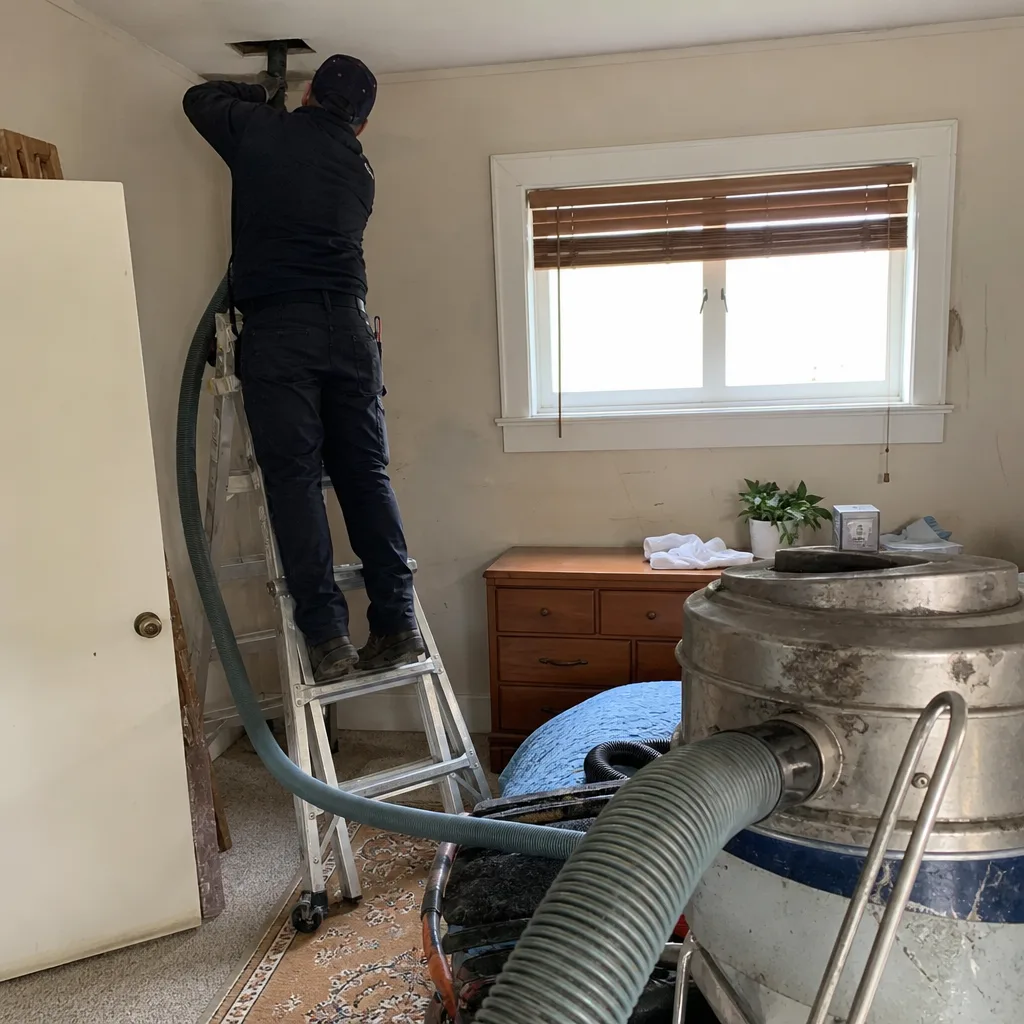 Before
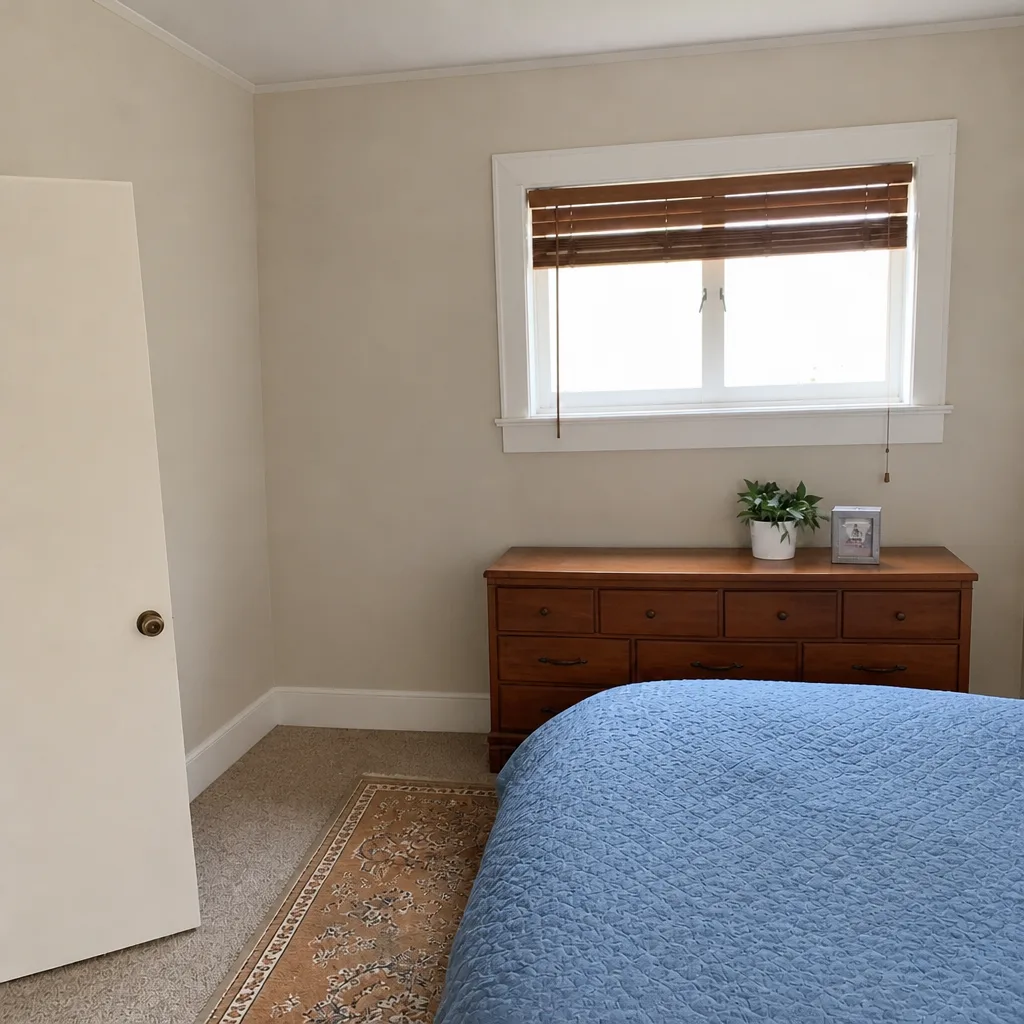 After
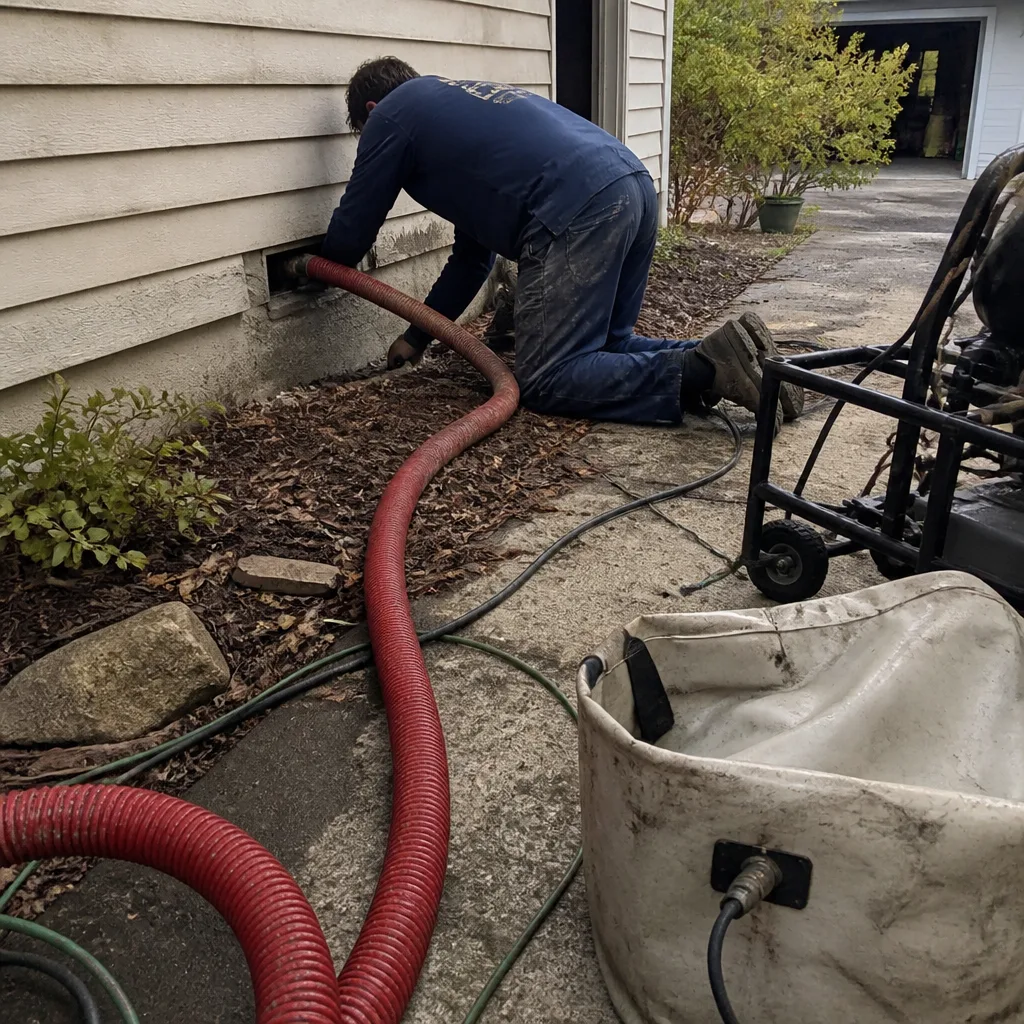 Before
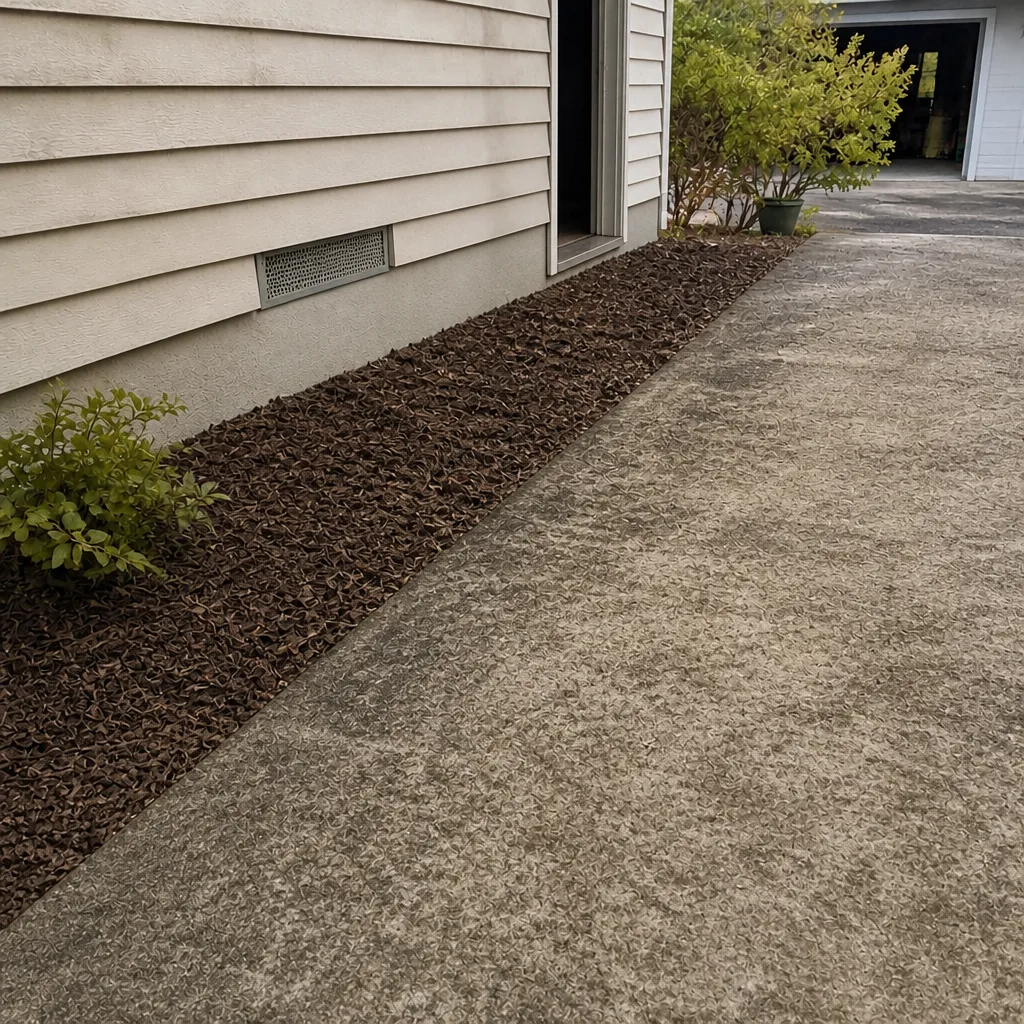 After
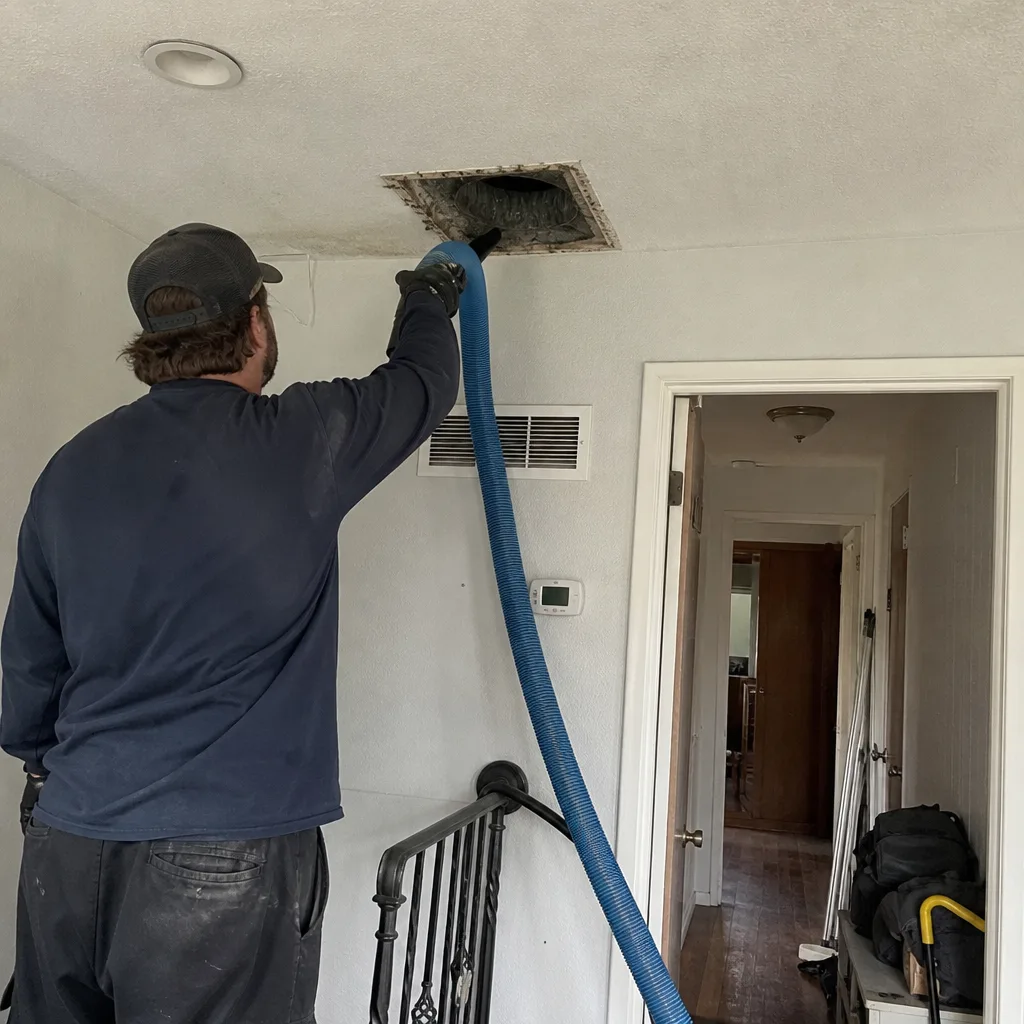 Before
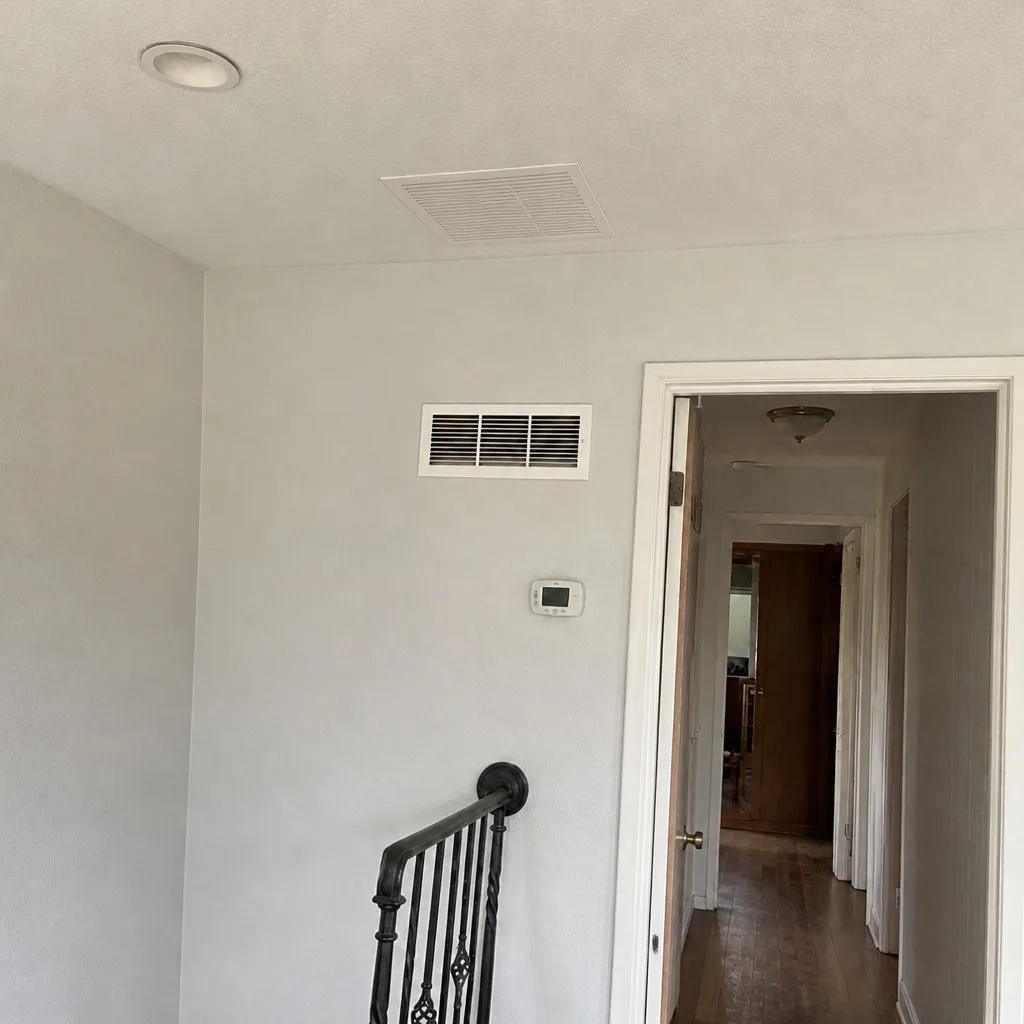 After
When to Call a Professional
Call a professional when the reason for cleaning points to contamination rather than routine maintenance: visible dust plumes at the registers when the system starts, a musty or stale odor on startup, recent renovation or water intrusion, a home purchase with unknown HVAC history, or a pre-1980 house where duct materials haven’t been inspected. Call also if you noticed a previous cleaning didn’t hold – registers that clean up and then load up again within days usually mean the source was never reached. In West Seattle, we see a lot of both situations, and neither is solved by another DIY pass.
Air Duct Cleaning West Seattle offers free estimates in West Seattle. Call (877) 492-4032. Our technicians have up to 8 years of experience, the local pro is licensed and insured as their state requires, and you get one flat price per system agreed before work starts, plus before-and-after photos of your own ducts.
Frequently Asked Questions
Professional air duct cleaning in West Seattle is priced per job by written estimate, not per vent or per hour. The written estimate sets the final price, and it should be agreed before any work starts. Call (877) 492-4032 for an exact quote – estimates are free.
A DIY kit cleans what it can reach from a register opening, which is typically the first few feet of a straight run and the register boot itself. It cannot create negative pressure across the whole system, so it doesn’t achieve source removal in the trunk line, the return, the furnace cabinet or the coil. It’s legitimate register maintenance, not full-system cleaning.
Some quotes are cheaper because the scope is smaller than it looks: register faces only, no negative-pressure containment, no coil or furnace cabinet work. Others are low advertised prices tied to per-vent pricing that expands once the technician is on site. Ask what equipment is used, what parts of the system are covered, and whether the price is flat per system or per vent.
Ask for before-and-after photos of your own ductwork, not stock images, and ask to see inside the furnace cabinet and at a few register boots after the job. The technician should be able to confirm the system is sealed and under negative pressure before agitation starts. Call (877) 492-4032 – estimates are free.
Routine intervals depend on conditions in the home rather than a fixed schedule. Homes with pets, recent renovations, allergy concerns or a long interval with no cleaning benefit from more frequent service. Homes with modern ductwork in good condition often go much longer. Register maintenance and filter management can stretch the interval between professional cleanings. Call (877) 492-4032 – estimates are free.
Not always. Homes built before roughly 1980 may have duct wrap or plenum insulation from an era when asbestos was in common use, and aged duct liner can shed when a stiff brush is applied. In those situations the safety question is about materials, not dirt, and it makes sense to have the ductwork assessed before anyone agitates it.
The Bottom Line
The DIY versus professional question for air duct cleaning comes down to physics, not effort. Source removal requires the full system under negative pressure while agitation happens, and a brush kit that reaches six feet into one branch can’t produce that condition. Register maintenance, filter discipline and regular dryer vent checks are genuinely useful things a homeowner can do, and they stretch the interval between professional cleanings. They don’t replace one. In West Seattle’s older housing stock, duct materials and duct integrity often matter more than dust volume. One flat price per system, before-and-after photos, and equipment rated for the job: those are the standards to hold any duct cleaning service to. Call (877) 492-4032 for a free estimate. We answer 24/7. Fast dispatch from 7am to 7pm, Sunday through Friday.
Written by the team at Air Duct Cleaning West Seattle.