
Last updated November 22, 2026
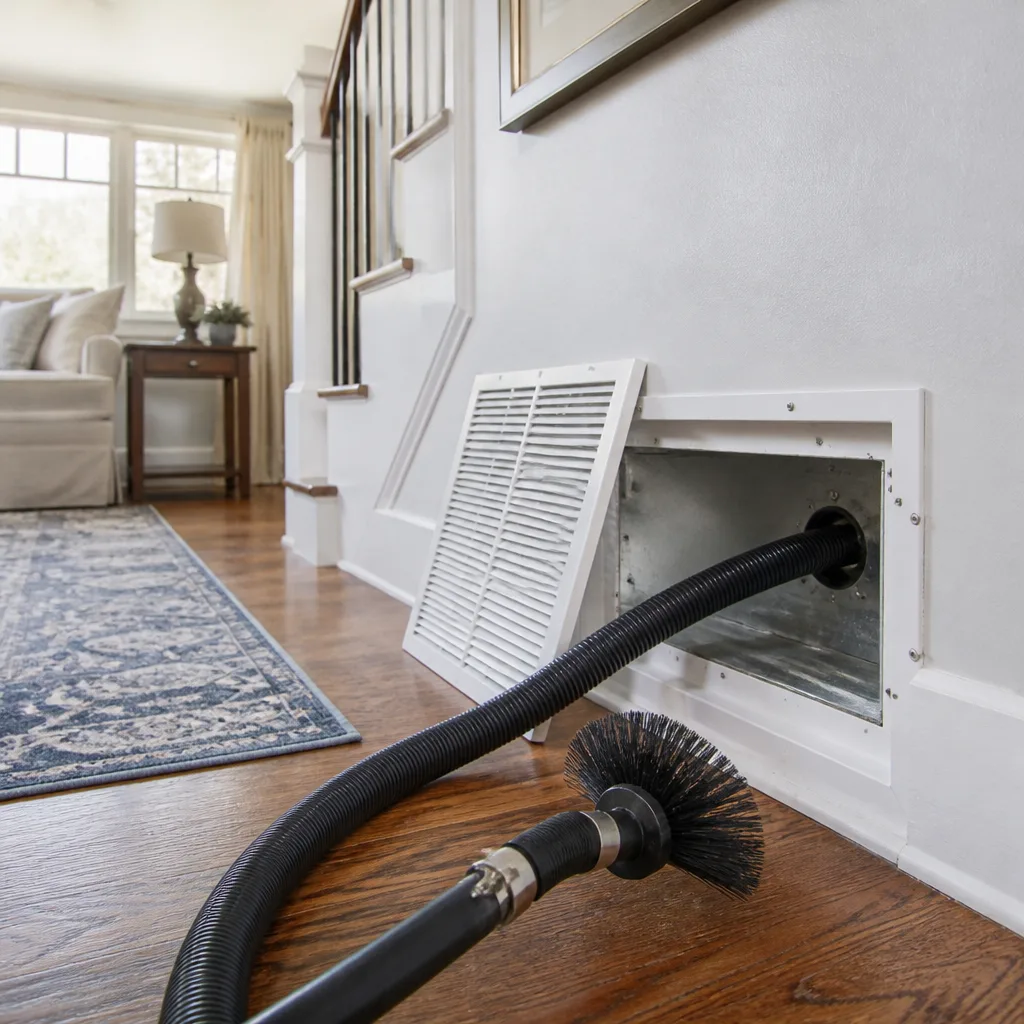 Whole-home duct cleaning
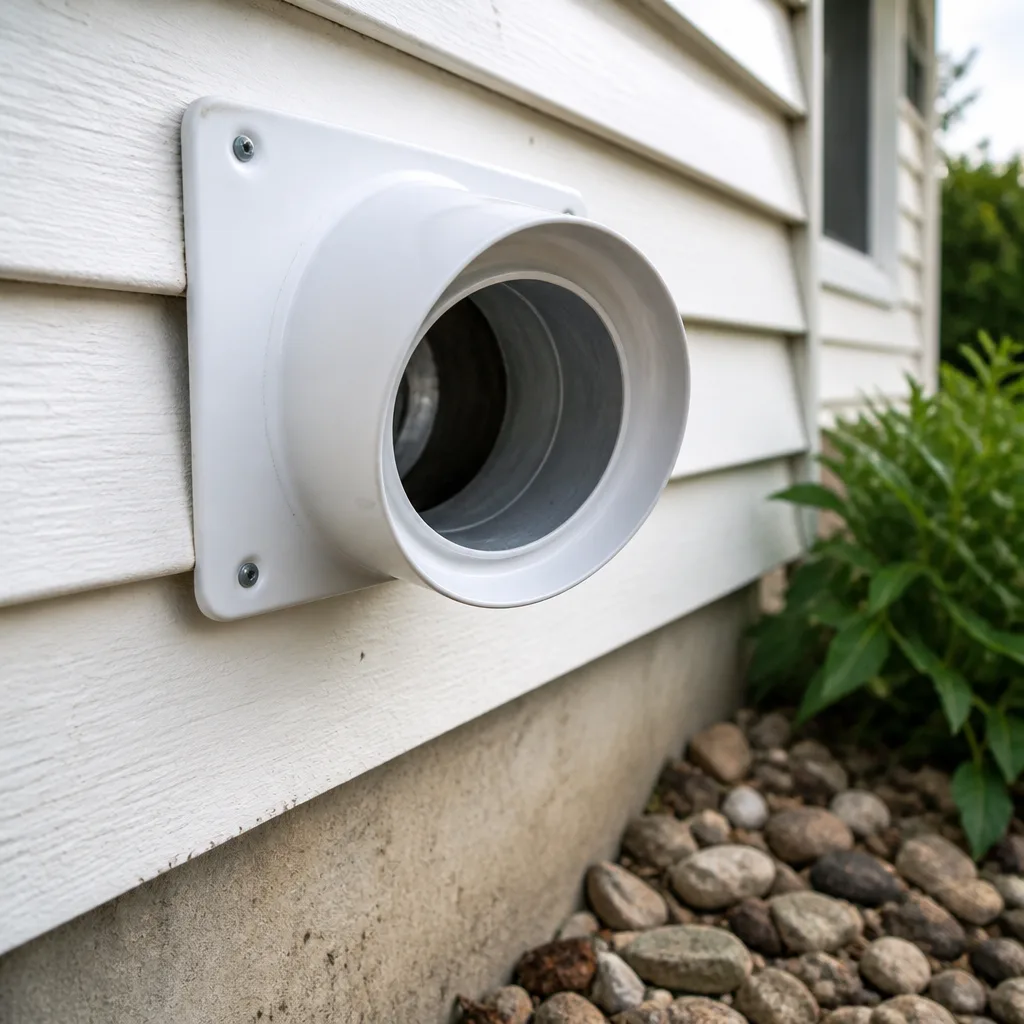 Dryer vent cleaning
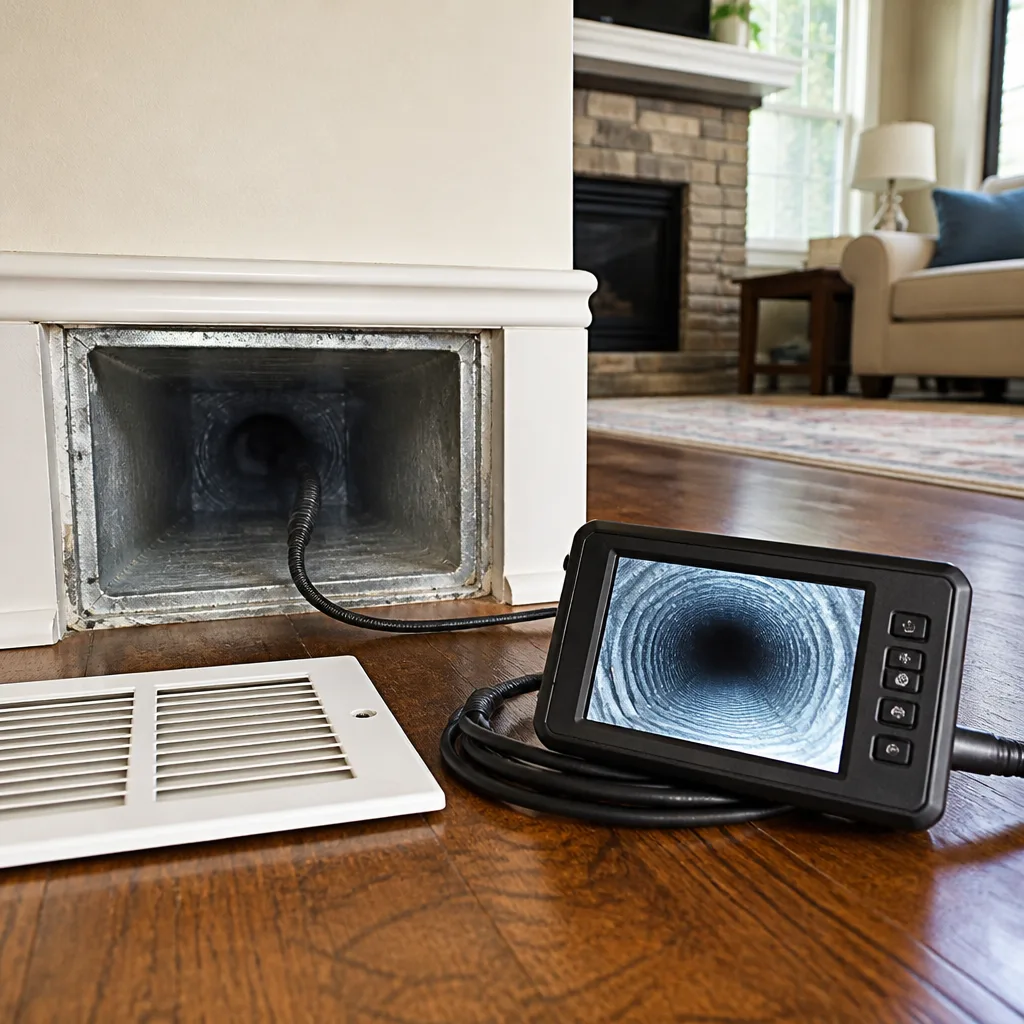 Camera inspection
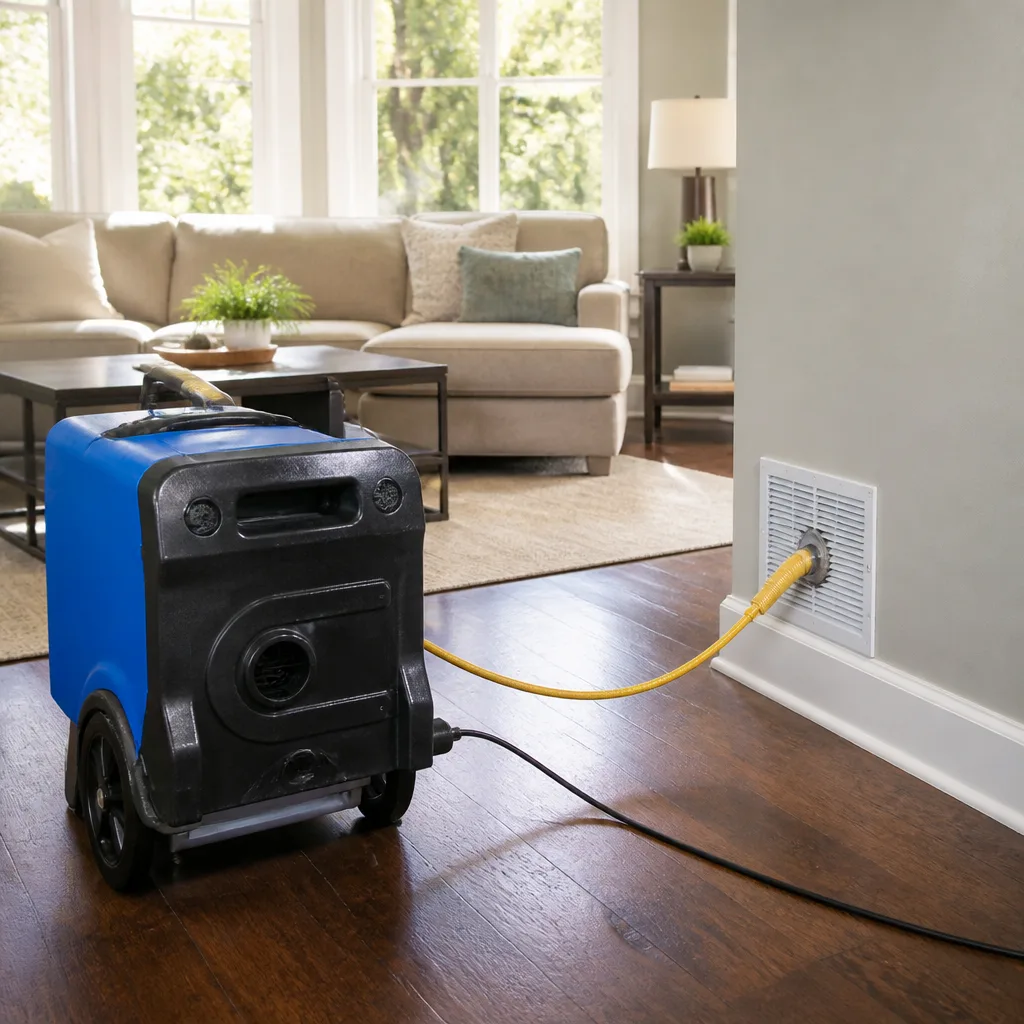 Sanitizing & deodorizing
Whole-system duct and dryer vent check with before-and-after photos - you see exactly what came out of your vents
That "$99 whole-house special" is a bait ad - the real number appears once they are in your hallway, or the "clean" is a shop-vac at the register. We photograph the inside of your ducts before and after instead.
Air Duct Cleaning Emergency Preparedness Guide for West Seattle Homes
Most homeowners think their ducts are protected by the filter. They aren’t. During the 2020 wildfire smoke events, air quality inside many West Seattle homes with forced-air systems measured worse than the air outside. Not because the filters failed, but because fine particulates had already infiltrated the duct system before any MERV rating could do its job. Once contamination is inside the air pathway, running the system spreads it through every room. This guide covers what to do after a smoke event, a flood, or an earthquake, how to shut the system down safely, and how to document duct condition for insurance. It’s written for West Seattle homes specifically.
Quick Answer
When an emergency contaminates the air in a West Seattle home, the first step is to shut the forced-air system off entirely. Don’t run it to “clear things out” – that pulls smoke, moisture, or debris deeper into the ductwork. The second step is a professional inspection of the full air pathway before restarting, because standard cleaning isn’t the same as post-event assessment. Third, document everything with photos and written notes for your insurer. Post-event duct work is inspection, contamination control, and repair – not a routine cleaning.
Styles & brands we work with
- Whole-home duct cleaning
- Dryer vent cleaning
- Camera inspection
- Sanitizing & deodorizing
Table of Contents
- Post-Wildfire Smoke Protocol: Run It or Shut It Down?
- What a Post-Event Duct Inspection Should Cover
- Flood and Moisture Intrusion: The Biological Timeline
- Earthquake Damage: A Duct System Checklist
- HVAC Shutdown Procedures for Each Emergency Type
- Documenting Duct Condition for Insurance
- Why Equipment Matters After a Contamination Event
- Building a Pre-Event Baseline
Post-Wildfire Smoke Protocol: Run It or Shut It Down?
Shut it down. When wildfire smoke blankets West Seattle, the instinct is to seal the windows and crank the fan to keep air moving. That instinct is backwards. Fine particulate matter in smoke is small enough to stay suspended in the air stream – and once it’s in your return ducts, every cycle pushes it back into the living space. A filter catches some of it on the way through. It doesn’t remove what’s already settled in the duct walls, the plenum, the coil, or the boots behind your registers.
So the protocol during a smoke event is straightforward. Close the windows. Turn the thermostat to fan-off. Run a portable air purifier with a HEPA filter in the room where you spend the most time if you have one. If you must run the system for temperature control, run the fan on low, and recognize you’re trading indoor air quality for comfort. That’s a decision to make consciously, not by default.
After the smoke clears, the question is whether a routine cleaning handles it or something more is needed. In our experience, smoke events leave a residue pattern that’s different from ordinary dust. It coats the return side more heavily than the supply side, and it collects in cooler sections of duct where the air stream slows down. A post-event assessment should specifically look at:
- Return duct interiors, especially the main trunk
- The evaporator coil and drain pan area, where smoke particles combine with condensation
- Duct boots and register faces, which trap residue at the transition
- Any flexible duct runs, where the corrugated interior surface catches particulate
- The air handler cabinet itself, not just the ducts feeding it
What this means for West Seattle homes is that a standard 30-minute visit that wipes the registers and vacuums the main returns is not sufficient after a major smoke event. The work needs to address the full air pathway – not because of a sale, but because the contamination is physically located in more places than the quick-visit version touches.
What a Post-Event Duct Inspection Should Cover
Post-event inspection is a different service than standard cleaning. Standard cleaning assumes the system is intact and just dirty. Post-event inspection assumes something changed – and the job is to find out what. For West Seattle homeowners filing insurance claims after a smoke event, storm, or earthquake, the inspection report is the documentation.
A proper post-event inspection walks through the system in order, from intake to output:
- Exterior inspection. Look for cracked or displaced duct board, separated flex duct at the collar connections, crushed runs in the crawlspace or attic, and any obvious water staining.
- Air handler cabinet. Check the blower wheel, filter slot, coil face, and drain pan. A compromised blower or dirty coil changes how contamination spreads – even after the ducts themselves are cleaned.
- Return trunk and branches. Camera inspection of the main return and each branch run, looking for debris accumulation, moisture, and microbial staining.
- Supply trunk and branches. Same camera pass on the supply side, plus a check for disconnected runs at the register boots. Disconnected supply ducts push conditioned air into the crawlspace instead of the room.
- Register and boot transitions. These are the most common points of leakage and the most common spots where smoke residue concentrates.
- Dryer vent. A separate but related pathway. After a storm event or a smoke event, the dryer vent is often overlooked, but it’s part of the home’s air movement – and a lint-clogged vent is a fire risk under any condition.
The inspection isn’t a quick look with a flashlight. It’s a documented, camera-assisted walk of the full air pathway, and it’s what separates a real post-event response from a sales call. If the assessment stops at the registers and doesn’t include the crawlspace, attic, and air handler, it isn’t complete.
If you’re already working with us on scheduled maintenance or you’ve booked a visit through our air duct cleaning service, the inspection can be folded into your scheduled appointment. After a qualifying event, though, it warrants its own dedicated visit and its own report.
Flood and Moisture Intrusion: The Biological Timeline
West Seattle gets long stretches of wet weather, and it’s not the rain you can see that damages ducts. It’s the moisture that reaches them slowly – through a crawlspace, past a compromised vapor barrier, through a roof leak that travels along a flex duct run, or from a sump failure under the house. Ductwork is often the first building component to absorb that moisture, and it stays wet longer than the surrounding structure because the air inside a duct is slow-moving.
Once liquid water reaches the inside of a duct, the biological timeline is measured in hours, not weeks. Mold spores are present in virtually all indoor air; the condition they need to colonize is sustained moisture. A wet duct interior reaches that condition quickly, and porous materials – flex duct, duct board, fiberglass liner – hold moisture where it can’t easily dry. Once growth starts, it’s not something a shop vac can fix.
What that means practically for West Seattle homeowners:
- If you see standing water in the crawlspace or around a duct run, shut the HVAC system off immediately. Running a fan across standing water aerosolizes contaminants into the living space.
- Dry the space first, then inspect the ducts. The crawlspace needs to be dried and ventilated before any duct assessment will mean anything.
- Inspect any porous duct material that was wet for more than a few hours. This includes flex duct, duct board, and internally lined sheet metal. Porous material that’s stayed wet usually needs replacement rather than cleaning.
- Watch for musty odor at registers after the space is dry. A persistent smell at one or two registers is a strong indicator that section of ductwork needs closer inspection – and likely repair.
- Look at the drain pan and coil. If water backed up or overflowed from the condensate system, the coil and cabinet are part of the problem even if the ducts look fine.
Moisture events in West Seattle tend to come as slow intrusions during the rainy season rather than sudden floods. That makes the inspection requirement more important, not less – because a slow leak gives the growth more time to establish before anyone notices.
Earthquake Damage: A Duct System Checklist
Ductwork is a surprisingly reliable indicator of structural movement after an earthquake. Sheet metal is rigid; flex duct is not; and the connections between them are the weakest points in the system. In a shaking event, it’s the collars, tape, and hangers that fail first – and a disconnected duct in a crawlspace or attic is invisible from the living room until the utility bill spikes or the room never warms up.
Before you run the system after a significant earthquake in West Seattle, walk the system end to end. Here’s the checklist we recommend:
- Turn the thermostat to off before you start. Do not test the system by running it. If any duct has separated, running the fan sends crawlspace air, insulation debris, and dust into the living space.
- Walk the attic and crawlspace if it’s safe to access. Look for ducts that have dropped off their hangers, flex duct that’s visibly sagging or detached from a collar, and any supplies that are touching the ground or a joist.
- Check the connection at every register boot. These are the most common failure points in shaking. A supply boot that’s come loose will blow into the wall cavity instead of the room.
- Inspect duct board for cracking. Rigid duct board can develop visible cracks at joints and seams. Any cracking you can see needs professional assessment before the system runs.
- Check the air handler and coil cabinet. Look for the unit shifted off its pad, piping that’s separated from the coil, or a gas line that’s been disturbed. If you smell gas at any point, leave the house and call your utility – that’s not a duct problem.
- Look for evidence of movement around the duct penetrations. Cracks in drywall around a duct collar, separated tape at a boot, or a register that no longer sits flush all point to the same thing: the duct run shifted and the connection needs attention.
- Book a professional inspection before restarting. A duct system that’s passed a visual walk-through still needs camera inspection after a quake. The failures that matter most are the ones you can’t see.
The reason this matters in West Seattle specifically is that this is earthquake country. Every homeowner here has heard the recommendation to secure the water heater and strap the bookcases. Ductwork is rarely on that list, but it’s just as vulnerable – and a disconnected duct after a quake is both an air quality problem and a system efficiency problem that only gets worse the longer it runs.
If the inspection turns up breaches, we handle HVAC cleaning and duct repair and sealing in-house, so you’re not stuck coordinating a second contractor to make the system whole again.
HVAC Shutdown Procedures for Each Emergency Type
Every emergency calls for a shutdown, but the sequence varies slightly. Here’s how to handle each one safely. None of these steps require opening the air handler or working on electrical components – if a step requires getting inside the equipment, that’s a job for a professional.
Wildfire Smoke Event
- Close all windows and exterior doors.
- Set the thermostat to off, then set the fan to off. Don’t use the “circulate” setting – it runs the fan, which is the opposite of what you want.
- Place a portable HEPA purifier in the main living room if you have one.
- Seal obvious air gaps with damp towels or temporary weatherstripping if smoke is entering passively.
- Leave the system off until the outdoor air quality clears, then book an inspection before restarting.
Flood or Moisture Intrusion
- If there is standing water and the HVAC equipment is in contact with it, shut off power to the unit at the breaker.
- Do not run the fan to dry the space. That circulates moisture and contaminants through the building.
- Remove standing water and start structural drying with fans and dehumidifiers (not the HVAC fan).
- Book a duct inspection once the crawlspace or affected area is dry.
- Any duct material that was wet and stays wet for more than a short period should be inspected for replacement, not just cleaning.
Earthquake
- Check for gas odor before doing anything else. If you smell gas, leave and call your utility.
- Set the thermostat and fan to off.
- Visually inspect the duct runs in the attic and crawlspace if it’s safe to access.
- Inspect all register connections and duct board for cracks.
- Book a professional camera inspection before running the system again.
In each case, the principles are the same: don’t run a contaminated or compromised system, don’t try to dry the space with the HVAC fan, and get a professional inspection before restarting. Running the system is the single most common mistake we see after an event.
Documenting Duct Condition for Insurance
Insurance claims for duct damage after a smoke, flood, or earthquake event hinge on documentation. The carrier will ask for more than a receipt. If your claim is denied or delayed, it’s almost always because the documentation was thin – whether that’s the adjuster looking at “duct cleaning” as routine maintenance rather than a covered loss, or disagreement about the extent of damage versus the extent of work.
What to put together after a qualifying event:
- Photos before any cleaning begins. Register faces, duct board in the attic or crawlspace, any visible moisture staining, disconnected flex duct, cracked joints. Date-stamped photos are stronger than undated.
- A written inspection report from a professional. The report should identify the affected components by type and location – return trunk, specific supply runs, air handler, drain pan – and describe the condition found.
- Camera footage of duct interiors. If a professional inspection includes camera footage, keep it. It’s the single most persuasive document in a claim.
- Bills and records of the event. The utility bill spike, the restoration company’s invoice, the plumber’s report – anything that establishes the event and its timeline.
- Your pre-event baseline. This is the one piece of documentation most homeowners don’t have, and it’s the one that makes the strongest case. More on this below.
We can work with your insurer to provide inspection documentation. That doesn’t mean we handle the claim for you – it means the report, photos, and footage are in the format adjusters expect, which saves time and avoids the back-and-forth that delays coverage decisions.
One more note: after any event, get the “before” documentation done before any cleaning starts. Once the system has been cleaned, you’ve lost the ability to establish what the condition actually was. Take photos first, clean second.
Why Equipment Matters After a Contamination Event
A routine cleaning with a shop vac and a hose handles ordinary dust. After a wildfire, flood, or earthquake, the contamination load is different – it includes fine particulates, settled ash, waterborne contamination, and in some cases biological growth – and the equipment needs to match that. That’s the reason we work with contractor-grade extraction systems rather than consumer equipment.
The Rotobrush rotary brush extraction system is our standard tool for duct interiors, and it’s the same platform used in commercial and remediation-grade projects. Nikro HEPA-filtered vacuum equipment handles the containment side; on a smoke or moisture job, what you’re pulling into the machine matters as much as what you’re pulling out of the duct. Abatement Technologies equipment is on hand for elevated contamination scenarios – the situations where particulate control is the entire job. And for indoor air quality additions, we install Honeywell and Aprilaire systems so the fix after a post-event cleaning goes beyond the ducts themselves.
What this means for a West Seattle homeowner is that a post-event assessment is defined by what it can actually accomplish. Three things separate a real post-event scope from a standard cleaning:
- Camera-assisted inspection of the full pathway – so the report can describe what was found, not just what was touched.
- HEPA-filtered extraction – so fine particulates are contained, not pushed around the room.
- Repair and sealing in the same visit – so a duct breach found during the inspection gets addressed before the system is restarted.
That last point matters because it’s where most clean-only providers leave homeowners. A technician who spots a disconnected flex duct halfway through a cleaning has two options: refer the homeowner to a separate contractor and come back later (which means two mobilizations, two bills, and a gap where the system is still compromised), or fix it in the same visit. We do the latter.
For the scheduled side of the work, our dryer vent cleaning and standard duct services follow the same equipment standard. The difference after an event is the inspection depth and the documentation, not the hardware.
Building a Pre-Event Baseline
The best insurance documentation is the one most homeowners never build: a pre-event baseline. It’s a snapshot of your duct system’s condition taken when there’s no active loss on the policy – clean interiors, intact connections, a functioning coil, a clear drain pan. When something happens, that baseline is what establishes the “before” against which the “after” gets measured.
Why this matters:
- It establishes baseline condition. A carrier can’t argue that damage existed before the event if you have a documented photo set showing it didn’t.
- It makes the claim measurable. Post-event photos compared with a baseline from six months earlier are far more persuasive than post-event photos alone.
- It catches small problems before they compound. A partially disconnected flex duct or a partially clogged drain pan discovered during baseline documentation is a small fix. Discovered after a moisture event, it’s a much bigger one.
- It documents the system for future owners. If you sell the home, a documented duct system is a genuine asset in the disclosure package.
In our experience serving West Seattle homes, the baseline visit is also the point where a lot of small problems get caught – a disconnected run in the crawlspace that’s been quietly pushing air outside, a dryer vent with more lint than it should have, a filter that hasn’t been changed in a year. Those are cheap to fix when they’re found early and expensive in the middle of a claim.
If you’d like to see what a baseline assessment covers, our Air Duct Cleaning West Seattle page walks through the full service – and the baseline visit itself is the same appointment as a scheduled cleaning. The documentation travels with your file afterward.
Common Mistakes to Avoid
- Running the HVAC system during a smoke event to “clear the air.” This is the most common mistake we see after wildfire smoke, and it’s the one that puts fine particulates from the walls into the living space. The system should be off during the event.
- Wiping registers and calling the ducts clean. After a major event, register-wiping is cosmetic. The contamination is inside the pathway, not on the visible grille.
- Restarting the system after an earthquake without a camera inspection. A visual walk-through will miss displaced flex duct and cracked duct board that isn’t visible from the access point.
- Drying the crawlspace with the HVAC fan. The fan moves a lot of air, but it also pulls moisture and contaminants through the system and into the living space. Use standalone fans and dehumidifiers to dry the space, then inspect.
- Cleaning before documenting. Once the ducts have been cleaned, the “before” condition is gone. Take photos first, always.
- Skipping the air handler and coil. Ducts are one component. A post-event inspection that stops at the ducts and doesn’t look at the air handler cabinet, coil face, and drain pan isn’t complete.
- Assuming all duct cleaners can handle the post-event scope. Ask specifically whether the visit includes camera documentation, containment equipment, and repair in the same appointment. A shop vac and a hose won’t do it.
See the difference
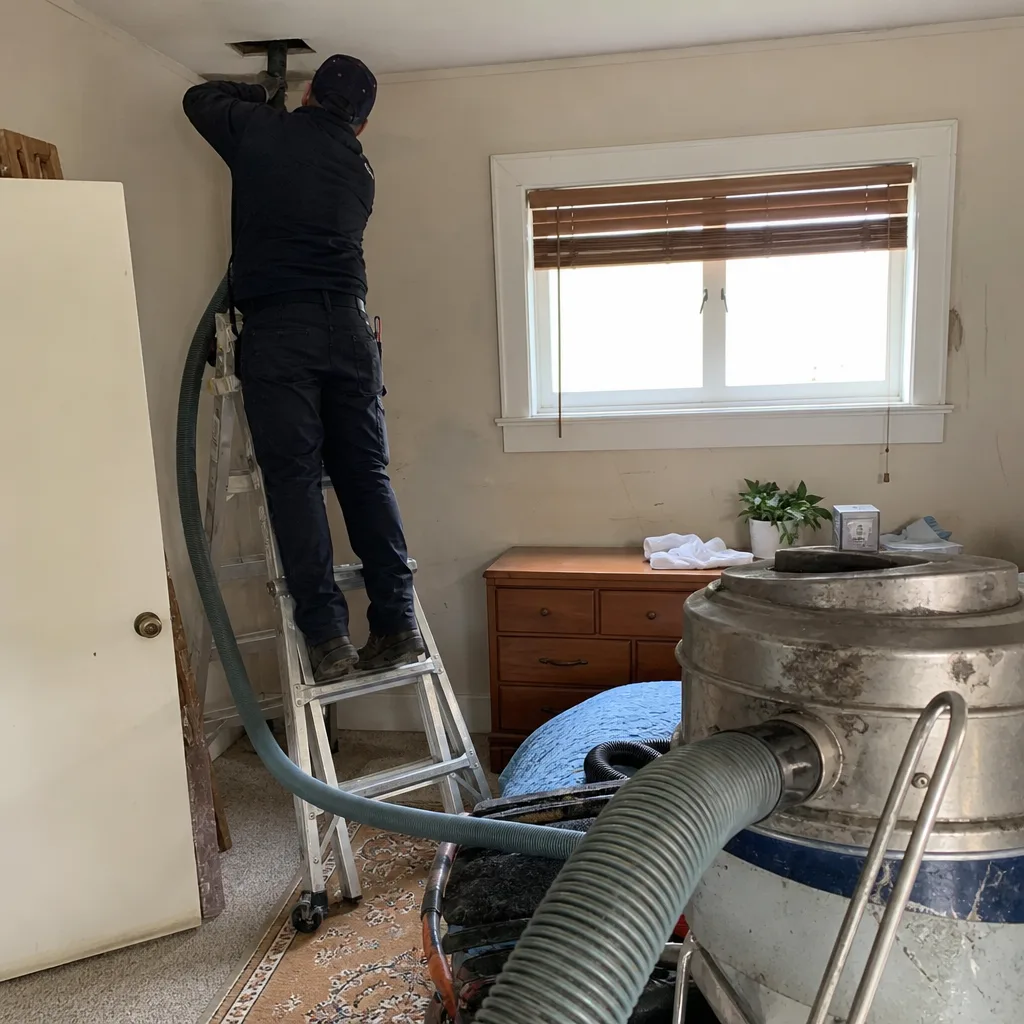 Before
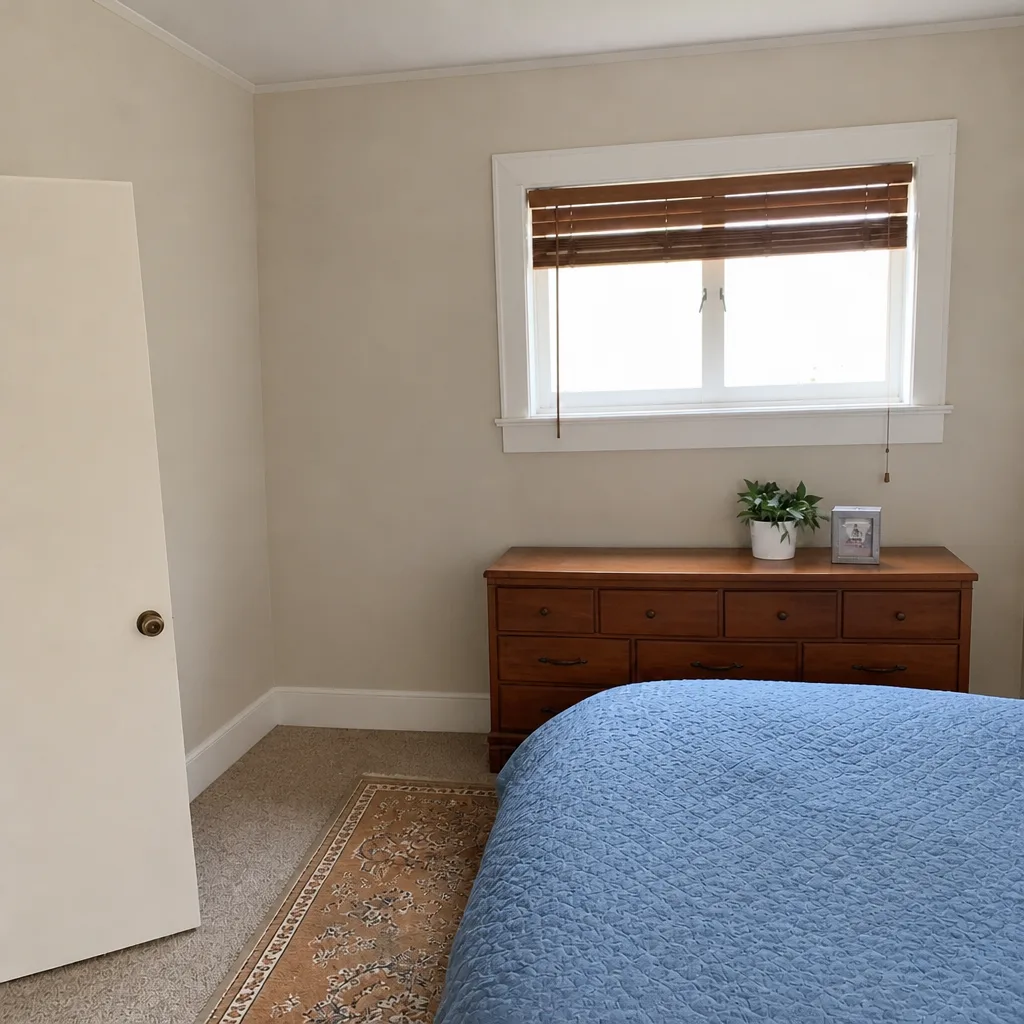 After
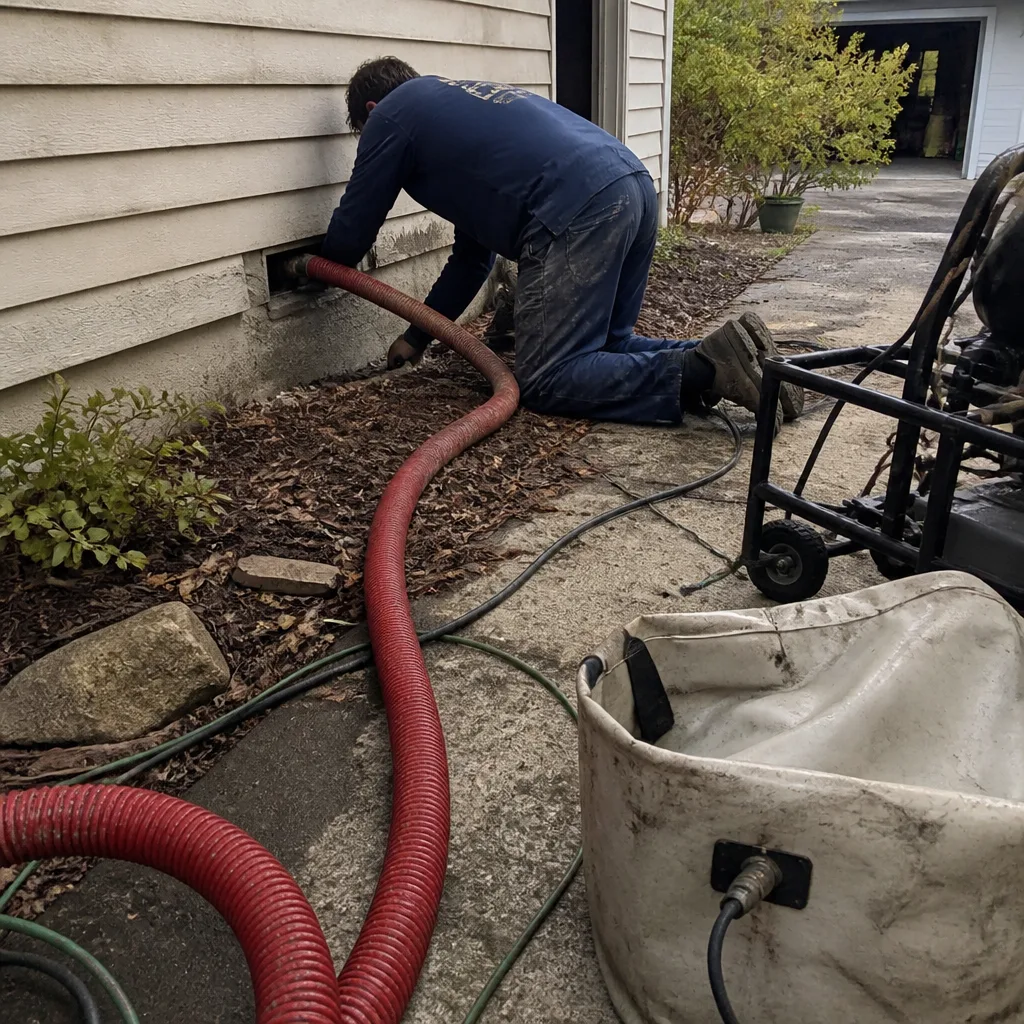 Before
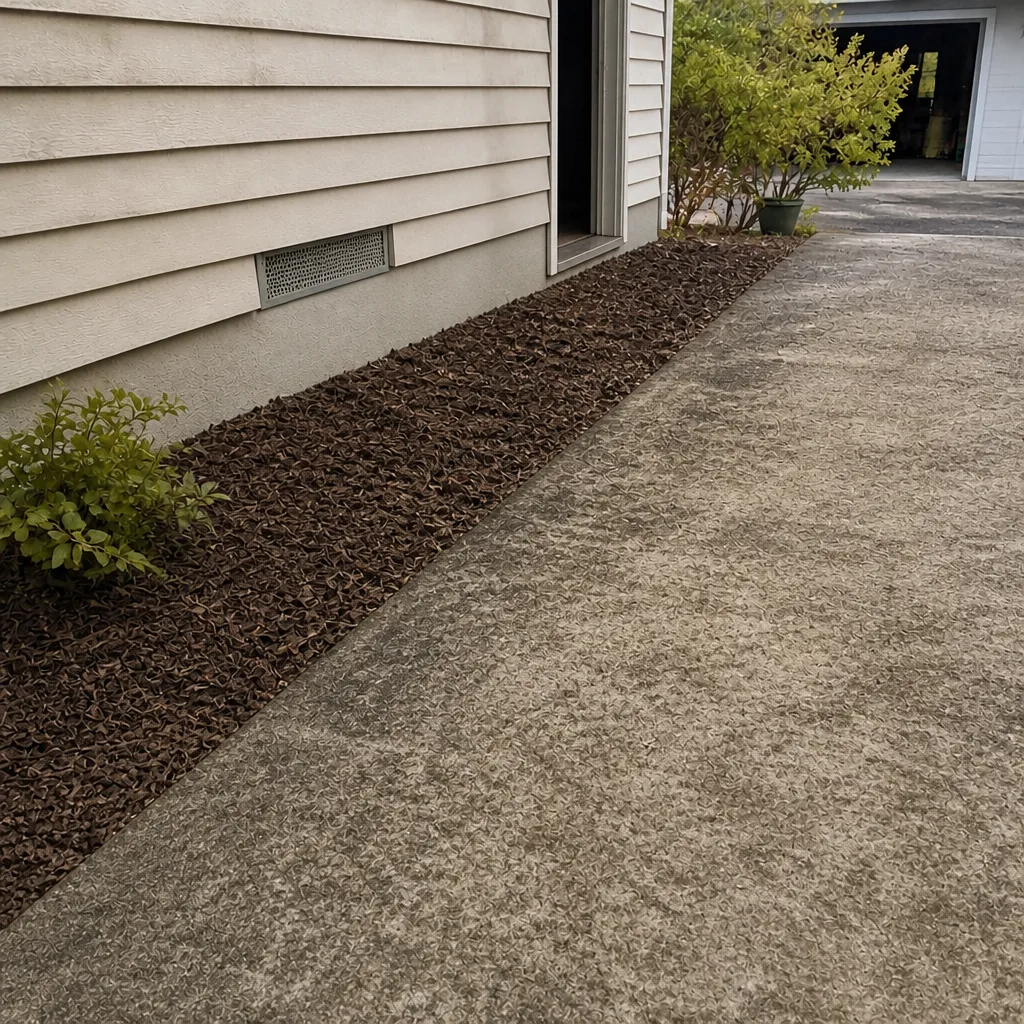 After
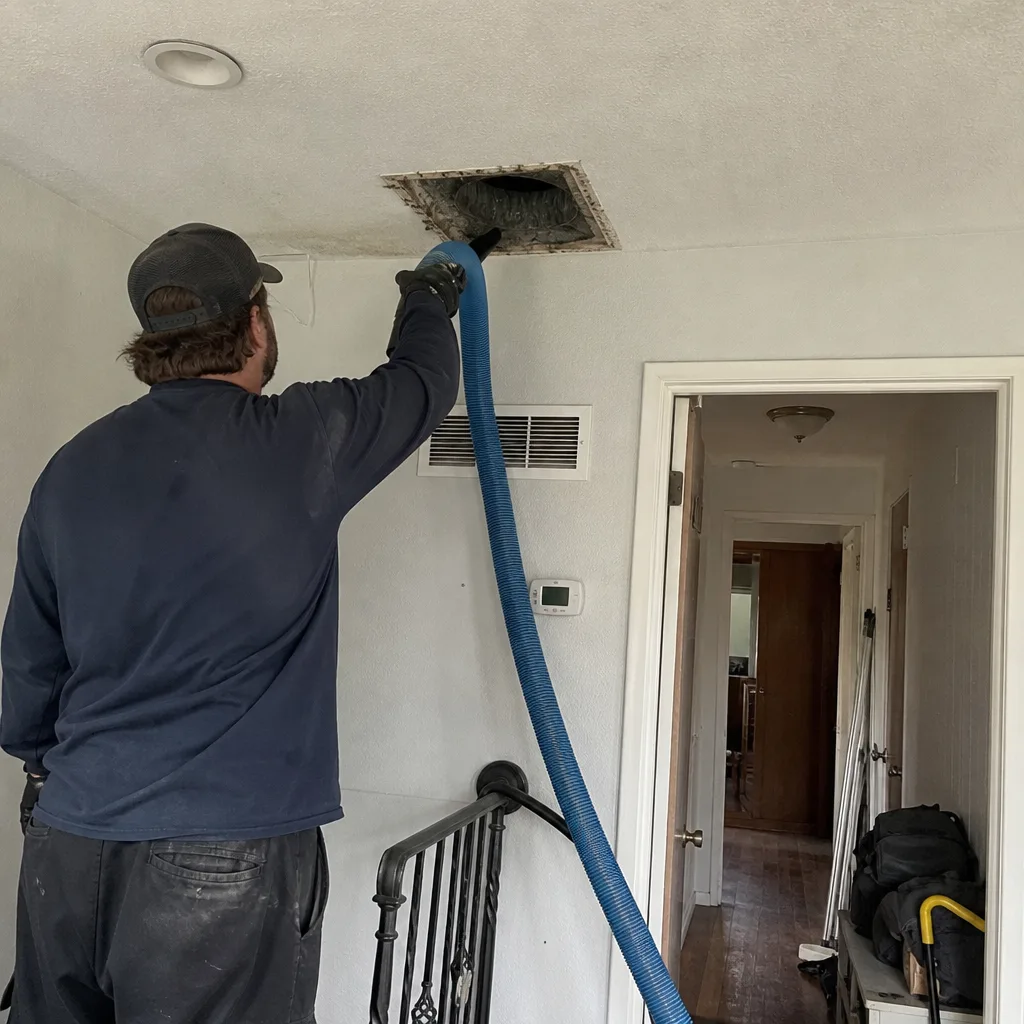 Before
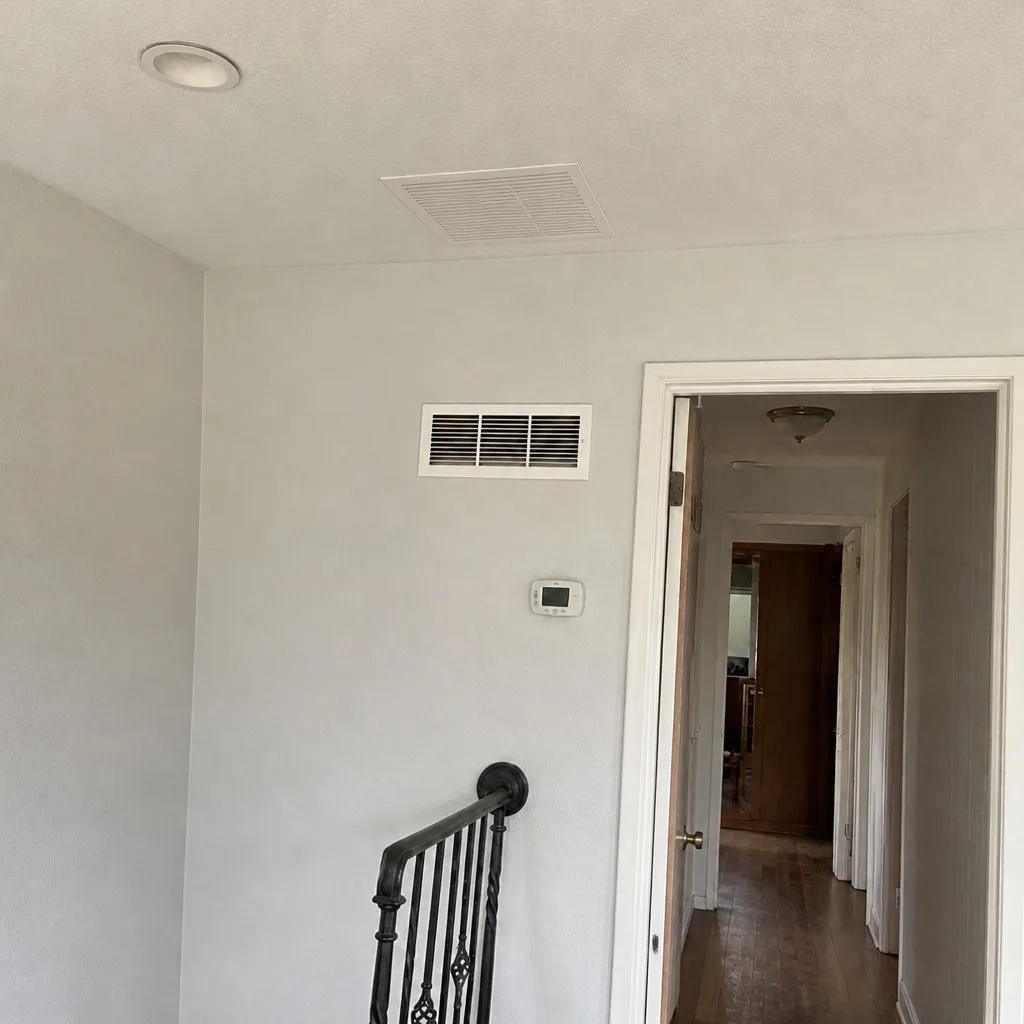 After
When to Call a Professional
Some post-event checks are a matter of walking the system and taking photos. Others genuinely need a professional on site, and knowing which is which is what this guide is for.
Call a professional after any wildfire smoke event that lasted several days, any moisture intrusion that reached ductwork, any earthquake strong enough to have knocked items off shelves, and any event where you smell musty or smoky odor at a register after the space has otherwise recovered. Call if the system has been running during an event without a post-event inspection. Call if you’re putting together an insurance claim and need documented, camera-assisted evidence of the system’s condition. And call if the system hasn’t been professionally assessed in years and you’re thinking about building a baseline before something happens.
The estimate is free, and the price for any work is set per job by a written estimate, never per vent, never with a teaser price that changes once we’re on site. The value of the visit is the inspection and the documentation you walk away with. Air Duct Cleaning West Seattle offers free estimates in West Seattle – call (877) 492-4032. We answer 24/7. Fast dispatch from 7am to 7pm, Sunday through Friday.
Frequently Asked Questions
No. Turn the thermostat and fan off during the smoke event. Running the system pushes fine particulates back into every room, and the filter can’t remove what’s already settled in the ducts. Keep windows closed, use a portable HEPA purifier if you have one, and book an inspection after the outdoor air clears before restarting the system.
Not until the space has been dried and the ducts inspected. Running the fan across standing water or wet duct material aerosolizes contaminants into the living space. Dry the crawlspace or affected area with standalone fans and dehumidifiers, then book a professional inspection before restarting. Porous duct material that’s stayed wet usually needs inspection for replacement rather than cleaning.
Look for evidence of movement at the obvious points first – cracked drywall around a register, separated tape at a boot, flex duct that’s visibly sagging in the attic or crawlspace. But visual checks miss more than they catch. A camera-assisted professional inspection is the only way to confirm the system is intact before you run the fan.
It helps, but only if it addresses the full air pathway. Register-wiping and a quick vacuum of the main returns won’t remove settled particulate from the returns, the coil, or the duct boots. A post-event scope with HEPA-filtered extraction and camera-assisted inspection is genuinely different work, and it’s the version that makes a measurable difference to indoor air after a smoke event.
That depends on your policy and the nature of the event – which is why documentation matters. A written inspection report, dated photos, and camera footage of duct interiors are what adjusters need to evaluate a claim. We can work with your insurer to provide that documentation in the format they expect. The claim decision is theirs; the documentation is ours.
For most homes, a baseline assessment once, then periodic maintenance based on the system’s condition and recent events. West Seattle’s long wet season and its exposure to regional wildfire smoke mean a re-inspection after any significant smoke or moisture event is worth doing regardless of the calendar. If you don’t have a baseline yet, start there. Call (877) 492-4032 for an exact quote – estimates are free.
The Bottom Line
After an emergency, the goal isn’t a quick cleaning – it’s a documented, camera-verified assessment of the full air pathway before you restart the system. Turn the system off during the event. Don’t use the fan to dry a wet space. Inspect the ducts in the attic, crawlspace, and air handler before running anything. And take photos before you clean, because the “before” condition is the documentation your insurer will need. West Seattle homes deal with wildfire smoke, slow moisture intrusion, and the real possibility of a damaging quake. A baseline assessment now and an inspection after any event is a smaller cost than the alternative. Call (877) 492-4032. We answer 24/7. Fast dispatch from 7am to 7pm, Sunday through Friday.
Written by the team at Air Duct Cleaning West Seattle.