
Last updated November 22, 2026
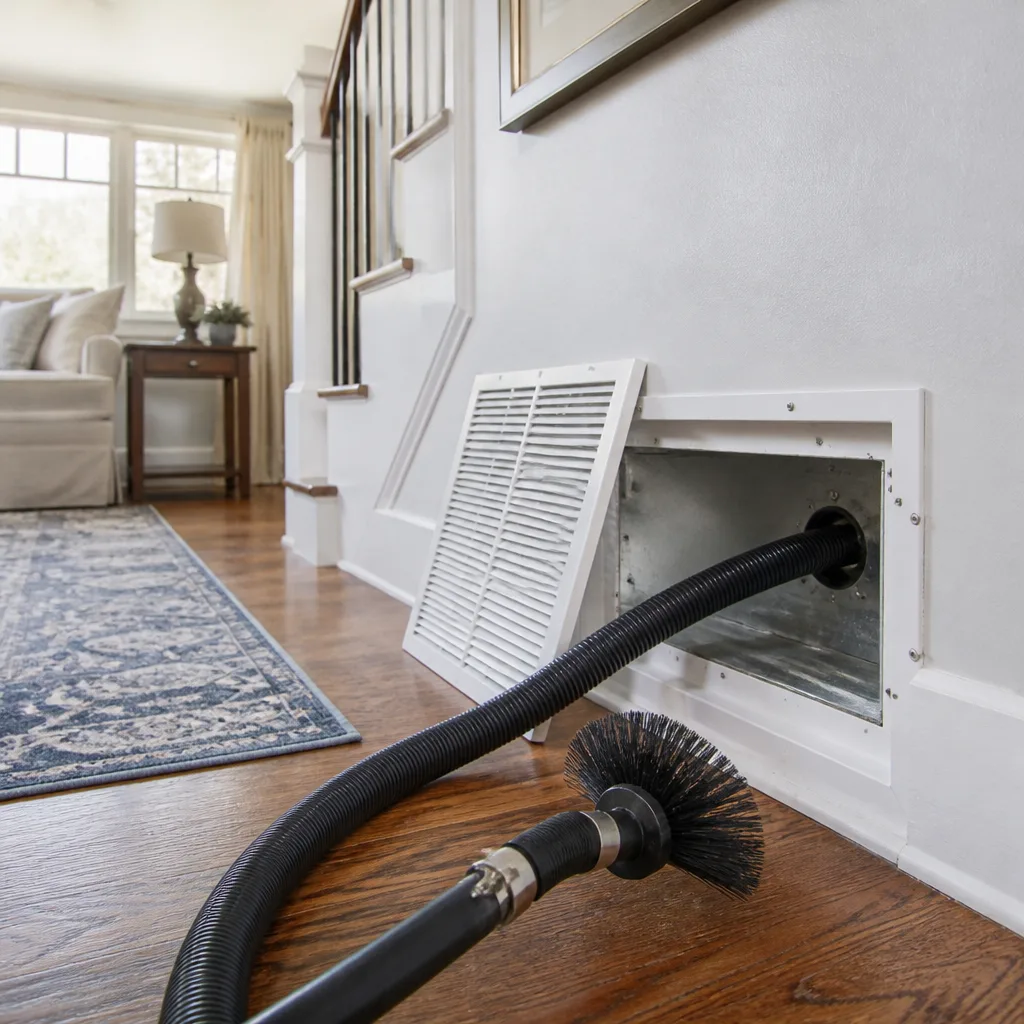 Whole-home duct cleaning
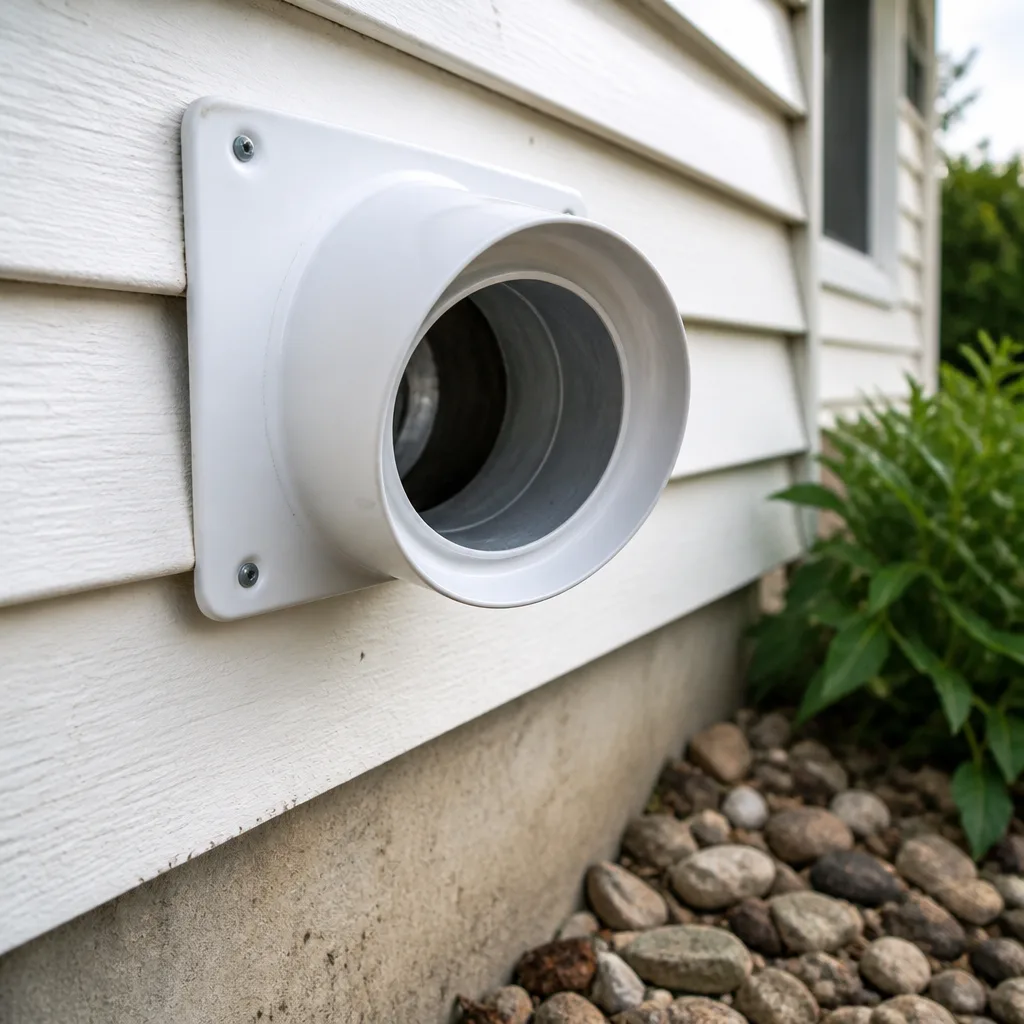 Dryer vent cleaning
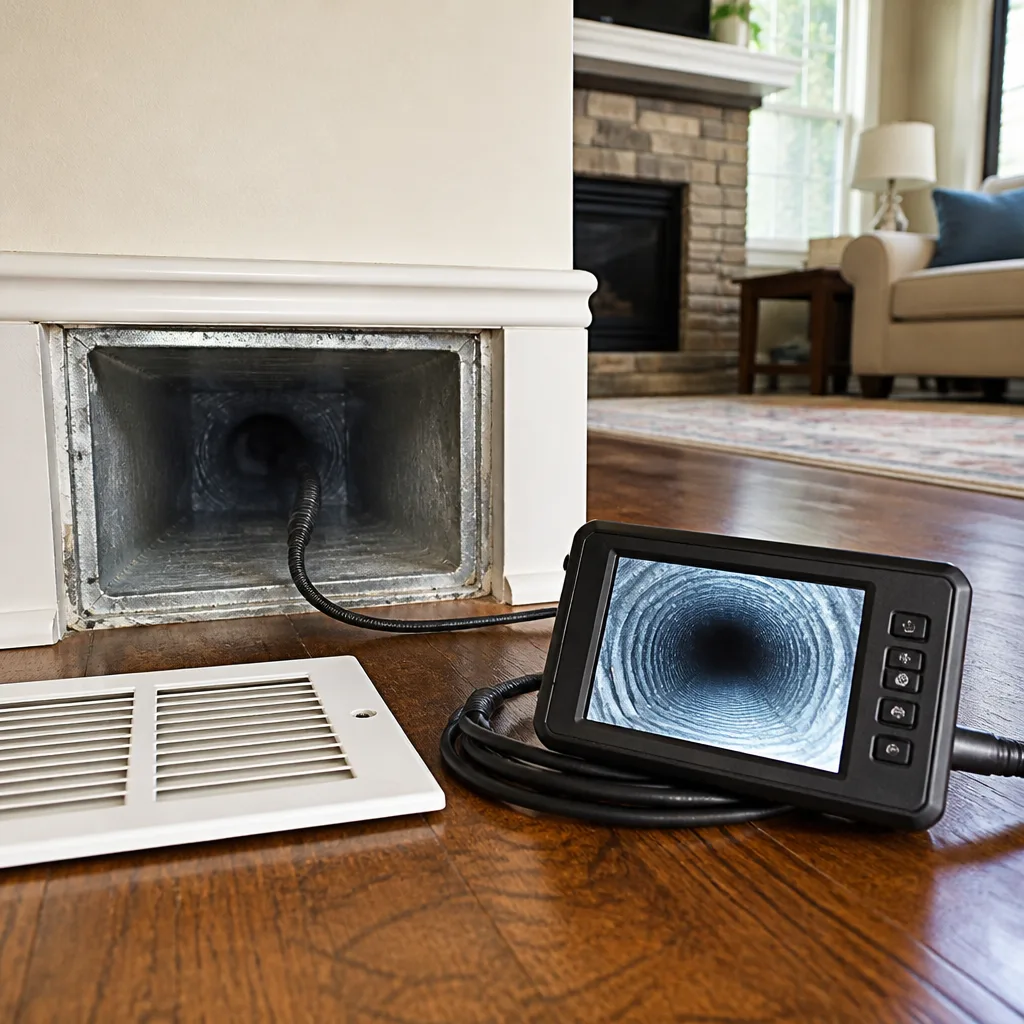 Camera inspection
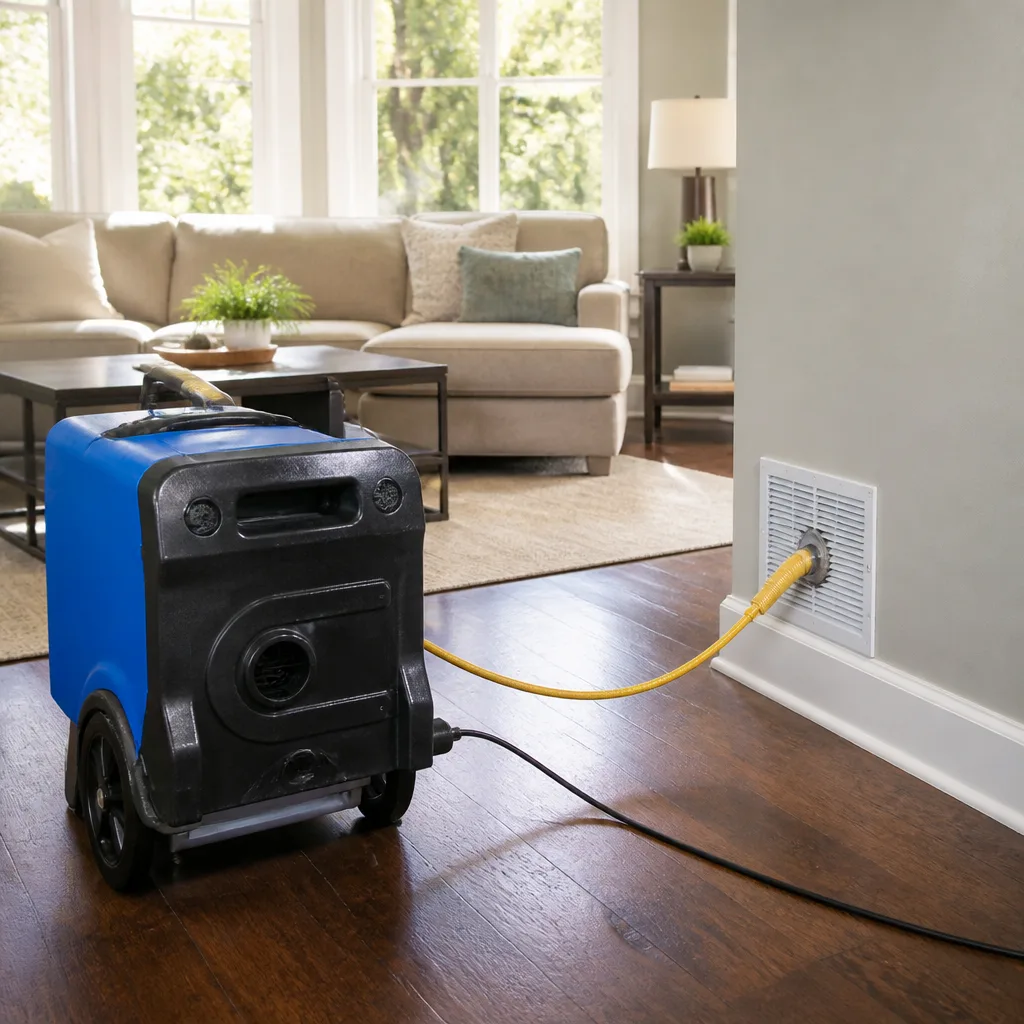 Sanitizing & deodorizing
Whole-system duct and dryer vent check with before-and-after photos - you see exactly what came out of your vents
That "$99 whole-house special" is a bait ad - the real number appears once they are in your hallway, or the "clean" is a shop-vac at the register. We photograph the inside of your ducts before and after instead.
Air Duct Cleaning Maintenance Checklist for West Seattle Homeowners
Changing your filter every 90 days is not duct maintenance – it’s the minimum floor. A filter swap tells you nothing about what’s happening inside the ductwork, the plenum, the return chase, or the coil cabinet where most contamination actually starts. Here in West Seattle, where a wet fall and a dry smoke season can hit the same house in the same year, the duct system quietly absorbs both. What follows is a monitoring protocol, not a cleaning schedule: what to look for, when to look for it, and what the findings actually mean before you spend money on a service call. You’ll learn the inspection points you can check without tools and the jobs that require professional-grade equipment to accomplish anything at all.
Quick Answer
A practical air duct maintenance checklist for West Seattle homeowners has three layers: a monthly visual inspection you do yourself, filter-load tracking to flag upstream problems early, and professional cleaning roughly every three to five years (sooner after renovation, smoke events, or a system that’s been sitting idle). The homeowner layer catches early-stage problems cheaply. The professional layer requires negative-pressure equipment and HEPA filtration to actually remove settled debris rather than stir it loose.
Key Takeaways
- Every-90-day filter changes are a floor, not a maintenance plan.
- A filter that loads faster than usual usually signals an upstream problem, not a filter problem.
- West Seattle’s wet winters, wildfire smoke season, and renovation cycles are the three local triggers that matter most.
- Homeowners can inspect and document. Removal of settled contamination needs negative-pressure extraction.
- A written record of dates and findings is worth more to a technician than an estimate of “a couple of years.”
Styles & brands we work with
- Whole-home duct cleaning
- Dryer vent cleaning
- Camera inspection
- Sanitizing & deodorizing
Table of Contents
- Monthly visual inspection points any homeowner can check
- Tracking filter loading rates as a proxy for duct health
- West Seattle triggers: smoke season, renovation, humidity spikes
- What to document between professional cleanings
- What you can do yourself and what needs negative pressure
- How often the professional layer actually needs to run
- Why sealing and repair belong on the same checklist
- Warning signs that move you from monitoring to calling
Monthly Visual Inspection Points Any Homeowner Can Check
Ten minutes and a flashlight cover the homeowner layer. The goal is to establish what normal looks like in your house so an anomaly stands out. Do this on the same weekend every month and the pattern becomes obvious.
What normal looks like: register grilles with a light, even dust film that wipes off with a dry cloth; return grilles slightly grayer than supply grilles (they pull air in, after all); no visible dust plumes when the system kicks on; a filter that’s uniformly gray when it’s ready to change.
What warrants a closer look or a call:
- Dark staining around the register boot where the duct meets the drywall or floor – often an air leak pulling unfiltered attic or crawlspace air into the system.
- Visible debris inside the duct when you remove the register and look in with a flashlight: flakes, insulation fragments, or a matted coating on the duct walls.
- Dust puffing from a register in the first seconds after the system starts – that’s settled contamination getting airborne again.
- Uneven airflow between rooms that were balanced before. A room that used to blow strong and now doesn’t is an early warning.
- Musty or “wet cardboard” smell from any register, especially in the fall and winter.
- Condensation or water staining anywhere near duct runs in a basement, crawlspace, or closet.
Write down what you see and the date. A single observation means little; three months of the same observation is a pattern, and patterns are what a technician can act on.
Tracking Filter Loading Rates as a Proxy for Duct Health
The filter is the cheapest sensor in your HVAC system. Its loading rate tells you how much particulate is moving through the return side, and a sudden change tells you something upstream changed. Compare apples to apples: same filter brand, same MERV rating, same manufacturer’s recommended interval.
How to track it in three steps:
- Date every filter. Write the install date on the filter frame edge with a marker. Photograph it when you pull it.
- Grade the loading each time. Use a simple scale: light gray (barely loaded), medium (uniformly gray, fibers still visible), heavy (opaque, matted, or visibly bowed from airflow pressure).
- Compare intervals. If a filter that took 90 days to reach medium now reaches medium in 45, the duct system is moving more particulate than it was.
A faster-loading filter usually means one of four things: a duct breach pulling dirty air from a crawlspace or attic, a return chase that’s come apart at a joint, construction dust nearby, or an unusually heavy smoke or pollen season. Notice that “the filter is dirty” isn’t on that list – the filter is supposed to get dirty. The rate is the signal.
A filter that stays suspiciously clean for months can be equally telling. That often points to a return-side leak bypassing the filter entirely, which means unfiltered air is reaching your coil. In West Seattle homes with older forced-air systems, this is one of the more common findings during a first professional visit. If you want a baseline reading, our HVAC cleaning service includes an inspection of the coil and cabinet where these bypass problems show up.
West Seattle Triggers: Smoke Season, Renovation Debris, and Humidity Spikes
West Seattle sits in a climate with three regular events that stress a duct system in different ways. Knowing them turns the general checklist into a calendar.
Wildfire smoke season. When regional smoke settles in, the particulate load on your filter climbs fast because the HVAC is often running with windows closed. Smoke particles are fine enough that a standard filter catches some and misses the rest. After a heavy smoke stretch, expect a filter change sooner than usual and pay attention to whether the smell lingers after the filter swap. If it does, the odor has settled into the duct walls and insulation lining, which is a cleaning job, not a filter job.
Renovation debris. Any interior remodel – a bathroom, a kitchen, a basement finish – sends drywall dust, sawdust, and insulation fibers into the return system unless the ducts are sealed off first. In West Seattle’s older housing stock, where many homes are being updated rather than replaced, this is the single most common reason a duct system needs cleaning ahead of its normal interval. If you’re planning work, ask the contractor to cap returns and block registers before demo starts.
Fall and winter humidity. West Seattle’s wet season is long, and a duct run through a cool crawlspace or unheated basement can stay damp for weeks. Damp duct lining is where biological growth gets a foothold – that musty smell you notice first thing in the morning is often the signal. Keep the system running on low fan to keep air moving, fix any obvious moisture source, and if the smell persists past the wet season, it’s time for a professional look. Sanitizing after cleaning is part of how we close that out.
What to Document Between Professional Cleanings
A technician who arrives with accurate history does better work than one who arrives with guesses. Keep a simple log – a note on your phone is fine – and capture the same six items every time.
- Date and filter grade at each change, with a photo.
- Any change in airflow by room. Note the room, the date, and whether it got weaker or stronger.
- Any smell, the room, and whether it’s worse in the morning or when the heat runs.
- Renovation dates, even for small jobs like a bathroom vanity replacement.
- Smoke events that lasted more than a few days.
- Any water intrusion – a leak, a flooded crawlspace, a spilled bucket near a floor register.
This log answers the questions the technician will ask and usually saves a follow-up visit. It also gives you a defensible baseline if a future homeowner’s inspection or a warranty question comes up. Most of all, it tells you when the system changed behavior, which is the single most useful fact in diagnosing a duct problem.
What You Can Do Yourself and What Requires Negative Pressure
This is the section where most guides get it wrong. Dusting a register grille and cleaning a duct system are different tasks, and the equipment gap is real.
Homeowner-level tasks:
- Remove and wash register and return grilles once or twice a year.
- Vacuum the grille face and the boot with a soft brush attachment.
- Change filters on schedule and log the loading.
- Wipe visible dust around the register area.
- Check that supply registers are open and unobstructed by furniture or rugs.
Tasks that require professional equipment:
- Removing settled debris from inside the duct runs. A shop vac pulls a little loose dust from the first foot of a duct and does nothing past that. Real extraction requires a rotary brush system like Rotobrush to dislodge the coating from duct walls, combined with negative pressure to carry it away.
- Containing the particulate during the work. Anything you dislodge becomes airborne in your home unless the work area is held under negative pressure with HEPA filtration. Nikro HEPA equipment is what handles that containment.
- Heavy contamination. When a system has had a renovation, a moisture event, or years of neglect, the particulate load can exceed what a standard setup handles well. Abatement Technologies equipment is what we reach for in those cases.
- Sealing and repairing breaches. A gap at a joint or a disconnected run can’t be sealed from the outside. It has to be found and closed properly, which is why duct repair and sealing is a separate service, not a line item on a cleaning invoice.
If your goal is a full cleanup of the air pathway – supply, return, coil, cabinet, and dryer vent – that’s what air duct cleaning actually covers. If you’re only trying to knock down surface dust, a homeowner can do that part.
How Often the Professional Layer Actually Needs to Run
The honest answer is “less often than most marketing suggests, and more often than most homeowners assume.” For a typical West Seattle home with normal occupancy, no pets, no smokers, and no renovation, three to five years between professional cleanings is a reasonable working interval. That’s a general guideline, not a rule – a system with heavy pet dander, recent construction, or a moisture event may need attention sooner.
Move the professional cleaning earlier when any of these apply:
- A remodel touched the living space, even a small one.
- The system sat idle or ran with windows open through a long smoke stretch.
- You’ve moved into a home where you don’t know the prior maintenance history.
- You have family members with allergy or asthma concerns, or young children and elderly residents in the home.
- The musty smell from the registers hasn’t cleared after a filter change and a full wet season.
New homeowners in particular benefit from a first inspection because it establishes a baseline. You won’t know whether the next three years are normal for your house until you have a starting point. Our technicians have up to 8 years of experience and have seen the full range of systems in West Seattle – from well-maintained to completely neglected, sometimes on the same block.
Why Sealing and Repair Belong on the Same Checklist
A cleaning without an inspection for leaks is only half the job. Duct systems in older West Seattle homes leak at joints, at the plenum connection, at register boots, and along runs that have settled or been bumped during other work. Every leak does two things: it loses conditioned air you’re paying to heat, and it pulls unfiltered air in from wherever the duct runs – crawlspace, attic, wall cavity.
That’s why the checklist includes a leak inspection as a standing item. When we’re on a job, we seal what we find. A properly sealed system holds pressure better, delivers more consistent airflow at the registers, and keeps the filter doing its actual job instead of catching air that bypassed the ducts entirely. This is the piece most clean-only services skip, and it’s the piece that determines whether your next cleaning is in three years or six.
If you also have a dryer that’s drying slower than it should, the same visit can cover the vent – dryer vent cleaning addresses lint accumulation that’s a fire risk, not just an efficiency drag. One crew, every step of the air pathway.
Warning Signs That Move You from Monitoring to Calling
Most problems don’t need a call the day they appear. Some do. These are the findings that should move you from the monitoring column to the phone:
- Persistent musty smell that returns within a week of a filter change, especially in the fall and winter.
- Visible biological growth on any duct surface you can see through a register.
- A room that’s lost airflow and hasn’t recovered after you’ve confirmed the register is open – could be a disconnected run or a collapsed flex duct.
- Water staining near a duct run, or standing water in a crawlspace under the house.
- Visible debris entering a room when the system starts, not just a puff of dust.
- Concern about indoor air quality for a household member with a respiratory condition, especially after a renovation or a smoke season.
For any of these, the right first step is a professional inspection, not a DIY attempt. High-voltage wiring runs through the same cabinets and plenums as your ductwork, and the inside of a duct system is not a place to reach into with a household vacuum. A trained technician knows where the electrical components sit and how to work around them safely.
Common Mistakes to Avoid
- Treating filter changes as the whole plan. A filter catches what passes through it. It doesn’t clean the duct walls, the plenum, or the coil. Skipping the inspection layer means the first sign of a real problem is usually the bill.
- Using a higher MERV filter than your system can handle. A filter that’s too restrictive starves airflow and can freeze a coil or strain the blower. Match the filter to what your system was designed for, and when in doubt, check the manufacturer’s spec.
- Vacuuming the ducts with a shop vac. A shop vac has no HEPA containment and no negative pressure, so it stirs more particulate into the air than it removes. In West Seattle’s older homes with tighter crawlspaces, this is a dust-recirculation exercise, not a cleaning.
- Assuming “a couple of years” is good enough. A technician who asks “when was the last cleaning?” and gets “a few years ago” has to start from zero. A written log with dates and photos gives them a real diagnosis.
- Skipping the inspection after a renovation. Drywall dust and insulation fibers settle into the return system and stay there. If the returns weren’t capped before demo, budget for a cleaning after the project wraps.
- Forgetting the dryer vent. Lint accumulation in the vent is a fire risk, and a slower-drying dryer is often the first clue. It belongs on the same annual checklist as the ducts, not separate.
- Ignoring a smell through a whole wet season. Musty air that persists past spring usually means moisture and biological growth inside the system. That’s a cleaning-and-sanitizing job, not a deodorizer job.
See the difference
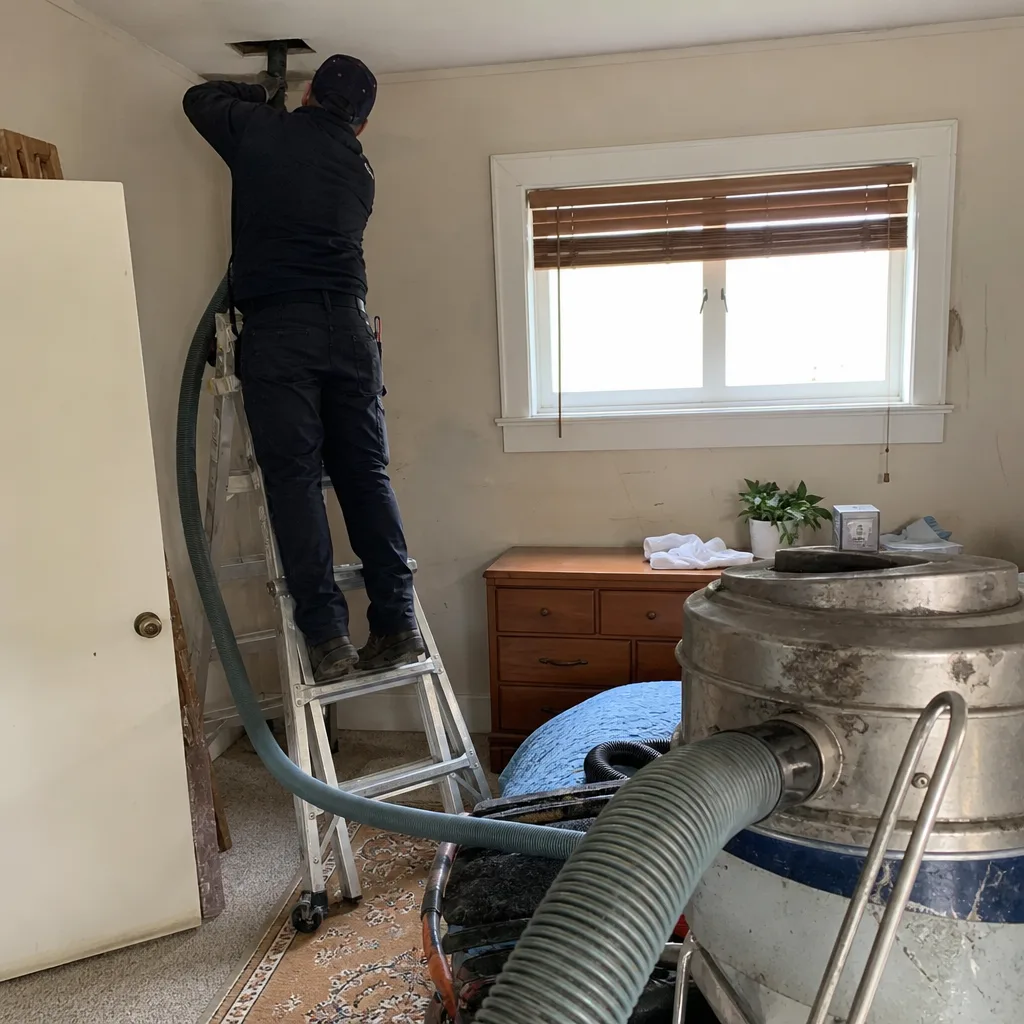 Before
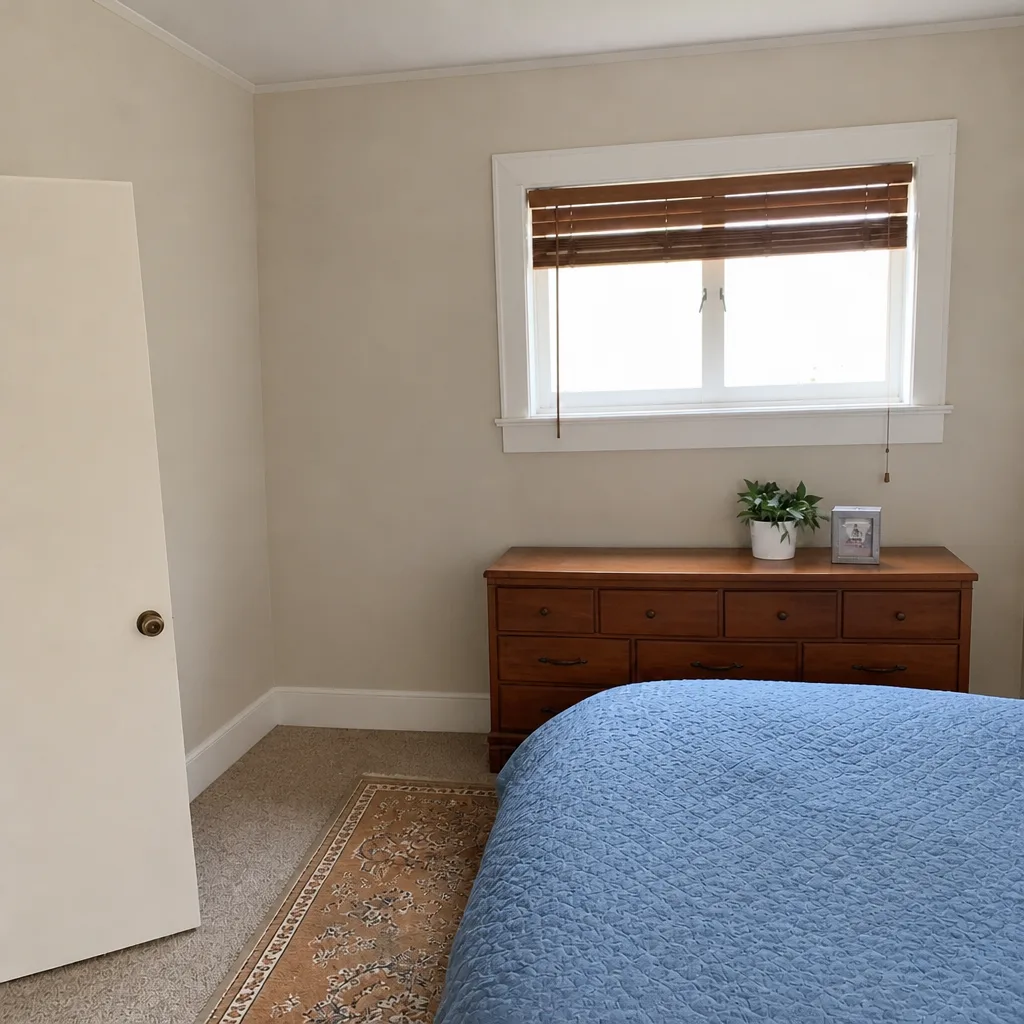 After
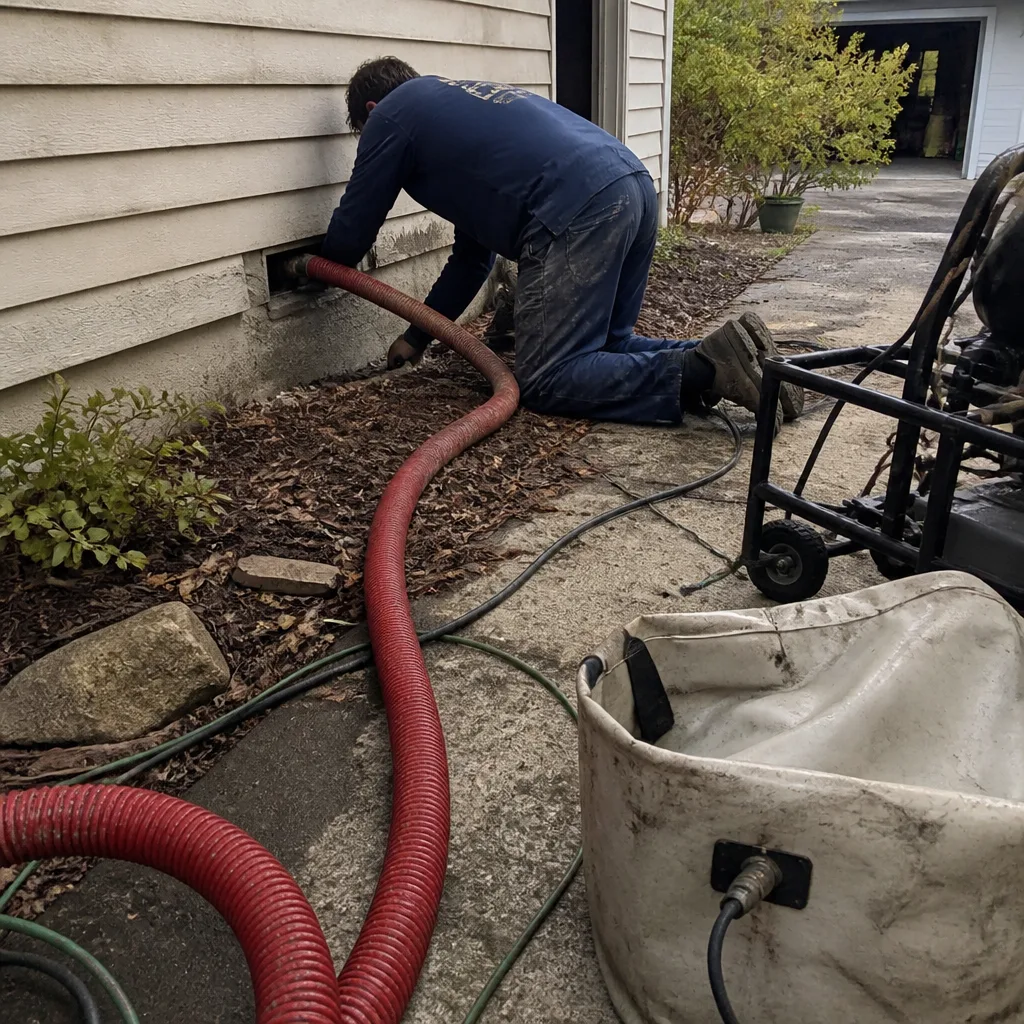 Before
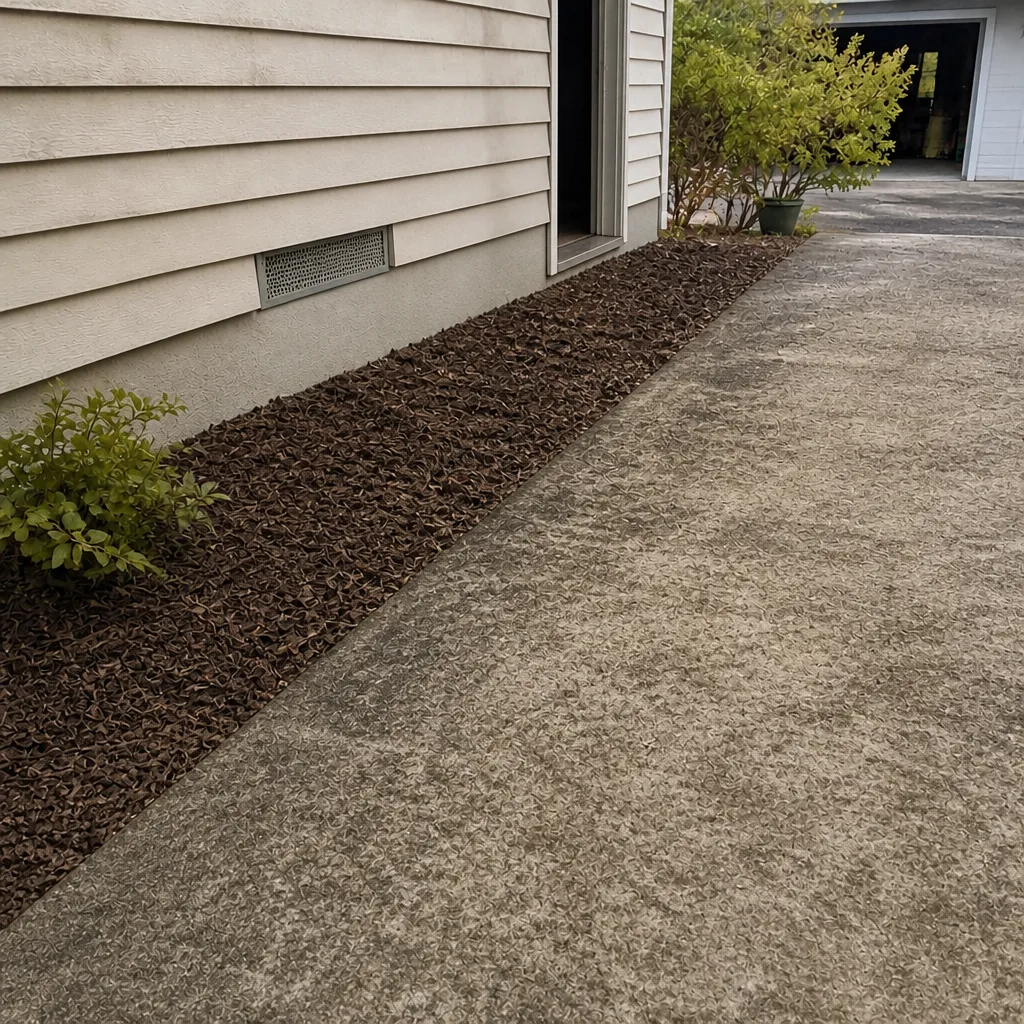 After
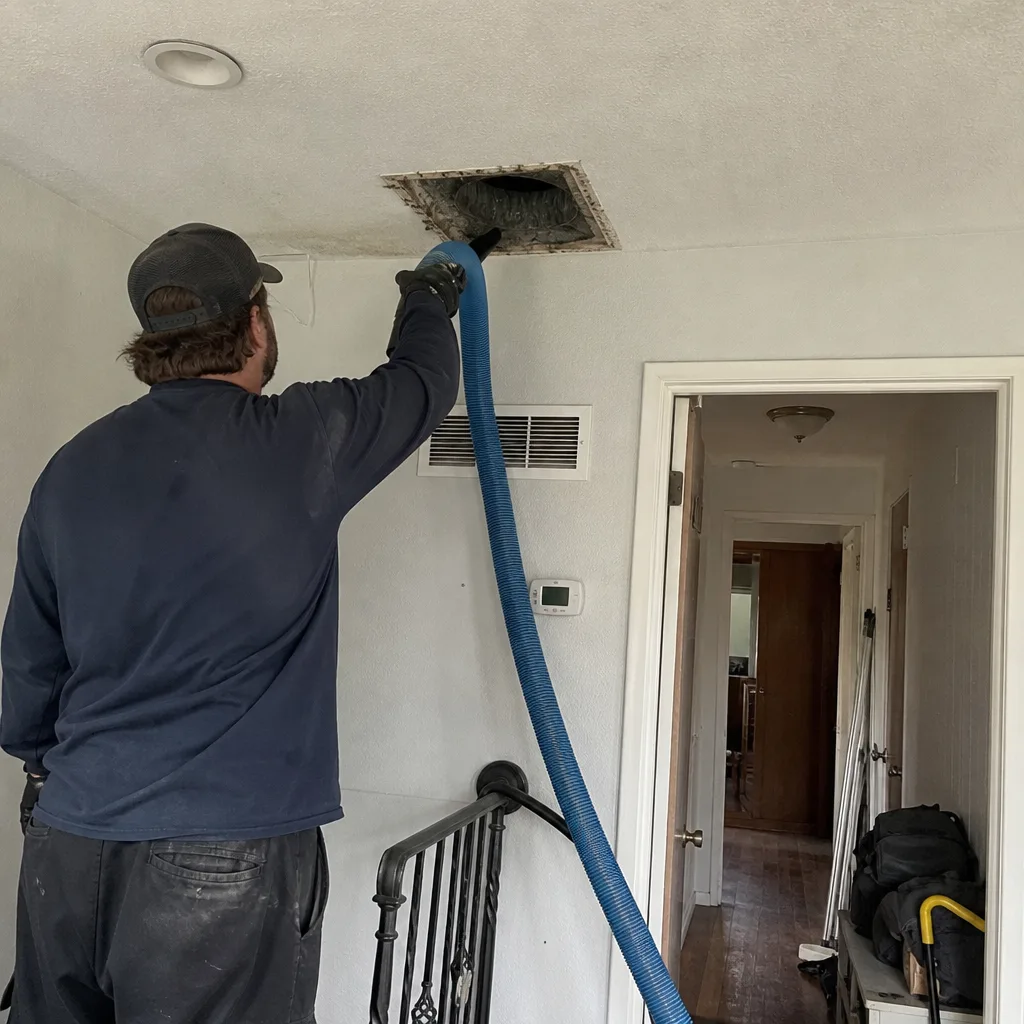 Before
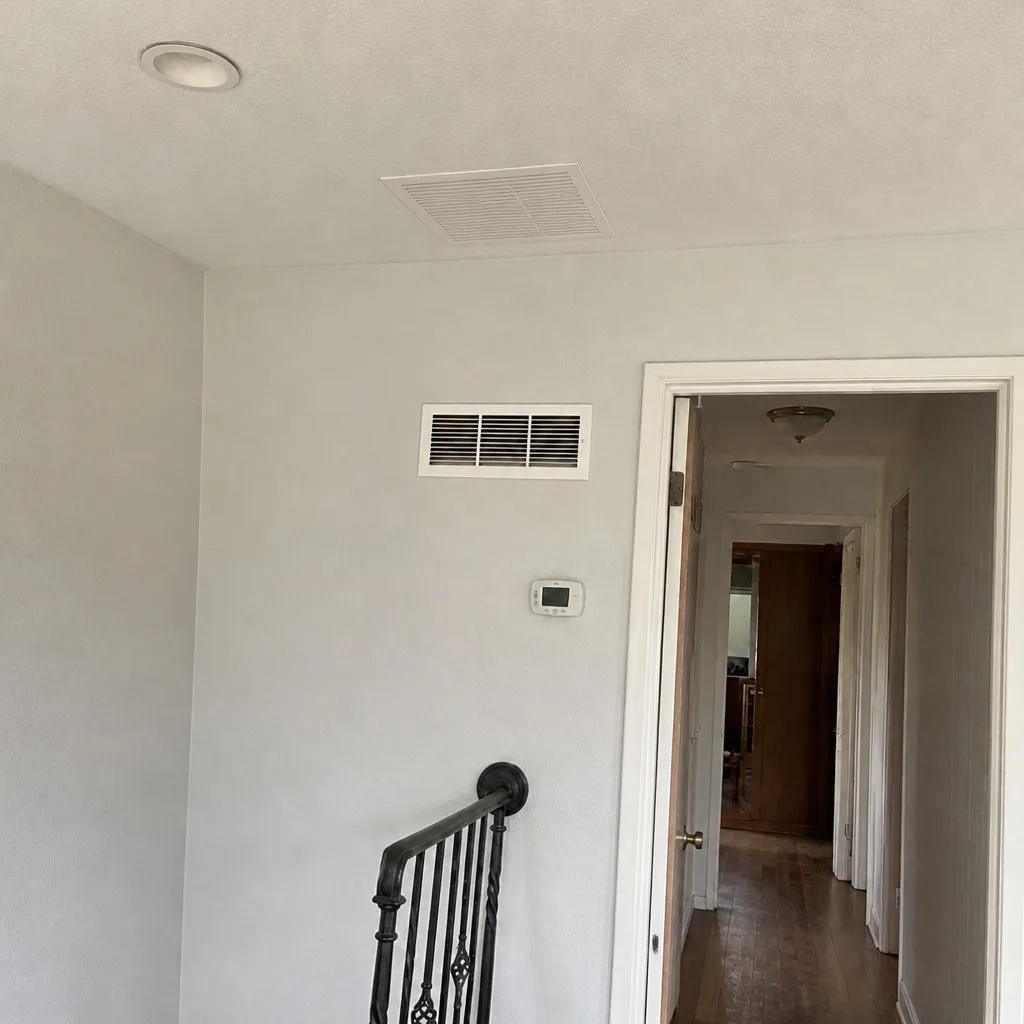 After
When to Call a Professional
Call when you find any of the warning signs above, when you’ve bought a home with unknown maintenance history, or when the annual self-inspection turns up something you can’t identify. Call after any renovation that touched living space, after a long smoke season if the smell lingers, and any time the system’s airflow changes for no obvious reason. Call if anyone in the household has allergy or asthma symptoms that seem tied to the HVAC system, or if you’re planning work around young children or elderly residents. And call if you simply want a baseline reading on a system you’ve never had inspected – knowing what normal looks like now beats discovering it after a problem.
Air Duct Cleaning West Seattle offers free estimates in West Seattle – call (877) 492-4032. We answer 24/7. Fast dispatch from 7am to 7pm, Sunday through Friday. The estimate is free, one flat price per system is agreed before work starts, and you’ll see before-and-after photos of your own ducts so you know the work was actually done.
Frequently Asked Questions
For a typical West Seattle home with normal occupancy and no recent renovation, professional duct cleaning every three to five years is a reasonable working interval. Move it earlier after a remodel, a long wildfire smoke stretch, a moisture event, or if you’ve just moved into a home with unknown history. The homeowner inspection layer should run monthly regardless of the professional interval.
Look for a persistent musty smell that returns after a filter change, visible debris through a register, uneven airflow that wasn’t there before, dark staining around register boots, or dust puffing from a register on startup. Any one of those warrants a professional inspection. A free estimate gives you a straight answer before you spend anything – call (877) 492-4032 to book one.
No, not effectively. A shop vac reaches the first foot or so of a duct and has no HEPA containment or negative pressure, so it pushes as much particulate into the room as it removes. The settled coating on duct walls needs rotary brush extraction and HEPA-filtered negative pressure. A homeowner can clean the register grilles and change the filter; the duct interiors need professional-grade equipment.
Drywall dust, sawdust, and insulation fibers enter the return system during demo and settle throughout the ductwork. The filter catches what passes through it, so it loads faster. The underlying issue is debris sitting in the ducts, not a filter problem – changing to a higher-MERV filter won’t fix it and can restrict airflow. A cleaning after the renovation wraps is the right fix.
Cleaning removes settled contamination from inside the duct system using negative-pressure extraction. Sealing closes the leaks and disconnected joints that let unfiltered air in and conditioned air out. They’re different jobs and both matter – a cleaned duct system with unsealed leaks will reaccumulate contamination and lose efficiency. We offer duct repair and sealing as a separate service so the finding gets fixed rather than noted and forgotten.
Yes. Fine smoke particulate travels through the HVAC system and settles on duct walls and insulation lining, and the odor can persist long after the air clears. After a heavy smoke stretch, change the filter sooner than usual. If the smell lingers past the next filter change, the contamination has settled into the system and a professional cleaning is the right next step.
The Bottom Line
A duct maintenance checklist is a monitoring habit, not a purchase schedule. The monthly inspection, the filter-loading log, and the local trigger calendar – smoke season, renovation, humidity – tell you when a professional cleaning is actually warranted rather than when a sales call says it is. Handle the surface work yourself: grilles, filters, airflow checks. Let a technician with the right equipment – Rotobrush rotary extraction, Nikro HEPA containment, and a full-system scope that includes sealing and repair – do the part that can’t be done from a step stool. Air quality hardware from Honeywell and Aprilaire can be added alongside a cleaning when the household has specific filtration goals. The system you understand is the system you maintain well.
Written by the team at Air Duct Cleaning West Seattle.