
Air Duct Cleaning: Repair or Replace? How West Seattle Homeowners Decide
If your ducts have disconnected joints, crushed flex runs, or deteriorated insulation liner, cleaning them is roughly equivalent to washing a car with a cracked engine block. The surface looks better; the underlying problem doesn’t move. The order matters: repair first, then clean, then decide whether replacement makes more sense than piecemeal fixes. If you’d rather not climb into the crawlspace yourself, call (877) 492-4032 and we’ll take a look.
Why Cleaning a Damaged System Wastes Money
Cleaning removes accumulated dust, debris, and biological growth from the interior surfaces of the ductwork. It does not restore a disconnected joint, straighten a crushed flex section, or rebuild a liner that’s shedding fiberglass into the airstream. That’s the core distinction West Seattle homeowners need to understand before they book anything.
Our technicians have up to 8 years of experience, and the most common mistake we see is a homeowner booking a cleaning on a system with structural problems that were never diagnosed. The cleaning runs, the invoice gets paid, and nothing about the distribution of air through the house actually improves.
Three conditions make cleaning ineffective until they’re addressed:
- Disconnected joints. A slipped or separated joint at a takeoff or trunk connection means conditioned air leaks into the crawlspace or wall cavity before it ever reaches a room. You’re paying to clean ductwork that isn’t delivering air where it’s supposed to.
- Collapsed flex duct. Flex runs kink, sag, or crush under stored items or sagging insulation. A restricted run chokes airflow to that room, and cleaning the interior of a pinched duct doesn’t restore the volume.
- Deteriorated duct liner. Older insulated liner can break down and shed fibers into the airstream. Cleaning can actually disturb a failing liner and make the problem worse.
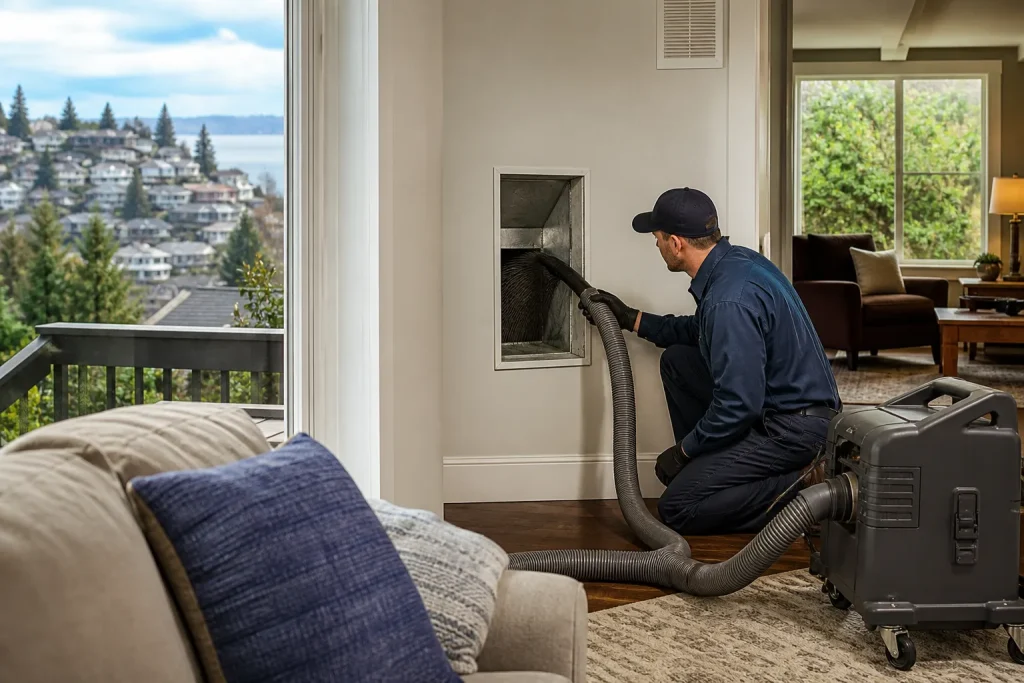
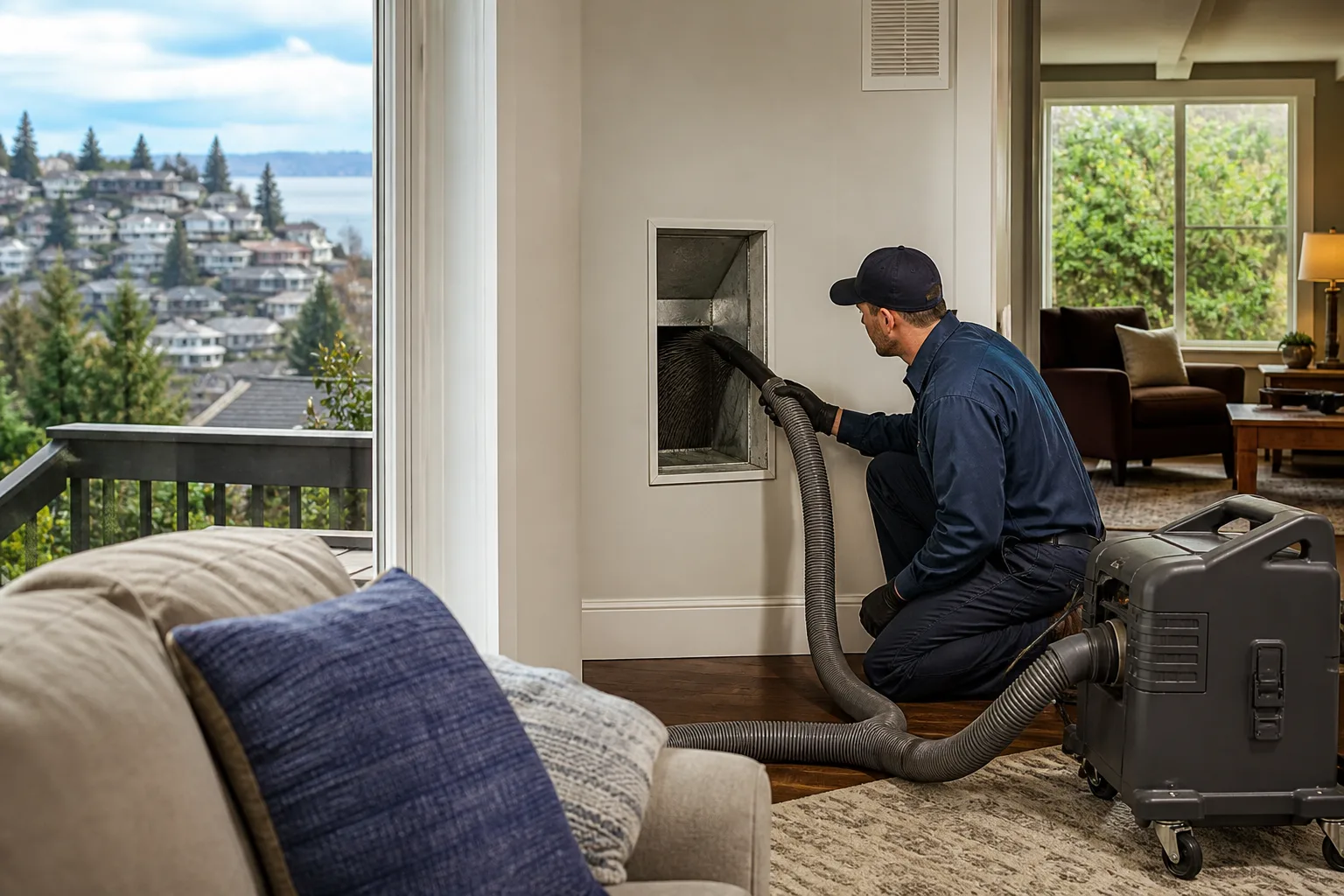
Professional-grade equipment matters here too. Our Air Duct Cleaning West Seattle work uses the Rotobrush rotary brush extraction system and Nikro HEPA-filtered vacuums for particulate containment, but no amount of good equipment fixes a duct that isn’t structurally sound.
How to Self-Inspect Your Ducts Before You Call Anyone
You can spot most of the serious problems yourself in about twenty minutes, provided your crawlspace or attic is safely accessible. Wear a mask and gloves, bring a flashlight and your phone, and look at the accessible sections only. Don’t crawl into a tight space you’re not comfortable in.
What to look for and what it means:
- Photograph every joint you can reach. Look for gaps, slipped connections, or tape that’s peeling away. A visible gap at a trunk takeoff is a leak.
- Check flex runs for kinks, sags, or crushing. A run that dips or gets pinched under stored boxes is restricting airflow. Photograph the worst-looking section.
- Look at the liner inside the duct. Shine a light into the opening of a rigid duct. If you see torn, crumbling, or flaking material, that’s a liner failure, not a dust problem.
- Note any soft spots or moisture staining on duct insulation. Damp insulation in a West Seattle crawlspace is a real concern given how much rain this area gets.
- Photograph your HVAC unit’s filter slot and the return grille. Heavy buildup there tells you the system is pulling in debris before it even reaches the ducts.
Send those photos to whoever you’re considering hiring. A company that won’t look at them before quoting is guessing.
Repair Plus Cleaning vs. Full Replacement: The Cost Framework
There’s no single right answer, but there is a decision framework. Targeted repair plus cleaning usually makes sense when the damage is isolated to one or two sections and the rest of the system is in reasonable shape. Full replacement tends to make more sense when damage is widespread and the repair scope approaches the replacement scope.
Compare the options this way:
- Repair plus cleaning works when the failures are localized, the duct material is still sound, and the layout is efficient. You’re fixing the leaks, then cleaning and sanitizing the whole air pathway.
- Full replacement makes more sense when the system has multiple failure points across different runs, when the layout itself is the problem, or when repair costs climb toward replacement costs.
- Clean-only is appropriate only when the system is structurally sound and the issue is truly just accumulated debris.
West Seattle’s humidity profile matters here. Duct systems in this climate deal with months of damp air, and that accelerates liner breakdown and insulation failure. When a system already has two or three problems, patching one and cleaning the rest often just postpones the next repair. Replacement can have a faster practical return because you stop spending on a distribution network that keeps failing.
Repair and sealing is a named part of what we do, so if cleaning uncovers a breach, we seal it rather than hand you off to someone else. We seal what we find.
How Age Changes the Repair-or-Replace Math in West Seattle
Duct systems over 25 years old in this region often show multiple failure points at once. That’s not a marketing line; it’s a pattern in how insulation, tape, and flex duct age in a damp climate. A system that’s 30 years old and showing one disconnected joint is rarely showing only that one problem.
When we assess an older system, we look at whether the repairs are concentrated or scattered. Scattered repairs across an aging system usually add up to more than a replacement, and you’re still left with ductwork that’s near the end of its service life. Concentrated repairs on an otherwise sound system are worth doing.
The practical question to ask: after these repairs, how many more years will this system realistically give you before the next failure? If the answer is short, replacement is the better use of the money.
Age also affects the air quality picture. A failing liner or deteriorating sealant in an older system can contribute to the dust and particulate load in the home. That’s where an Aprilaire or Honeywell filtration or air quality component, installed alongside the repair and cleaning, can help capture what the system is still kicking up.
What a Reputable Duct Cleaner Should Tell You When They Find Damage
This is the honest test of any duct cleaning company. If you hire someone to clean and they find a disconnected joint, collapsed flex, or a failing liner, they should stop, show you photos, and explain your options before they proceed. Cleaning a damaged system and saying nothing is a liability, not a service.
“Professional-grade equipment, not a shop vac and a hose.”
A company that cleans anyway without flagging structural damage is telling you something important about how they work. The right response is a conversation: here’s what we found, here’s what repair would involve, here’s whether replacement makes more sense, and here’s what cleaning will and won’t accomplish either way.
Our Abatement Technologies equipment lets us handle elevated contamination scenarios, and our Rotobrush and Nikro gear makes the cleaning genuinely thorough. That’s the hardware side. The judgment side is flagging what we find before the invoice is signed.
When to call a pro: if you’ve done the self-inspection and found gaps, kinks, or liner damage, or if the system is over 25 years old, get eyes on it before you book a cleaning. Related services in West Seattle include air duct cleaning, dryer vent cleaning, and HVAC cleaning if your unit needs attention too.
The Bottom Line
Repair before you clean when the ducts are damaged. Clean when they’re sound. Replace when scattered failures make piecemeal repair uneconomical. The order saves you money because you’re not paying to clean a distribution network that isn’t working.
If you’re in West Seattle and need help deciding, Air Duct Cleaning West Seattle offers free estimates, call (877) 492-4032. We answer 24/7. Fast dispatch from 7am to 7pm, Sunday through Friday. You get one flat price per system agreed before work starts, plus before-and-after photos of your own ducts so you can see exactly what changed. We cover the full air pathway, from intake to output, so you don’t need a second contractor for the repair.
Frequently Asked Questions
Repair plus cleaning usually makes sense when damage is isolated to one or two sections of a sound system. Full replacement makes more sense when an older system has multiple scattered failure points, especially over 25 years old in this climate. The written estimate will tell you which is more economical for your specific system. Call (877) 492-4032 for a free estimate.
No, not until the damage is repaired. Cleaning a disconnected or crushed duct doesn’t restore airflow or delivery, so you’re paying for surface improvement that doesn’t solve the actual problem. Repair first, then clean. Call (877) 492-4032 and we’ll assess what you’re dealing with.
In accessible crawlspace or attic sections, look for gaps at joints, kinked or crushed flex runs, and flaking liner material inside rigid ducts. Photograph what you find and compare it. If you’re not comfortable in those spaces, skip the DIY check and have a pro inspect. Call (877) 492-4032 for a free estimate.
A reputable one will stop and show you, before proceeding. If a company cleans a damaged system without flagging it, take that as a warning sign. We photograph and explain what we find so you can decide between repair and replacement. Call (877) 492-4032 to book an inspection.
Written by the team at Air Duct Cleaning West Seattle.
Need Air Duct Cleaning Help?
Call Air Duct Cleaning West Seattle - the local pro we connect you with is licensed and insured, with free written estimates in West Seattle.
(877) 492-4032